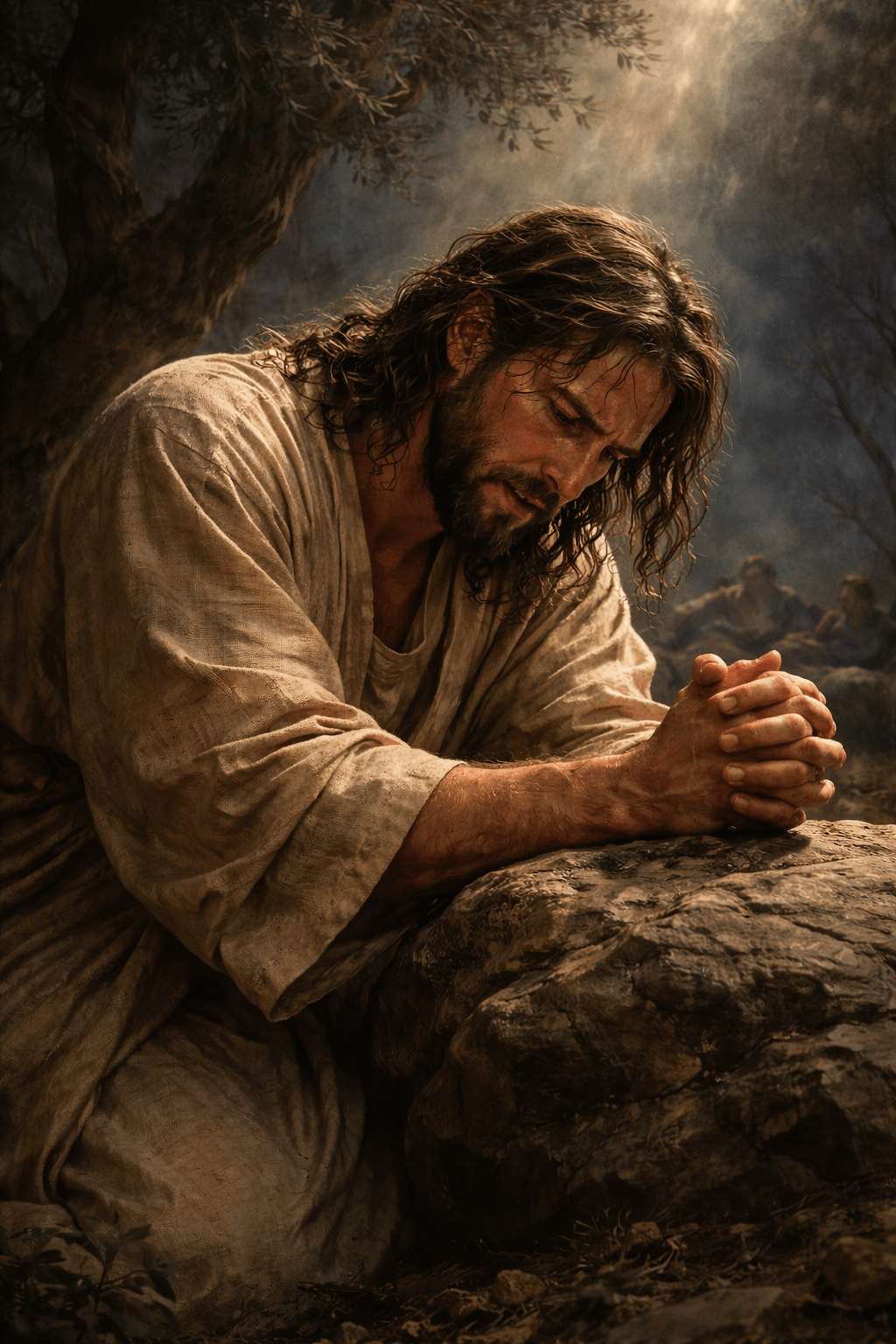
Luke was not guessing. He was a physician. And when he wrote that Jesus’ sweat became “as it were great drops of blood falling down to the ground” (Luke 22:44), he chose a word that demands attention.
The term he used — thromboi — does not describe light perspiration. It refers to thick clots, heavy masses. Luke is not painting poetry. He is describing something observable. Something physical. Something alarming.
There is a known medical condition called hematidrosis — a rare phenomenon in which extreme stress causes capillaries around the sweat glands to rupture, mixing blood with perspiration. Under crushing emotional strain, the body can literally begin to bleed through the skin.
Gethsemane was not symbolic distress. It was measurable anguish.
The word “agony” Luke uses speaks of the fiercest contest — the strain of a man locked in life-or-death struggle. But this was not a struggle against Roman soldiers. Not yet. It was the soul of the Son of God bearing the anticipation of sin — your sin, my sin — and the cup of divine wrath.
Before a single nail touched Him, His body was already breaking under the weight.
He was not afraid of physical pain. He had spoken calmly of the cross many times. What pressed Him into bloody sweat was the reality of becoming sin for us. The coming separation. The darkness. The judgment.
And what was He doing while His body reacted this way?
Praying more earnestly.
Not retreating.
Not resisting.
Not reconsidering.
“Nevertheless not my will, but thine, be done.”
That is the moment redemption locked into place.
The garden shows us something staggering: the cost of obedience. The intensity of love. The depth of surrender.
If the curse in Eden brought sweat to man’s brow, the redemption in Gethsemane brought blood to the Savior’s.
He did not merely bleed at Calvary.
He began bleeding in prayer.
And He chose the cross anyway.

 The Solid Rock
Leave a comment