
Galatians 3:18 says, “…but God gave it to Abraham by promise.”
When God first told Abraham that his descendants would be as numerous as the stars (Genesis 15:5), Abraham had no child. No heir. No evidence. His body was aging. Sarah’s womb was barren. Everything visible argued against the promise. Yet Genesis 15:6 tells us that Abraham believed the Lord, and God counted it to him for righteousness.
That is stunning. There was no law yet. No ceremony. No achievement. Just belief.
Time passed, and Abraham felt what we all feel when promises linger. “Lord, I still don’t have a son.” The tension between promise and reality stretched thin. That is when God initiated a covenant (Genesis 15:9–10). In that culture, two parties would split animals and walk between the pieces together. It was a dramatic way of saying, “If I fail to keep my word, may I be torn apart like this sacrifice.”
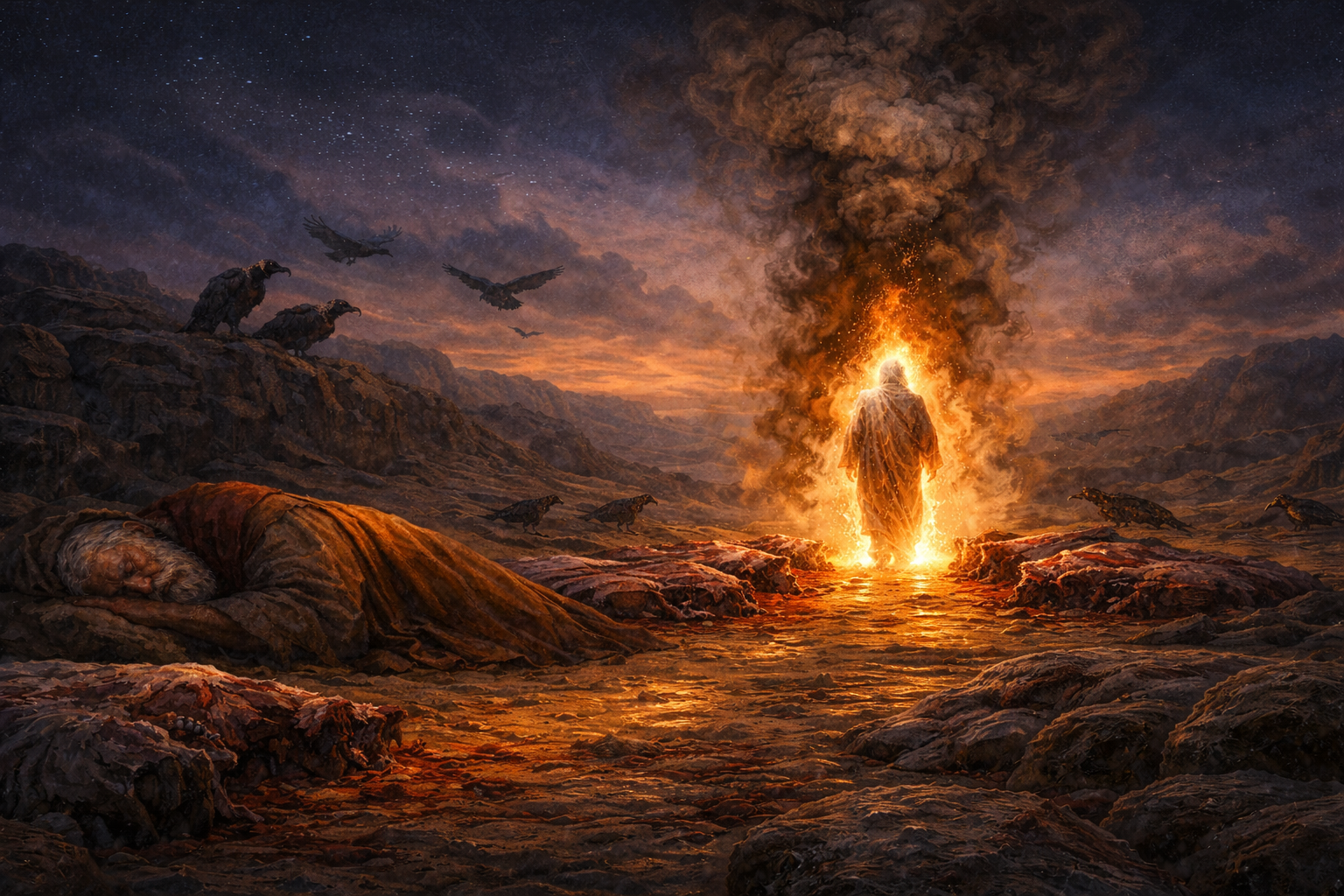
Abraham prepared the animals and waited. As he waited, birds descended on the carcasses, and he drove them away (Genesis 15:11). The day wore on. Fatigue set in. Eventually, Abraham fell into a deep sleep.
While he slept, God passed through the pieces alone as a smoking furnace and a burning lamp (Genesis 15:17).
Do not miss that.
God did not meet Abraham halfway. He did not say, “I will do My part if you do yours.” He assumed full responsibility for the covenant. The fulfillment of the promise rested entirely on Him.
That is Paul’s argument in Galatians 3. If the inheritance comes by law, it is no longer by promise. But God gave it by promise. Grace does not share credit.
Here is the picture.
Imagine a wealthy father establishing a trust for his child long before that child is capable of earning, negotiating, or even understanding it. The child contributes nothing to its creation. He simply grows into what has already been secured.
That is what God did with Abraham. That is what He does in salvation. Ephesians 2:8–9 makes it clear that we are saved by grace through faith, not by works. The cross was not a cooperative effort. When Jesus cried, “It is finished” (John 19:30), He was declaring completion, not partial progress.
So where do we come in?
Our part looks much smaller than we expect. Abraham’s only recorded action in that scene was driving away the birds. The covenant was God’s work. The protection of the promise from scavengers was Abraham’s.
And the birds still circle.
Doubt whispers that you are not spiritual enough. Accusation reminds you of past failures. Religion suggests that perhaps you need to contribute more in order to secure what God has said. Those thoughts peck at the promise.
Our responsibility is not to complete the covenant. Christ has already done that. Our responsibility is to answer unbelief with what God has spoken. When anxiety rises, we hold to Philippians 4:19. When fear of abandonment creeps in, we cling to Hebrews 13:5. When weakness overwhelms us, we rest in 2 Corinthians 12:9.
This is also where Christianity stands distinct from every system of self effort. Every other religion ultimately places part of the weight on human shoulders. Scripture presents a God who walks the blood path alone and then invites us to trust Him.
If salvation depended on the steadiness of your hand, you would lose it the first time you trembled. But it rests on the faithfulness of God, who cannot deny Himself (2 Timothy 2:13).
Abraham slept.
God did not.
That is grace.