
1 Timothy 5:7–8
And these things give in charge, that they may be blameless.
But if any provide not for his own, and specially for those of his own house, he hath denied the faith, and is worse than an infidel.
Paul does not soften his words here.
He tells Timothy to teach these things clearly so that people will be blameless. In other words, everyone in the church should understand this responsibility.
If a person refuses to care for his own family, Paul says something shocking. He says that person has denied the faith and is worse than an unbeliever.
That is strong language.
Why would Paul say something like that?
Because even people who do not believe in God usually understand the basic duty of caring for their family. It is part of being human. When someone refuses that responsibility, something fundamental has broken down.
Paul is talking specifically about caring for aging parents and relatives, but the principle runs deeper than that.
Responsibility for family begins at home.
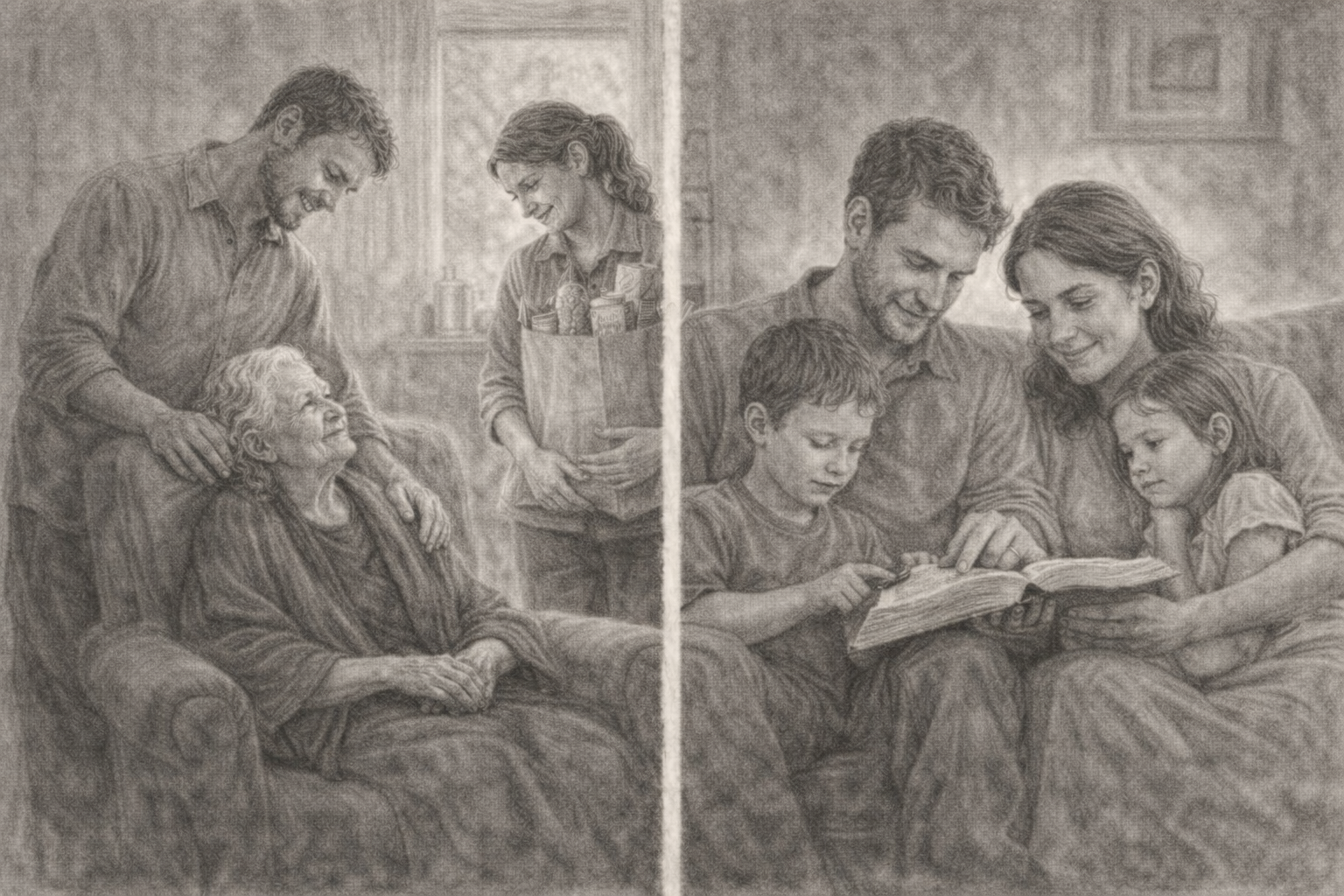
Children and grandchildren should step up to care for their parents and grandparents instead of assuming the church will handle it. The church can help when someone truly has no support, but it should not replace the role of the family.
The same idea applies in other areas too.
Parents sometimes expect the church to take care of their child’s spiritual life. They hope Sunday school will teach their kids about Jesus, or youth group will keep their teenagers on track.
The church can help with that. It can encourage, teach, and support.
But nothing the church does will ever carry the same weight as what children see and hear at home every day.
Think of it like learning a language. A child might take a class once a week, but the real learning happens in the house where the language is spoken daily.
Faith works the same way.
When children see their parents praying, reading Scripture, and talking about the Lord in ordinary life, those lessons sink in deeply.
The church can partner with families.
But the foundation is built at home.