
2 Timothy 4:19–20
Salute Prisca and Aquila, and the household of Onesiphorus.
Erastus abode at Corinth: but Trophimus have I left at Miletum sick.
As Paul closes his letter, he begins mentioning names. Friends. Fellow workers. People whose lives had been woven into the work of the gospel.
Prisca and Aquila were among the most faithful of those companions. Wherever Paul went, they seemed to appear nearby, opening their home, helping strengthen the churches, quietly serving behind the scenes.
Then Paul mentions Erastus, who remained at Corinth.
And finally he mentions Trophimus.
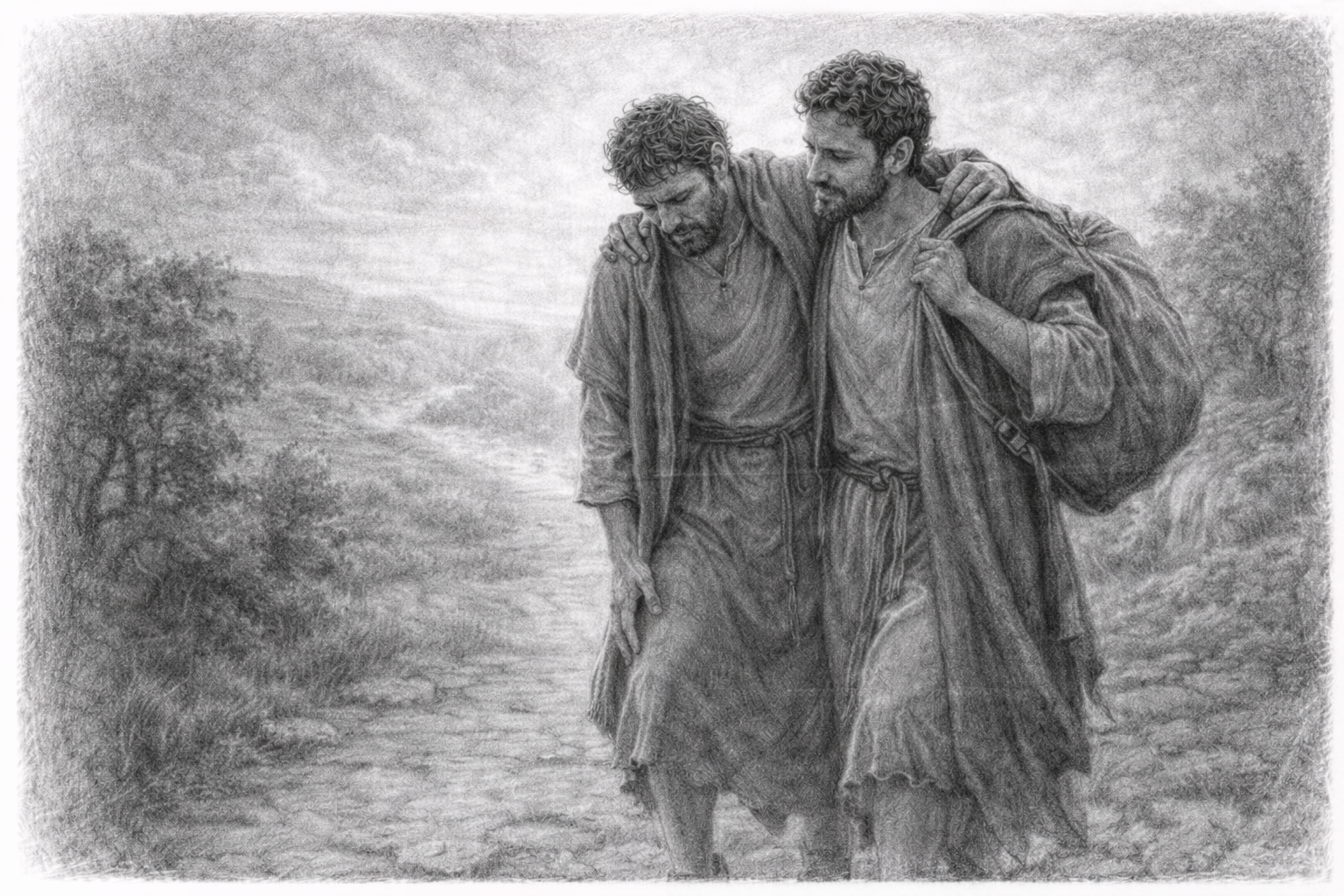
“But Trophimus have I left at Miletum sick.”
It is such a simple statement, but it says a great deal. Paul does not launch into a long explanation. He does not question Trophimus’s faith. He does not suggest that something must be spiritually wrong with him.
He simply says that Trophimus was sick.
That is important because sometimes people assume that if faith is strong enough, illness should disappear instantly. But the New Testament tells a more honest story. God certainly healed many through the ministry of Paul. There were moments when miracles occurred in powerful ways.
But there were also times when sickness remained.
Trophimus was one of those cases.
And Paul did not treat him as a spiritual failure. He treated him as a friend who simply could not travel any farther.
Life with the Lord includes both kinds of stories. Sometimes the Lord heals immediately and dramatically. At other times the weakness remains for a season. In either case, His presence does not disappear.
It is a little like walking with someone on a long road. If your companion twists his ankle, you do not accuse him of failing the journey. You simply acknowledge the injury and continue the trip when he is able.
Paul did exactly that.
The gospel moved forward through strong days and weak ones alike. Through miracles and through ordinary struggles.
And in both, the Lord remained faithful.