
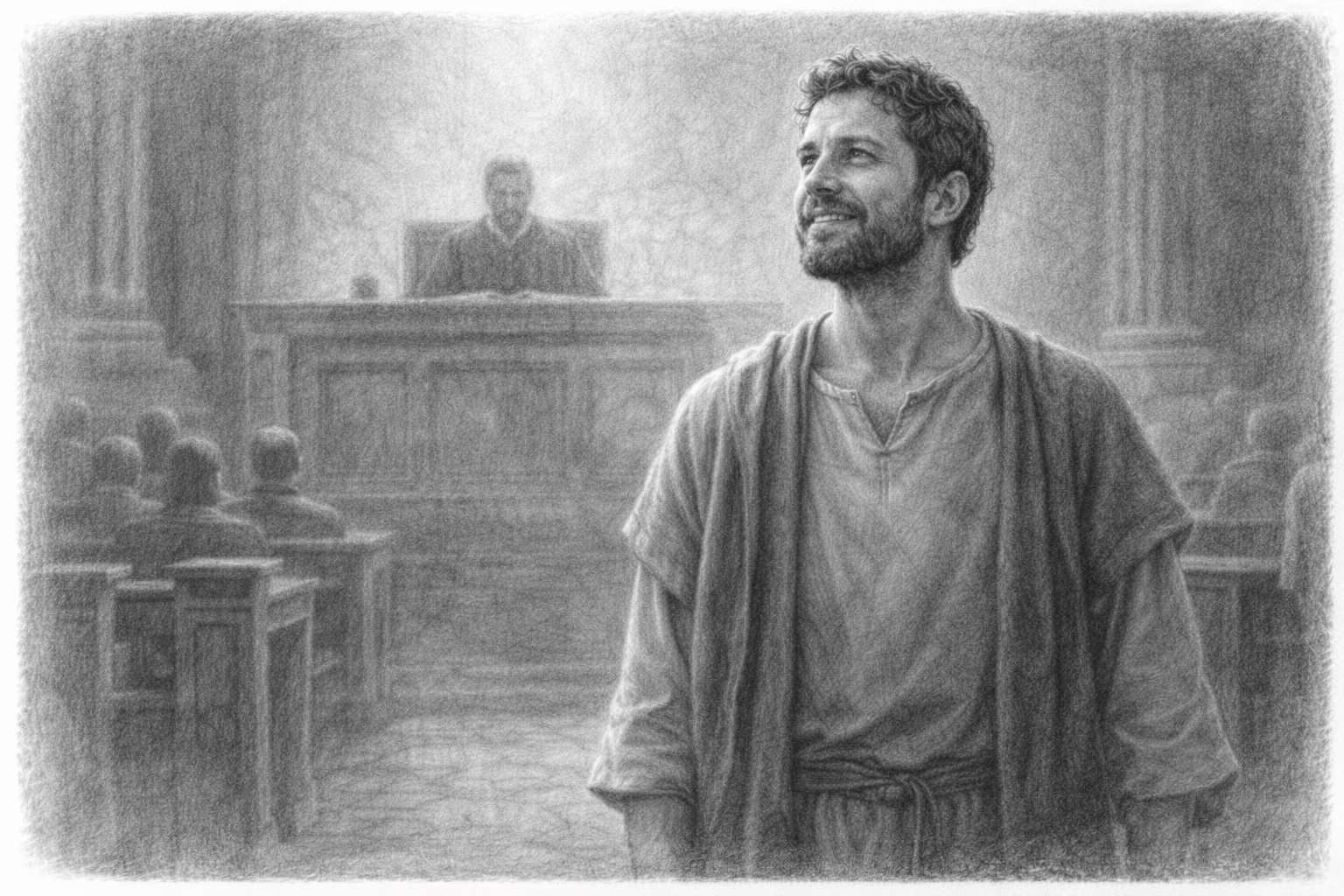
2 Timothy 4:15–16
Of whom be thou ware also; for he hath greatly withstood our words.
At my first answer no man stood with me, but all men forsook me: I pray God that it may not be laid to their charge.
Paul warns Timothy about Alexander again. The man had fiercely opposed the message of the gospel, and Timothy needed to be aware of that danger. Ministry often includes moments like this. Not everyone will welcome the truth.
But then Paul reflects on something even more painful.
When he first stood to give his defense, no one stood with him.
No friends in the crowd.
No familiar voices beside him.
No one willing to risk being associated with a prisoner awaiting judgment.
“All men forsook me,” he says.
That is a lonely sentence.
Anyone who has ever gone through a difficult season knows something of that feeling. A moment when support you expected simply does not appear. When people who once walked beside you quietly step back.
Yet what Paul says next reveals the heart of a man shaped by grace.
“I pray God that it may not be laid to their charge.”
Instead of bitterness, there is mercy. Instead of resentment, there is prayer. Paul does not excuse what happened. He simply refuses to hold it against them.
It reminds me of what Jesus said in the Sermon on the Mount about loving your enemies and praying for those who mistreat you. That kind of response does not come naturally. It grows in a heart that has spent years walking with the Lord.
Think about it this way. When a tree has deep roots, a strong wind may bend the branches, but it does not uproot the tree. The roots hold.
Paul had deep roots in Christ. So even when others failed him, his heart did not turn bitter.
And that is a powerful witness.
Because the world expects anger when someone is abandoned. It expects retaliation when someone is wronged. But grace moves in a different direction. Grace remembers how much we ourselves have been forgiven.
Paul had received that mercy from the Lord.
So he extended it to others.