
Titus 1:4
To Titus, mine own son after the common faith: Grace, mercy, and peace, from God the Father and the Lord Jesus Christ our Saviour.
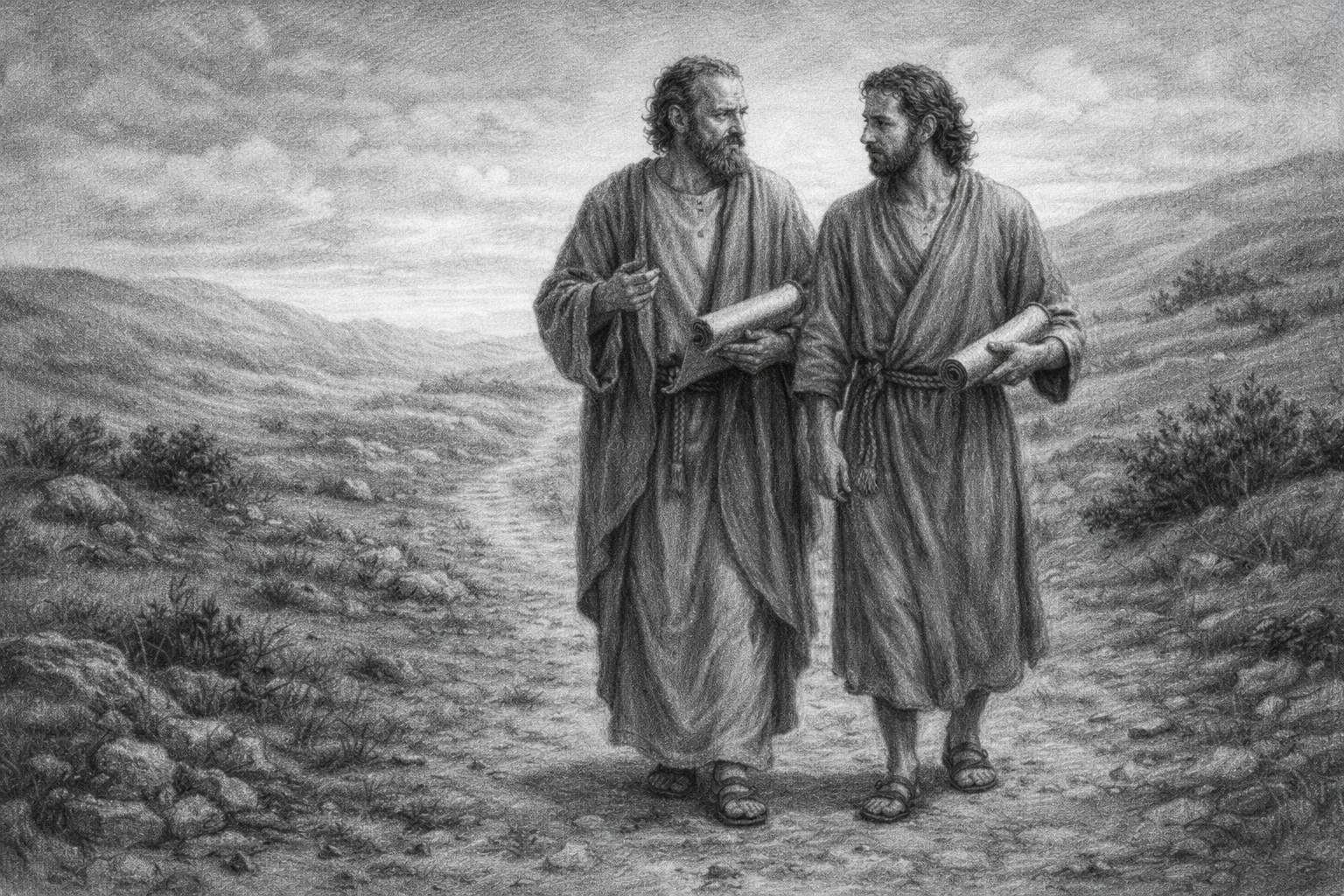
Paul begins this verse by addressing the man who would carry the weight of the work in Crete.
“Titus.”
We do not know as much about Titus as we do about Timothy, but the pieces of his life that appear in Scripture tell us a great deal about the kind of man he was. Like Timothy, Titus was most likely led to Christ through Paul’s ministry. Paul calls him “mine own son after the common faith,” which was the apostle’s way of speaking about someone he had personally brought to the Lord and then helped grow in the faith.
Titus shows up at several important moments in the early church.
In Galatians we learn that Titus traveled with Paul to Jerusalem during the council that settled the controversy about circumcision. Some were insisting that Gentile believers had to become Jews in order to be saved. But the apostles made it clear that salvation comes by grace through faith alone. Titus himself became a living example of that truth because he was a Greek who had come to Christ apart from the law.
Later we see him again in Corinth. That was not an easy place to minister. The church there struggled with division, immorality, pride, and confusion. Yet Titus was the man Paul trusted to help bring order and encourage the believers. He was also instrumental in organizing a collection from the Corinthian church to help suffering believers in Jerusalem.
Then Paul sent him to Crete.
Crete was another difficult assignment. The island had a reputation for rough living and moral chaos. Establishing healthy churches there would require patience, strength, and wisdom. But Paul knew Titus could handle it.
Later still, Titus was sent to Dalmatia, the region we know today as Bosnia. When you follow the path of his ministry, you see that Titus was constantly moving into challenging places where the work was hard and the problems were real.
It was not an easy life.
But Paul had confidence in him because Titus had proven himself faithful.
Paul then greets him with a familiar blessing: “Grace, mercy, and peace.”
Grace was the foundation of the Christian life. Peace was the result of knowing that we are reconciled to God. And in letters to Timothy and Titus, Paul adds one more word.
Mercy.
Anyone involved in ministry knows why that word belongs there. Leaders make mistakes. They grow tired. They sometimes misjudge situations or struggle under the weight of responsibility. Fathers know their sons need mercy, and Paul knew the same was true for the young men he had sent into the work.
Finally, Paul says that these blessings come “from God the Father and the Lord Jesus Christ our Saviour.”
One detail often raises a quiet question. The Holy Spirit is not mentioned here. Yet the reason is simple. Jesus explained it in John 16 when He said that the Spirit would not speak of Himself but would testify of Christ.
The ministry of the Holy Spirit is to point people to Jesus.
Wherever the Spirit is truly at work, attention does not settle on the Spirit. Instead hearts are drawn toward Christ. The spotlight moves in one direction.
Toward Jesus.