
Philemon 1:7–9
For we have great joy and consolation in thy love, because the bowels of the saints are refreshed by thee, brother.
Wherefore, though I might be much bold in Christ to enjoin thee that which is convenient,
Yet for love’s sake I rather beseech thee, being such an one as Paul the aged, and now also a prisoner of Jesus Christ.
Paul begins this section by telling Philemon something encouraging.
“We have great joy and consolation in thy love.”
Paul had been hearing reports about Philemon’s life, and those reports brought him deep encouragement. The believers around Philemon were being strengthened by him. Paul says, “the bowels of the saints are refreshed.”
In Greek thought, the bowels were considered the seat of emotion—the place where compassion, affection, and deep feeling lived. So what Paul is saying is this: Philemon’s love had reached people at the deepest level of their hearts.
People felt refreshed around him.
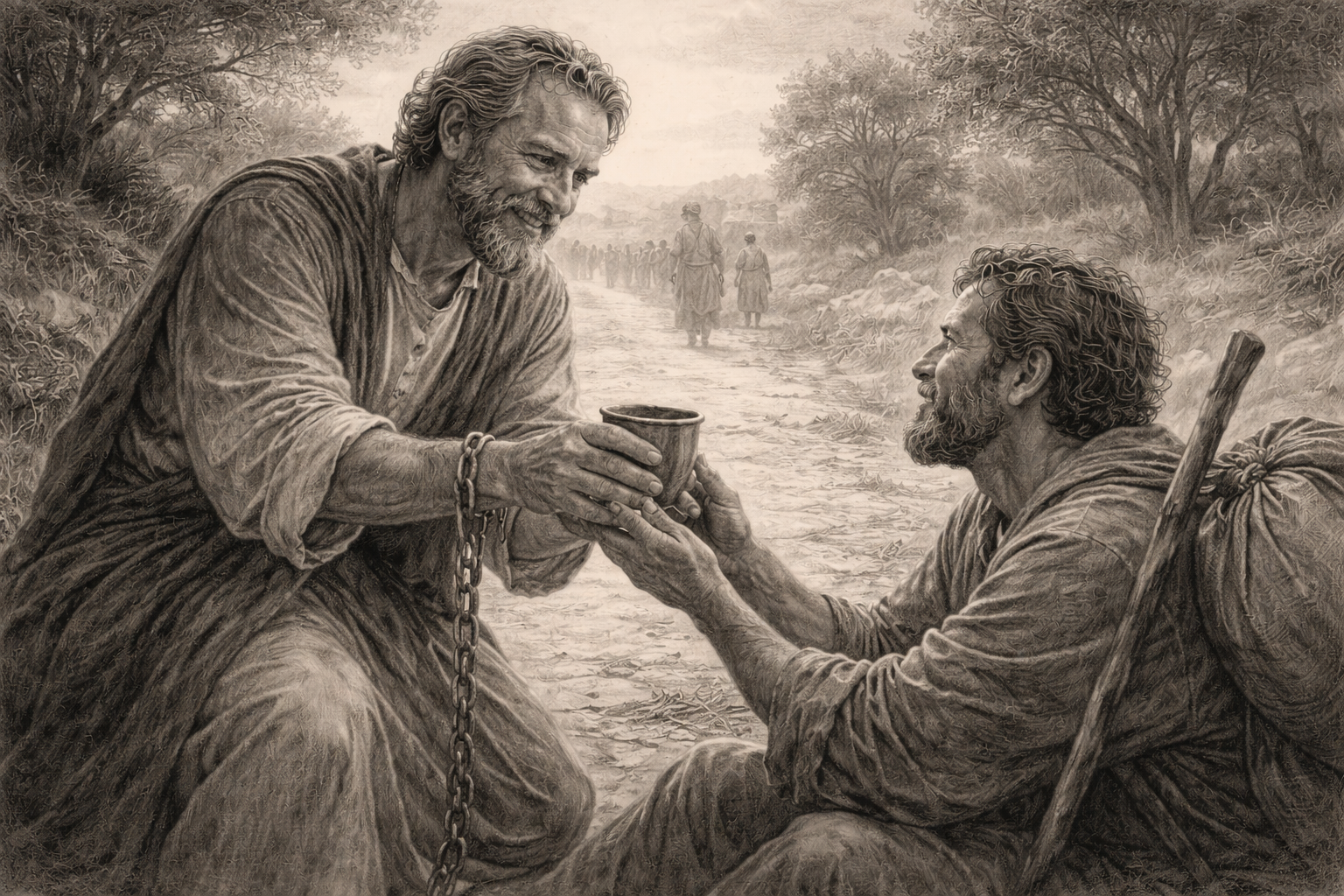
Think about how a cool drink feels on a hot afternoon.
When the sun has been beating down and the air feels heavy, a glass of cold water can revive you instantly. Your strength returns. Your mind clears. Your body relaxes.
That is what Philemon was like to the people around him.
His love refreshed them.
And Paul wanted him to know that.
Then Paul shifts gears.
“Wherefore…”
That word signals a turn. After affirming Philemon’s character, Paul begins explaining the reason for his letter.
And this is where the beauty of Paul’s approach shows up.
He says, “Though I might be much bold in Christ to enjoin thee…”
In other words, Paul could have simply commanded Philemon. As an apostle, he had the authority to say, “This is what you must do.”
But Paul chooses a different path.
“Yet for love’s sake I rather beseech thee.”
Instead of commanding, he appeals.
Instead of demanding, he asks.
And notice how he describes himself.
“Paul the aged… and now also a prisoner of Jesus Christ.”
There is humility in those words. Paul is not leaning on authority. He is leaning on relationship.
He is saying, in effect, “Philemon, because of love—because of the bond we share in Christ—I’m asking you to consider something.”
And that is often the most powerful kind of leadership.
A command can force obedience.
But love invites the heart to respond freely.
And Paul knew that what he was about to ask would require exactly that kind of response.