
Hebrews 1:5–6
For unto which of the angels said he at any time, Thou art my Son, this day have I begotten thee? And again, I will be to him a Father, and he shall be to me a Son?
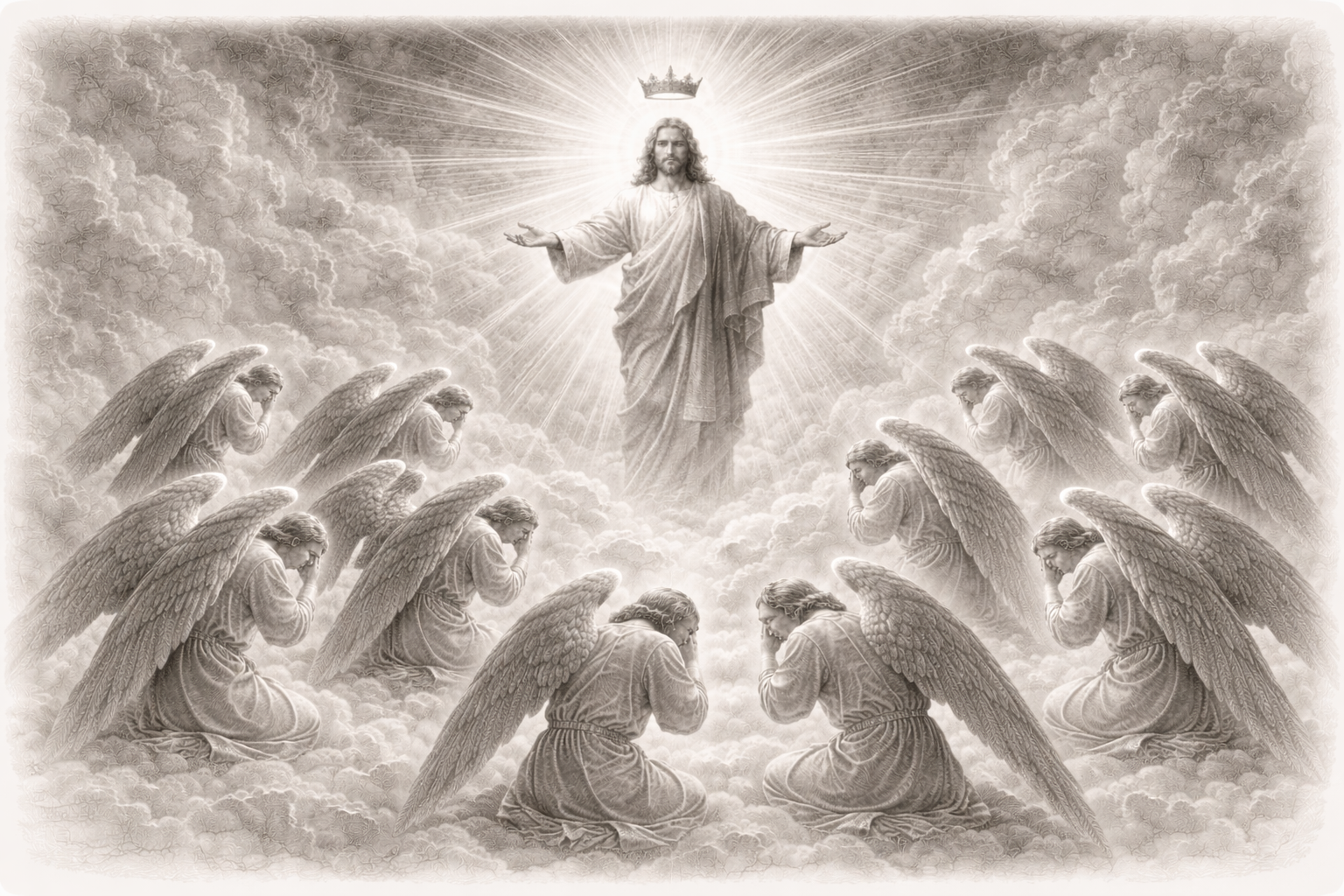
And again, when he bringeth in the firstbegotten into the world, he saith, And let all the angels of God worship him.
The writer of Hebrews continues building his case by asking a question that answers itself.
To which angel did God ever say, “Thou art my Son”?
The answer is obvious.
He never said that to any angel.
Angels are remarkable beings. Scripture shows them as powerful servants who carry out the will of God, deliver messages, and minister to His people. Yet no matter how glorious they appear, they remain servants.
Jesus is not a servant.
He is the Son.
This distinction matters, especially because some groups point to the phrase “this day have I begotten thee” and try to argue that Jesus must therefore have had a beginning. They say that if He was begotten, then He must have been created.
But that is not how the Bible always uses the language of “firstborn” or “begotten.”
A good example appears in Jeremiah 31:9, where God refers to Ephraim as the firstborn of Joseph. Yet when you read the story in Genesis, you find that Ephraim was not Joseph’s firstborn son. Manasseh was born first.
So why does Scripture call Ephraim the firstborn?
Because in the Bible the term often refers not simply to who came first chronologically, but to who holds the place of honor and authority. Ephraim received the greater blessing and the higher position.
That is the idea here.
When Hebrews calls Jesus the firstbegotten, it is not suggesting that He was created. It is declaring His supreme rank. He stands in the place of highest honor.
The next line makes that unmistakable.
When the Son is brought into the world, God gives a command that leaves no room for confusion:
“Let all the angels of God worship him.”
Angels never receive worship. In fact, whenever someone tries to worship an angel in Scripture, the angel immediately refuses and directs that worship to God alone.
Yet here the angels are commanded to do the very thing they refuse to accept themselves.
They are told to worship Jesus.
And angels only worship one being.
God.
That is the point Hebrews is making. Jesus is not another heavenly creature. He is not an exalted angel or a powerful messenger.
He is the Son who stands infinitely above them all.
And the angels themselves acknowledge it every time they bow before Him.