
Hebrews 8:8, 9
For finding fault with them, he saith, Behold, the days come, saith the Lord, when I will make a new covenant with the house of Israel and with the house of Judah:
Not according to the covenant that I made with their fathers in the day when I took them by the hand to lead them out of the land of Egypt; because they continued not in my covenant, and I regarded them not, saith the Lord.
Here the writer of Hebrews reaches back to Jeremiah 31 and brings forward one of the clearest promises in all of Scripture: God Himself said a New Covenant was coming.
That alone says a great deal.
If the first covenant had been the final answer, there would be no promise of another one. But God, speaking through Jeremiah and echoed again in Ezekiel, said the days were coming when He would make a new covenant, not according to the one given when He led Israel out of Egypt.
That old covenant was real. It was holy. It came from God. But it was not the final cure for the human heart.
Why? Because the problem was never merely that people needed clearer rules. The problem was that people could not keep them.
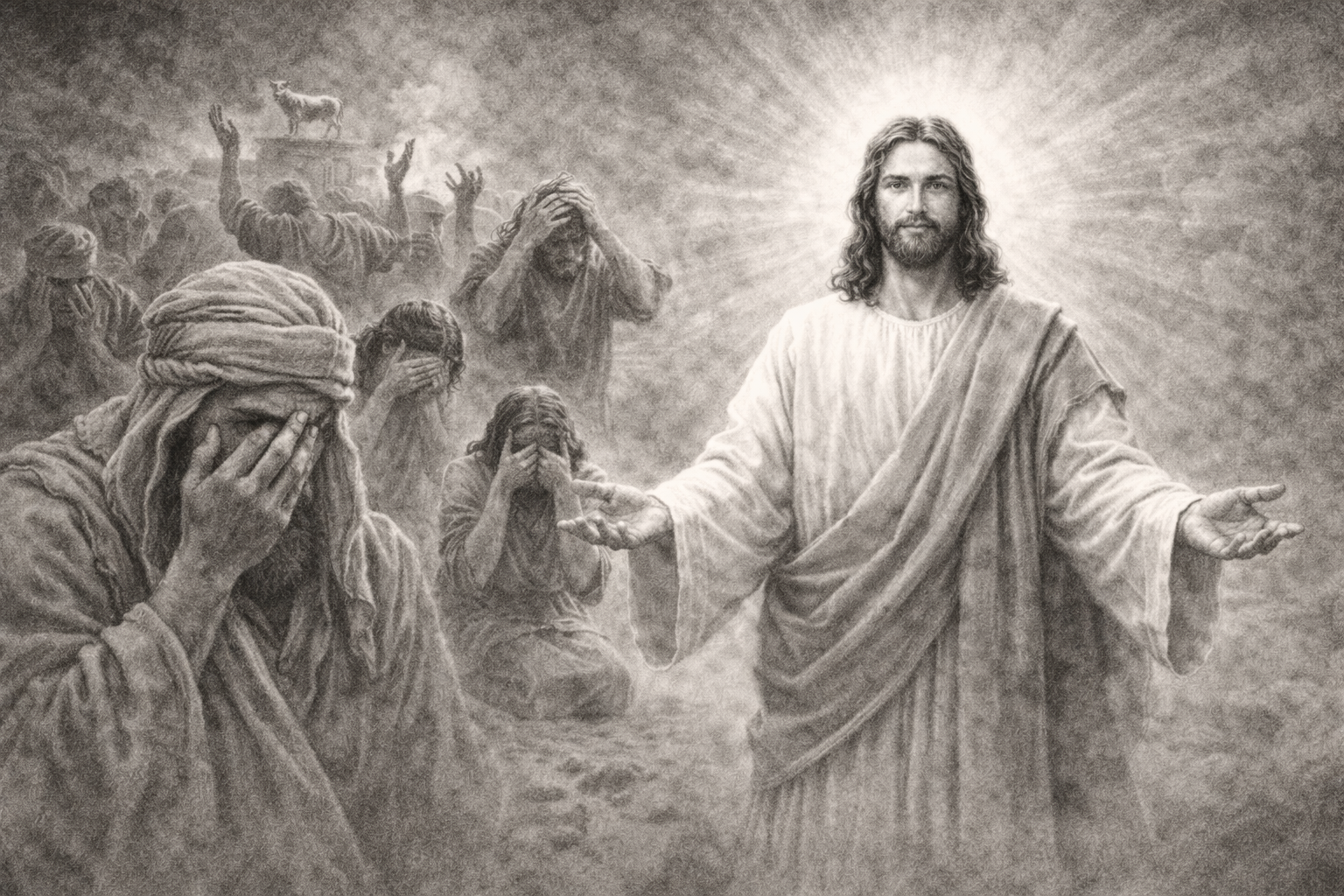
The old covenant essentially said, Do this and live. That sounds simple enough until you realize who is being spoken to. Fallen people. Weak people. Wandering people. People like Israel. People like us. The law was good, but the human heart was not. So the covenant kept running into the same wall over and over again: man’s inability.
Don’t miss this: the fault was not that God’s standard was too high. The fault was in us.
That is what the verse says so plainly: “finding fault with them.” Not finding fault with His holiness. Not finding fault with His ways. Finding fault with them. They did not continue in His covenant. They could not hold up their end. The very thing that was supposed to mark them as faithful exposed how unable they really were.
It is like handing a drowning man a list of swimming instructions. The instructions may be perfectly correct, but they do not solve his immediate problem. What he needs is not better wording. He needs rescue. In the same way, the law told the truth, but it could not rescue the sinner from the power of sin within.
That is why the New Covenant is such good news.
God did not look at man’s failure and say, “Try harder next time.” He said, in effect, “I will do something new.” Not new in the sense of changing His character, but new in the sense of establishing a different basis for relationship. The old covenant rested on man’s obedience. The new covenant rests on God’s action through Christ.
And that changes everything.
Because if my standing before God depends ultimately on my flawless performance, I am finished before I begin. But if it depends on what Jesus has done, then there is hope for people like us, people who mean well and fail, people who promise and break, people who know the right thing and still stumble.
The old covenant can command righteousness, but it cannot create it in me. The new covenant, through Christ, does what law alone never could. It reaches deeper than behavior. It goes to the heart.
Here’s the thing: God knew from the start that stone tablets could expose sin, but only grace could transform a soul. That is why Hebrews brings us here. It wants us to stop looking at ourselves as though we will somehow become strong enough to keep the whole thing together, and start looking to Christ, who brings in the covenant we could never produce for ourselves.
So if you are tired of failing under the weight of your own promises, this text is for you. God already knew the old path of “do this and live” would only prove how weak we are. That is why He promised something better.
Not according to the first.
Not resting on your record.
Not hanging on your consistency.
But resting on Christ.