
Hebrews 8:5
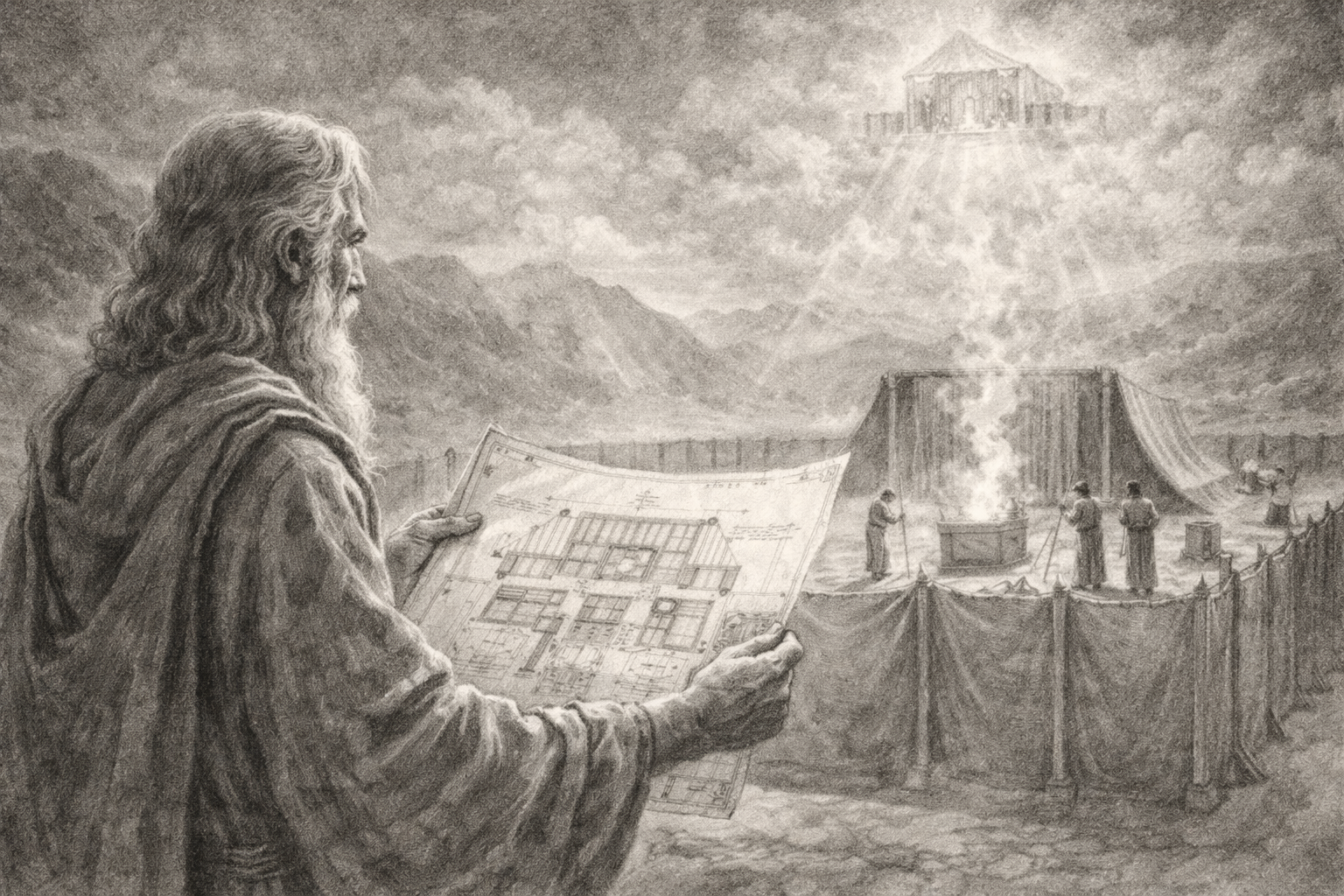
Who serve unto the example and shadow of heavenly things, as Moses was admonished of God when he was about to make the tabernacle: for, See, saith he, that thou make all things according to the pattern shewed to thee in the mount.
The tabernacle in the wilderness was never meant to be the final reality. It was a shadow. It was an example. It was a copy pointing beyond itself to something greater, something heavenly, something true.
That is why God told Moses to build it carefully.
This was not the kind of project where Moses could say, “I get the general idea. I’ll just make a few adjustments here and there.” No. The details mattered because the whole structure was preaching a message. Every board, every curtain, every vessel, every arrangement was saying something about heaven’s reality and about God’s way of bringing man near to Himself.
You need to see this: when God gives a pattern, it is never meaningless.
Moses may not have understood every implication of what he was building, but he still had to obey precisely. Why? Because the tabernacle was a shadow of heavenly things. A shadow only makes sense if it matches the object casting it. If the shape is altered, the picture is distorted. And if the picture is distorted, people start misunderstanding the reality behind it.
That still speaks loudly to us.
There are times when we want to improve on what God has said. We want to soften a command, reshape a truth, update a pattern, or trim away a detail that seems inconvenient. But when God gives the pattern, our place is not to redesign it. Our place is to receive it. The reason is simple: His pattern comes from a reality higher than what we can see.
Think about a blueprint. A man walking by a construction site might look at the steel beams and pipes and wonder why they are set the way they are. It can seem strange from ground level. But the architect is working from a design the passerby cannot see. In the same way, Moses was building from heaven’s blueprint. What seemed like details in the wilderness were actually testimonies of eternal truth.
And that is what the old covenant keeps doing. It points beyond itself. The tabernacle was real, but it was not ultimate. It was a shadow cast forward from something better. The sacrifices, the priesthood, the furnishings, the holy place, the veil, all of it was whispering, “There is more. There is something greater. There is a true tabernacle.”
That true tabernacle is not on earth. It is in heaven. And the One who ministers there is not Aaron, not Levi, not any earthly priest, but Jesus Christ.
Here’s the thing: shadows are useful, but you do not live in the shadow once the substance has come. If you see the shadow of a friend coming around the corner, that shadow is exciting because it tells you he is near. But once he steps into view, you do not keep staring at the pavement. You lift your eyes to the person himself.
That is exactly what Hebrews is doing for us. It is lifting our eyes from the shadow to the substance, from the copy to the reality, from the earthly tabernacle to Christ.
So yes, the pattern mattered then. And the reality matters even more now.
God was careful with the shadow because He was preparing the world for His Son. Every precise detail in the wilderness was part of a larger testimony saying, “When the true Priest comes, when the true sacrifice is offered, when the true sanctuary is opened, you will know this is what it all meant.”
And now we do.