
Hebrews 11:23
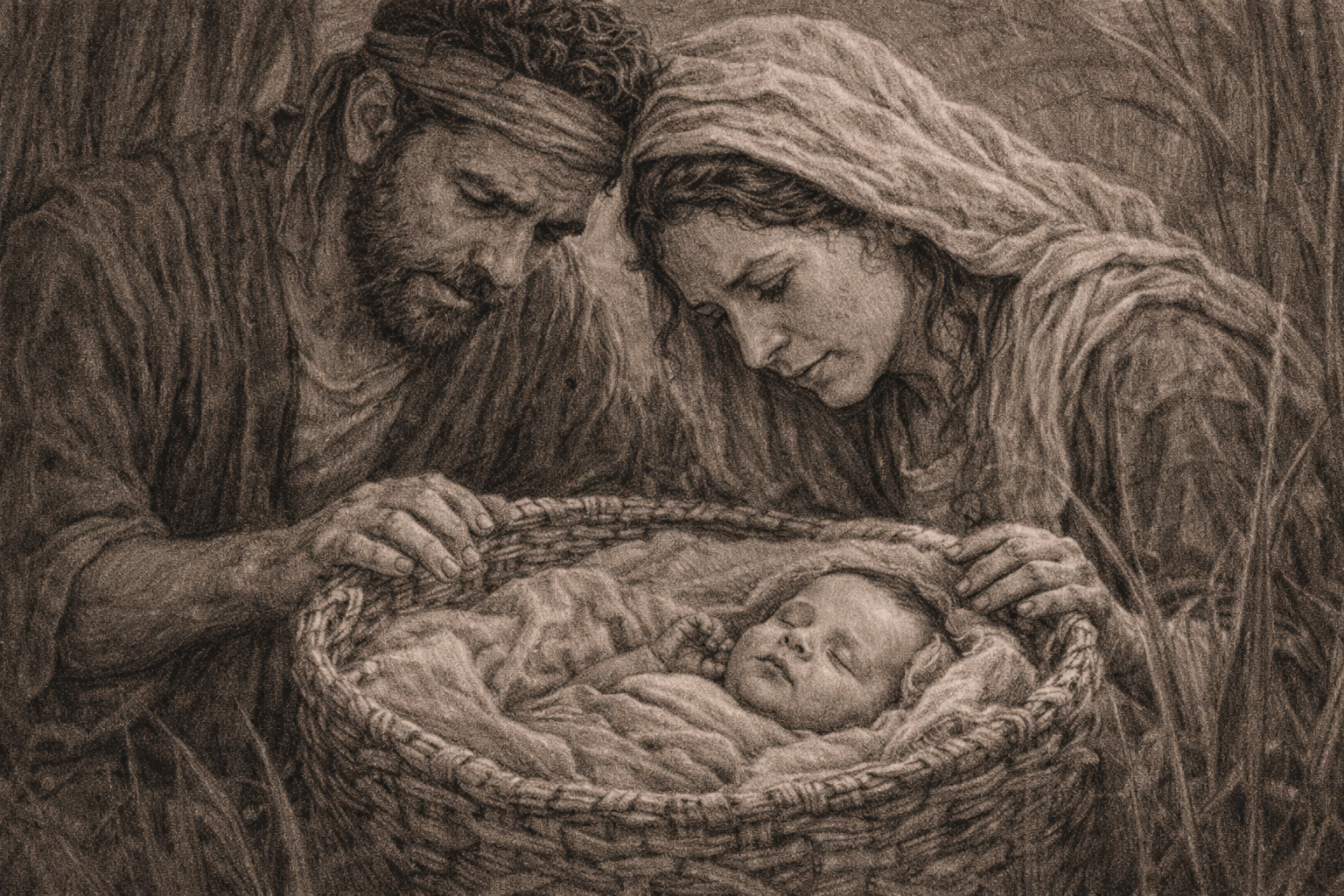
By faith Moses, when he was born, was hid three months of his parents, because they saw he was a proper child; and they were not afraid of the king’s commandment.
Before Moses ever stretched out a rod, before he ever stood before Pharaoh, before he ever led anyone through the sea, he was first seen through the eyes of faith by his parents.
That is where this verse begins.
A helpless baby. A cruel decree. A dangerous world. Every visible circumstance said this child was in trouble. Every practical calculation said fear should rule the house. But Amram and Jochebed looked at that little boy and saw more than the threat hanging over him. By faith, they saw that this child mattered in the purpose of God.
That is a beautiful thing.
Because faith does not only help a person see what God can do in his own life. Sometimes faith first shows up in how you look at someone else. In this case, it was a mother and father looking at their son and refusing to define him by the darkness around him. They saw that he was a proper child. Not merely handsome in a natural sense, but marked out in some way by God’s hand.
Think about that. Two people can look at the same seed in the dirt. One sees only mud. The other sees a tree that is not there yet. That is the difference faith makes. Faith sees beyond the present form. It does not deny the dirt. It simply believes God is able to bring forth more than what is visible now.
That matters deeply for parents.
If a mom or dad looks at a child and only sees trouble, limitation, weakness, disappointment, or failure, that vision has a way of settling over the whole home like low clouds. Children may not be able to explain it, but they often feel how they are being seen. If they are always treated as the difficult one, the disappointing one, the one who probably will not become much, that can sink into the soul and weigh heavily on the heart.
But here, Moses’ parents saw him differently.
Here’s the thing. Faith is the substance of things hoped for, the evidence of things not yet seen. So biblical parenting has to include more than reacting to what is obvious in the moment. It has to include asking, “Lord, what might You do with this child? What grace might be hidden here? What future might be tucked inside this little life?”
That does not mean pretending there are no struggles. It does not mean ignoring discipline or refusing to face reality. It means refusing to let present immaturity become the final word. It means saying, “I will not define this child only by what he is struggling with right now. I will hold room in my heart for what God may yet do.”
I like that. Because Moses himself gave very little visible evidence at birth of what he would become. He was just a baby under threat. Yet his parents’ faith moved them to courageous action. They hid him. Protected him. Refused to bow to the king’s commandment. Their vision of his significance gave them boldness.
And that is often how it works. When you begin to believe God may have His hand on a child, you start praying differently. Speaking differently. Enduring differently. Hoping differently. You go to greater lengths because faith sees more than the current chapter.
So maybe that is the word here for mothers and fathers, grandparents too: ask God to help you see your children with faith. Not with denial. Not with fantasy. But with faith. See beyond the awkward stage, the hard season, the immaturity, the rough edges. See beyond the fear that says, “This is all they’ll ever be.”
Because the child in front of you may be carrying a future you cannot yet imagine.