
Hebrews 12:5–6
And ye have forgotten the exhortation which speaketh unto you as unto children, My son, despise not thou the chastening of the Lord, nor faint when thou art rebuked of him:
For whom the Lord loveth he chasteneth, and scourgeth every son whom he receiveth.
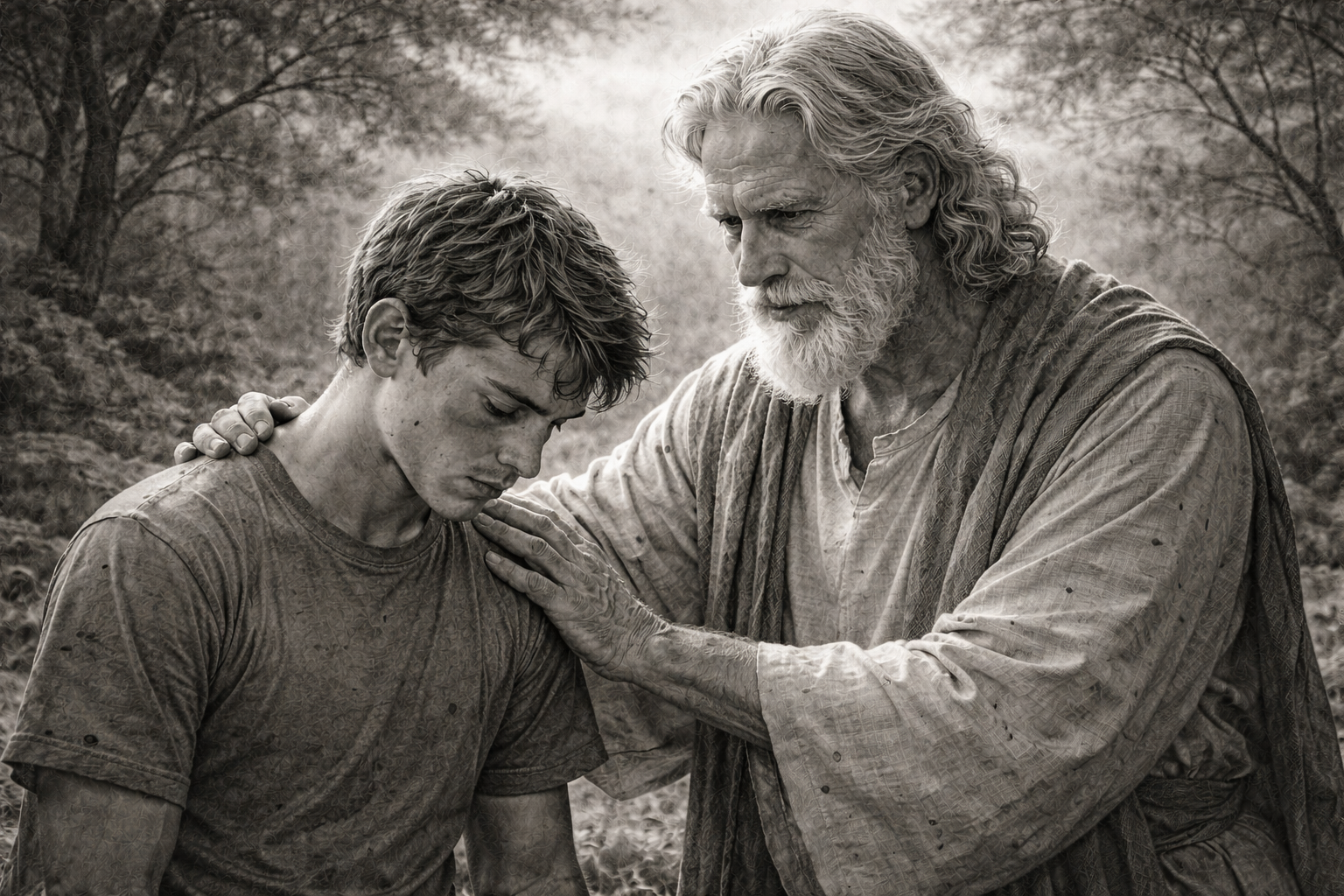
After speaking about running a race, the writer now shifts pictures. Suddenly we’re not on a track—we’re in a family. God is not pictured as a coach now, but as a Father.
And the point is simple: a good father corrects his children.
Sometimes the best coaches act the same way. They get right in the face of their athletes. They correct them sharply. But it’s not because they hate them. It’s because they want them to succeed and finish the race well.
That’s the idea here.
The writer says we shouldn’t respond to the Lord’s discipline in two wrong ways. Some people despise it. They brush it off and refuse to learn. Others faint under it. They assume God must be against them.
But the passage says the opposite.
Whom the Lord loves, He chastens.
Discipline is not proof you’re rejected. It’s proof you belong.
Hebrews 12:7–9
If ye endure chastening, God dealeth with you as with sons; for what son is he whom the father chasteneth not?
Furthermore we have had fathers of our flesh which corrected us, and we gave them reverence: shall we not much rather be in subjection unto the Father of spirits, and live?
Still, people often ask a fair question.
“If God forgives our sins completely, why is there still discipline?”
Two things help answer that.
First, God’s chastening is corrective, not punitive.
When Jesus went into the temple in John 2 and drove out the moneychangers, He wasn’t trying to destroy the temple. He was cleansing it. He was clearing out what didn’t belong.
And Scripture says we are the temple of the Holy Spirit. So when the Lord overturns something in our lives—an attitude, a habit, a compromise—He’s not punishing us. He’s clearing the temple.
Second, sin carries its own consequences.
Scripture says, “Be sure your sin will find you out,” and “whatever a man sows, that shall he also reap.” That means sin plants seeds that grow into repercussions.
Cain murdered Abel and spent the rest of his life wandering.
Abraham’s lie eventually brought family turmoil through Hagar.
David was forgiven for his sin with Bathsheba, yet tragedy rippled through his household.
Sin is forgiven—but it still leaves scars.
But even scars are not wasted.
After the resurrection, Jesus still bore the marks of the cross. When Thomas doubted, Jesus showed him those wounds—and Thomas believed.
That’s what God can do with our scars too. The very wounds left behind by sin can become the place where someone else finds faith.
So when the Lord corrects you, don’t despise it and don’t collapse under it. A Father corrects the children He loves.
And the same grace that forgives our sin can even redeem the scars it leaves behind.