
Hebrews 12:25
See that ye refuse not him that speaketh. For if they escaped not who refused him that spake on earth, much more shall not we escape, if we turn away from him that speaketh from heaven.
The warning here is simple and direct: do not refuse the voice of God.
At Sinai, when God spoke from the mountain, the people trembled. Even then, ignoring His voice carried consequences. But now the writer says something even more serious. If refusing the voice that spoke on earth brought judgment, how much more serious is it to ignore the One who now speaks from heaven?
God still speaks. The question is whether we will listen.
Hebrews 12:26–27
Whose voice then shook the earth: but now he hath promised, saying, Yet once more I shake not the earth only, but also heaven.
And this word, Yet once more, signifieth the removing of those things that are shaken, as of things that are made, that those things which cannot be shaken may remain.
When God spoke at Sinai, the mountain shook. But the writer says another shaking is coming—one that reaches beyond the earth itself.
Why would God shake things like that?
To remove what cannot last.
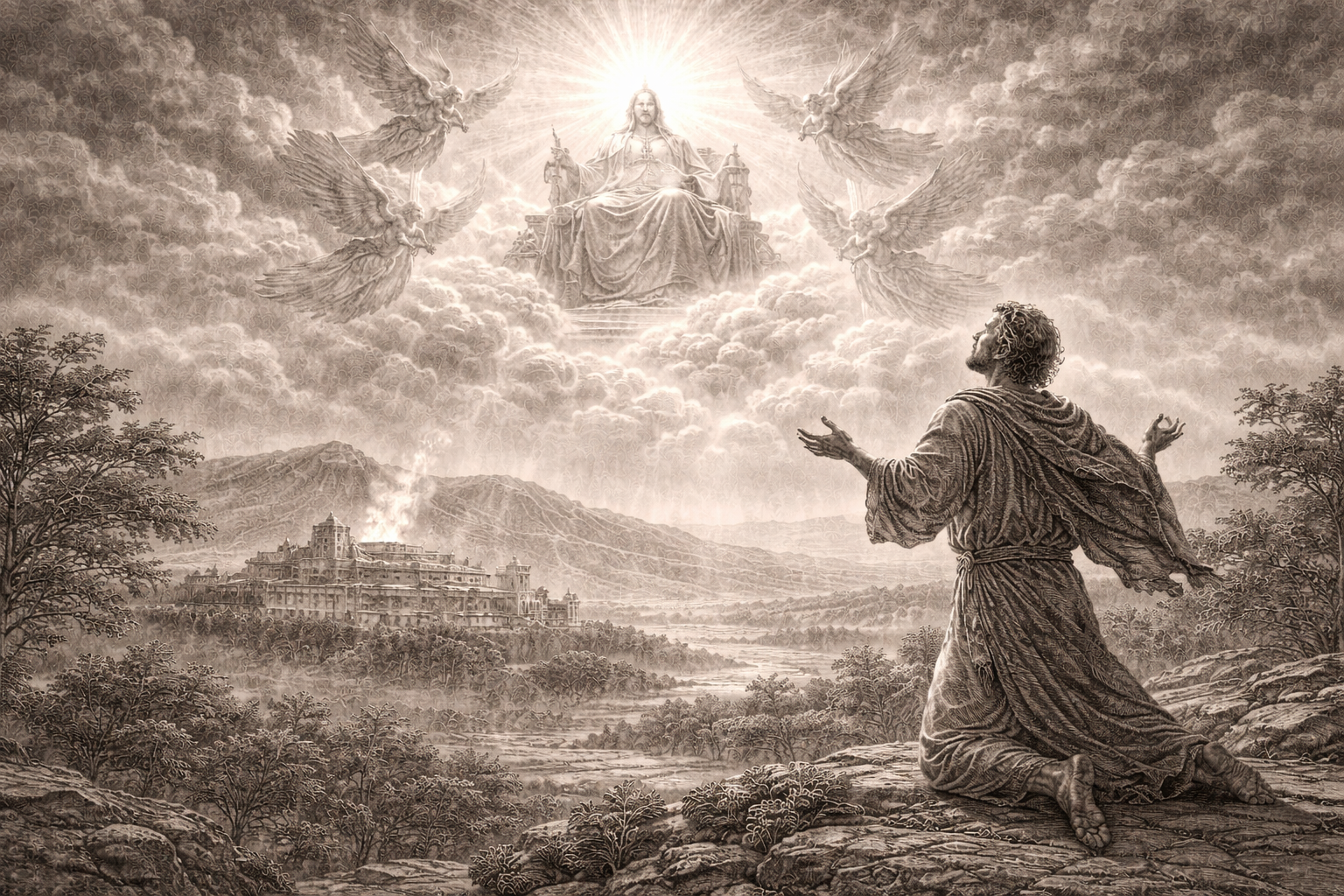
Think about the story Isaiah told. He said, “In the year that King Uzziah died, I saw the Lord.” Uzziah had been a powerful and successful king. Under his rule the nation prospered. The borders were strong. Wealth flowed through the land. People felt secure.
But sometimes the very things that make us feel secure become the things we quietly start trusting more than God.
Uzziah was a good king. But he was not God.
And when Uzziah died, the shaking of that moment forced Isaiah to look up—and when he did, he saw the Lord.
That is often how God works in our lives too.
We all have our own “Uzziahs.” They might be good things: a job, a relationship, a position, a system of security, a sense of control. None of them are necessarily bad. In fact, many of them are blessings.
But if we begin leaning on them instead of leaning on God, they become dangerous.
So sometimes the Lord shakes our world.
Not because He hates us—but because He loves us too much to let us build our lives on things that will eventually collapse. He removes what can be shaken so that what cannot be shaken remains.
The goal is not destruction.
The goal is clarity.
When the shaking settles, we discover something that was there all along: God Himself is the only foundation that cannot move.
And when our lives are built on Him, we are no longer depending on things that can disappear tomorrow.
We are standing on something eternal.