
James 2:14–26
What doth it profit, my brethren, though a man say he hath faith, and have not works? can faith save him? If a brother or sister be naked, and destitute of daily food, And one of you say unto them, Depart in peace, be ye warmed and filled; notwithstanding ye give them not those things which are needful to the body; what doth it profit? Even so faith, if it hath not works, is dead, being alone. Yea, a man may say, Thou hast faith, and I have works: shew me thy faith without thy works, and I will shew thee my faith by my works. Thou believest that there is one God; thou doest well: the devils also believe, and tremble. But wilt thou know, O vain man, that faith without works is dead? Was not Abraham our father justified by works, when he had offered Isaac his son upon the altar? Seest thou how faith wrought with his works, and by works was faith made perfect? And the scripture was fulfilled which saith, Abraham believed God, and it was imputed unto him for righteousness: and he was called the Friend of God. Ye see then how that by works a man is justified, and not by faith only. Likewise also was not Rahab the harlot justified by works, when she had received the messengers, and had sent them out another way? For as the body without the spirit is dead, so faith without works is dead also.
James is not fighting Paul.
He is fighting empty talk.
That matters, because people sometimes read this passage and think James is saying a man is saved by works, while Paul says a man is saved by faith. But that is not the conflict at all. Paul is dealing with the man who says, “I can earn righteousness.” James is dealing with the man who says, “I have faith,” while his life never moves an inch.
Paul is saying works cannot produce salvation.
James is saying salvation, if real, will produce works.
Those are not enemies. They fit together perfectly.
Here’s the thing. James is not asking whether works save. He is asking whether a claimed faith that never acts, never obeys, never loves, never moves, is really faith at all. If a brother or sister is cold and hungry, and all I offer is a religious slogan with no help, what kind of faith is that? It may sound spiritual for a moment, but James says it is dead.
Dead faith can talk.
Dead faith can nod.
Dead faith can agree with doctrine.
Dead faith can even sound orthodox.
James says demons believe there is one God. They are not atheists. They are not confused about monotheism. They know exactly who God is, and they tremble. But their belief does not lead to loving obedience. So mere mental agreement is not saving faith.
That is a needed warning.
Because some people think Christianity is mainly agreeing with the right statements. They believe the right facts, use the right words, and assume that is enough. James says no. Real faith does not just sit there. It breathes. It moves. It obeys. It works.
And then he brings in Abraham.
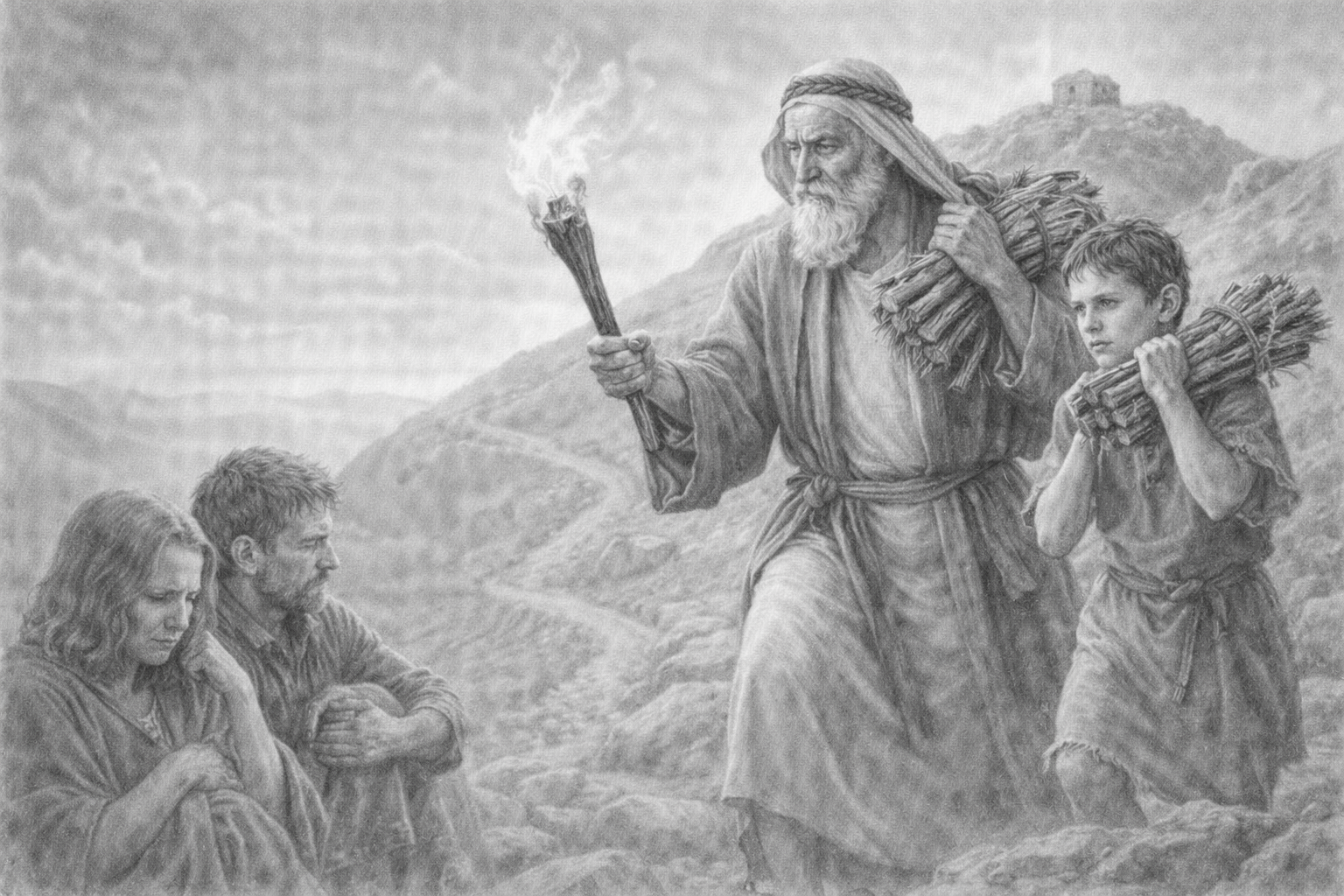
That is so important, because Abraham was not made righteous on Mount Moriah when he offered Isaac. He was declared righteous years earlier, when he simply believed God. James quotes Genesis 15:6 to make that clear. Abraham believed God, and it was counted to him for righteousness. Paul says the same thing in Romans 4. So James is not changing the basis of salvation. He is showing what real faith looked like later on.
Mount Moriah did not create Abraham’s faith.
It revealed it.
That is the point.
All Abraham was doing when he took Isaac up the mountain was showing the reality of what had already happened in his heart years before. His works did not replace faith. His works completed it, brought it into view, put skin on it. Faith was there first, and obedience proved it was alive.
Rahab is the same way. Her hiding of the messengers did not earn her salvation like a wage. It demonstrated that she truly believed the God of Israel was the true God. Her actions made visible what her heart had already embraced.
It is a little like fire. You cannot always see heat directly, but if there is real fire, sooner or later something will glow, flicker, or burn. If nothing ever changes, nothing ever moves, nothing ever warms, you have every reason to ask whether there was fire there in the first place. James says faith is like that. True faith has evidence.
So it is not faith and works that save a man.
It is not faith or works.
It is faith that works.
I like that.
Because it keeps grace clear and still leaves no room for empty profession. We are not saved by obedience. But obedience proves our faith is real. We are not saved because we do good works. But if God has truly touched a life, good works will start showing up, however imperfectly, because living faith always leaves footprints.
That is why James ends with that striking line: “As the body without the spirit is dead, so faith without works is dead also.” A body may still have shape, features, and form, but if there is no spirit in it, it is a corpse. James says some people’s faith is like that. It has vocabulary, shape, and religious appearance, but no life.
So the question this passage asks is not, “Have I ever said I believe?”
The question is, “Is my faith alive enough to obey?”
Not perfectly.
Not sinlessly.
But actually.
Do you find yourself moving toward obedience?
Do you find yourself responding to the Word?
Do you find yourself following the Lord even when you do not fully understand?
That is the evidence of life.
True faith gets up and walks.