
1 Peter 4:17
For the time is come that judgment must begin at the house of God: and if it first begin at us, what shall the end be of them that obey not the gospel of God?
Peter says judgment begins at the house of God, and that can sound unsettling until you follow his thought. He is not saying believers are under the wrath of God in the sense of condemnation, because the judgment our sin deserved was already poured out on Jesus Christ. That was settled at the Cross.
So what is Peter seeing?
He is recognizing that the people of God do not get a free pass around hardship. In fact, the pressure often reaches them first. The church feels the fire. The church gets tested. The church gets shaken. And Peter, writing from Rome, can already sense that darker days are unfolding.
But his point is not despair.
It is perspective.
You need to see this: if life is hard even for those who know Christ, what must it be like to go through life without Him?
That is Peter’s question. If the people who have access to mercy, hope, prayer, grace, and the presence of Jesus still go through deep waters, what will the end be for those who refuse the gospel? If life in a fallen world is already painful, how terrible will it be to face suffering without the Shepherd, trouble without hope, and eternity without Christ?
That is a sobering thought.
Because sometimes Christians start feeling singled out. We think, Why is this so hard? Why so much pressure? Why so much conflict? But Peter is saying, in effect, life is hard. That is the reality of a broken world. You are not being uniquely targeted in the sense that pain is only your story. Pain is everywhere. Trouble is everywhere. The whole world groans under it.
The difference is not that Christians have no problems.
The difference is that Christians know where to go with them.
That changes everything.
A believer can cast his care on Christ.
A believer can pray.
A believer can cry out and be heard.
A believer can suffer and still have hope.
A believer can walk through hard days with the Problem-Solver beside him.
The unbelieving world does not have that anchor.
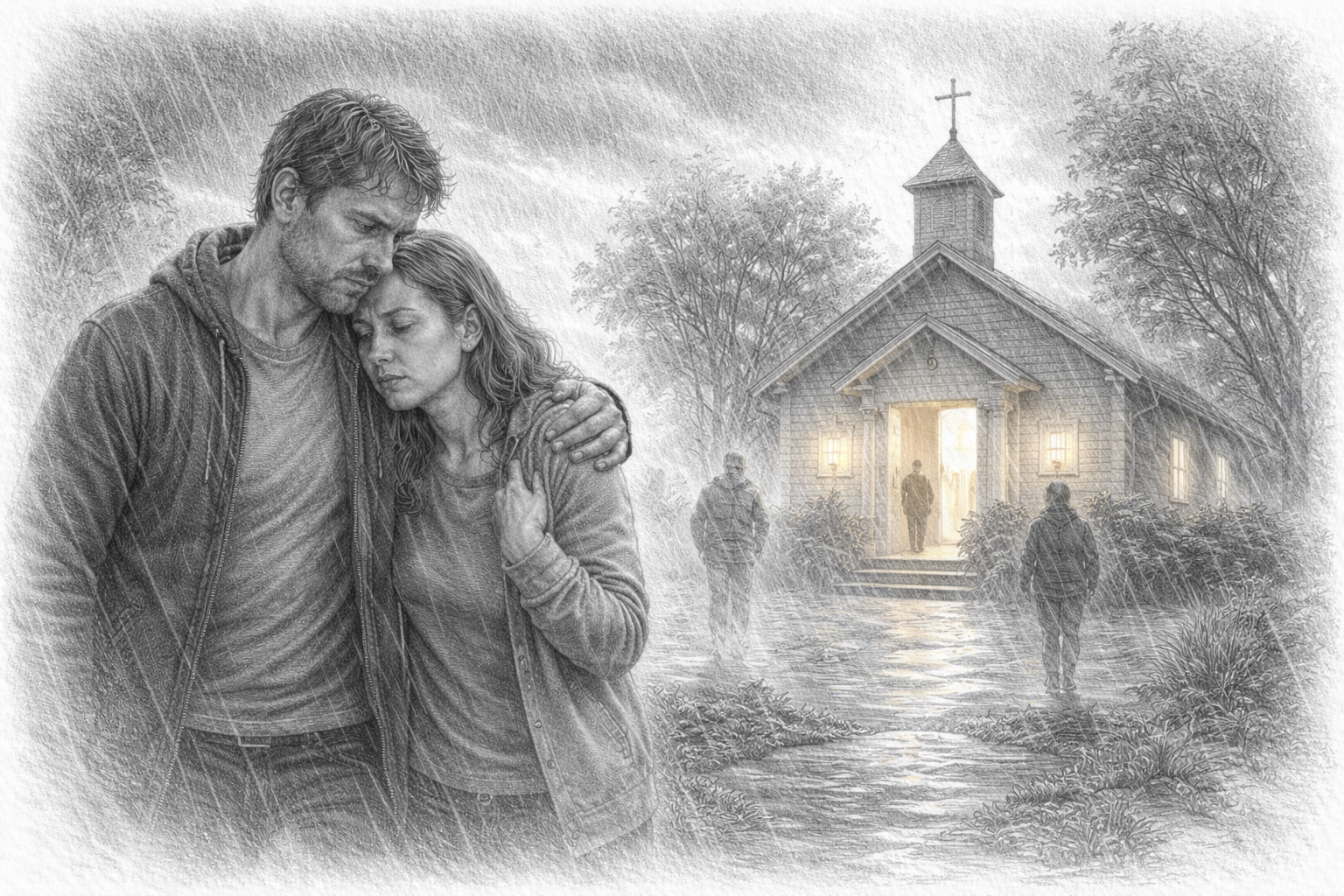
It is a little like two people walking through the same storm. Both get drenched. Both feel the wind. Both struggle to see. But one of them knows there is a house just ahead with light in the window, warmth inside, and someone waiting at the door. The other just keeps wandering in the dark. The storm is hard for both. But it is much harder for the one with nowhere to go.
That is Peter’s point.
Don’t miss this: the hardship of the Christian life is real, but it is never hopeless.
We have Christ.
We have His promises.
We have His Spirit.
We have His ear.
We have His peace in the middle of the pressure.
And if that is true for us in the middle of present difficulty, then Peter’s question becomes even more urgent for those who reject the gospel. What will the end be for them? If life in this world is already heavy, how awful must it be to face both present darkness and final separation from God?
That should not make us smug.
It should make us compassionate.
It should move us to pray for people.
It should move us to speak of Christ.
It should move us to remember that though being a Christian is not easy, being without Christ is far worse.
Here’s the thing: life is hard for everyone. The real issue is not whether you will have trouble. The real issue is whether you will have Jesus in the trouble.
Peter wants believers to understand that suffering is not proof that something unusual has happened. It is life in a fallen world. But the church has a refuge the world does not know. We have One who carries care, steadies hearts, and meets us in the storm.
So yes, life is hard.
But for the believer, hardship is not the end of the story.
We have access to the Problem-Solver.
We have Someone to cast our care upon.
We have Christ.
And that makes all the difference.