
2 Peter 1:7
And to godliness brotherly kindness; and to brotherly kindness charity.
Peter now brings us near the summit of the staircase he has been building. He has talked about faith, virtue, knowledge, self control, patience, and godliness. Now he says that godliness must be joined to brotherly kindness.
That matters more than we might think.
A person can be serious about holiness and still become sharp around the edges. He can care about truth, stand for righteousness, and want to live cleanly before God, yet carry himself in a way that feels cold, narrow, or severe. Peter says brotherly kindness must be added so godliness does not turn harsh.
Truth should not make us hard.
Brotherly kindness means there is a warmth in the life of a believer. It means we are not merely correct. We are generous hearted. We are approachable. We are ready to extend grace, patience, and practical goodness to others.
That kind of spirit reflects Jesus.
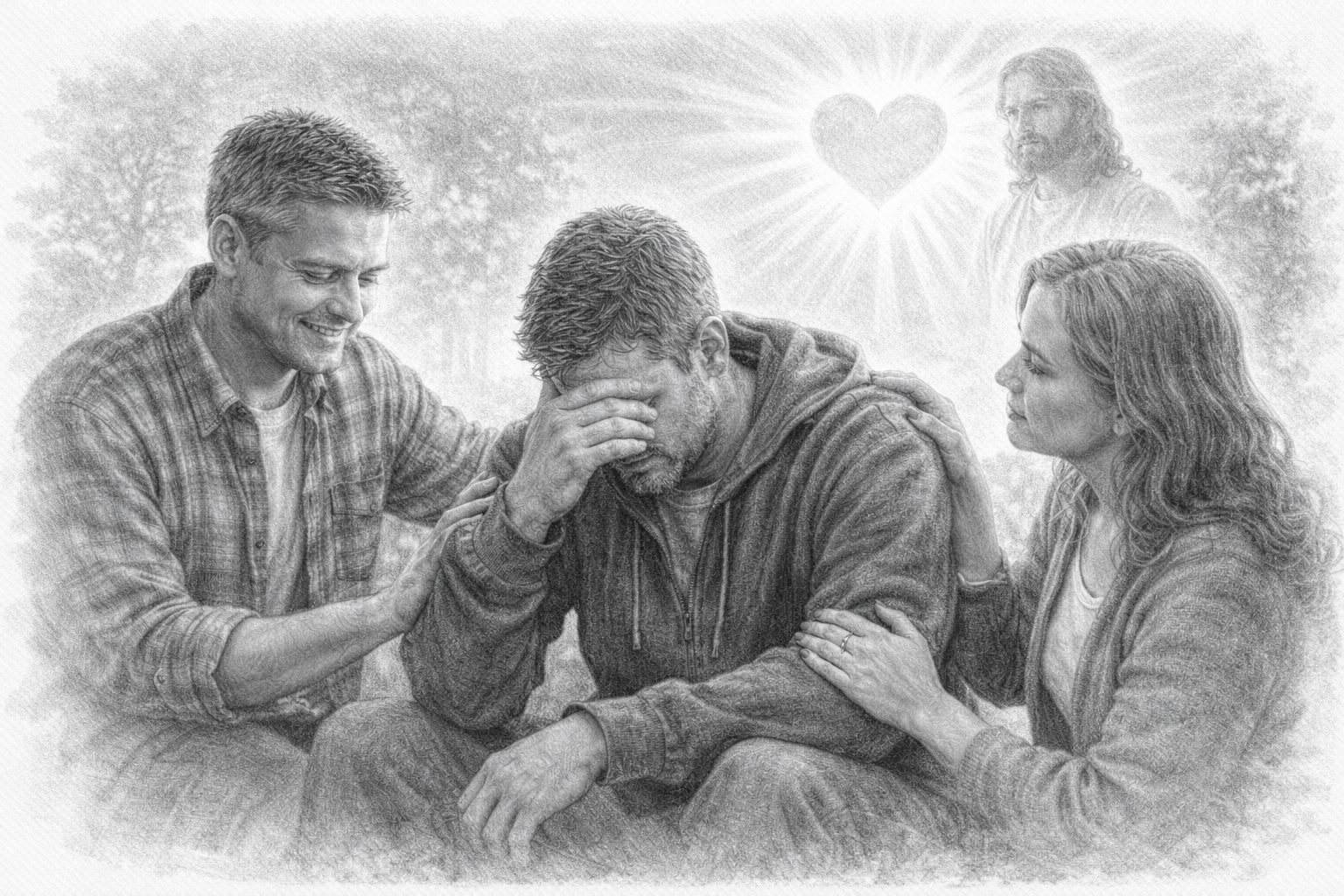
There is a simple scene that shows this well. A man walks into church late, embarrassed, disheveled, and clearly carrying a heavy week on his shoulders. One person notices the distraction he caused. Another notices the person himself.
Brotherly kindness moves toward the person.
That is the difference.
It looks for ways to be as gracious as possible to as many as possible. It does not lower truth. It simply remembers that people are not projects. They are souls.
Then Peter adds one more word.
Charity.
This is agape love, the highest kind of love, the kind that does not merely respond to what is lovable but gives because that is its nature. Brotherly kindness is precious, but charity rises even higher. It is not only affection among believers. It is the love of God working through the believer.
That is why Peter places it at the top.
John says love is the evidence that we have passed from death unto life. That means love is not an optional ornament hanging off the Christian life. It is proof that life is really there. A person may know doctrine, defend truth, and even live with discipline, but if love is absent, something essential is missing.
Love is the real evidence.
Brotherly kindness opens the door.
Charity fills the house.
Brotherly kindness says, “I want to treat people well.” Charity says, “I will lay myself down for them.” Brotherly kindness is tender and gracious. Charity is deeper still. It is willing to sacrifice, forgive, cover, and keep loving even when no reward comes back in return.
That kind of love does not come from personality.
It comes from God.
And that is exactly Peter’s point. Spiritual growth is not just about becoming cleaner, stronger, or wiser. It is about becoming more loving. The whole staircase leads here. Faith grows upward until it becomes a life marked by love.
That is the goal.
A godly person without kindness can wound people. A kind person without love can stay shallow. But when brotherly kindness and charity are present together, the life of Christ becomes visible in a beautiful way.
People feel helped.
People feel seen.
People feel the heart of Jesus.
So Peter ends this section where every believer must end if growth is real. Not merely with knowledge. Not merely with discipline. Not merely with uprightness.
But with love.
Because when love is present, the whole structure stands in the right spirit. And when love is absent, even the strongest looking life is missing its brightest evidence.