
1 Peter 4:12
Beloved, think it not strange concerning the fiery trial which is to try you, as though some strange thing happened unto you.
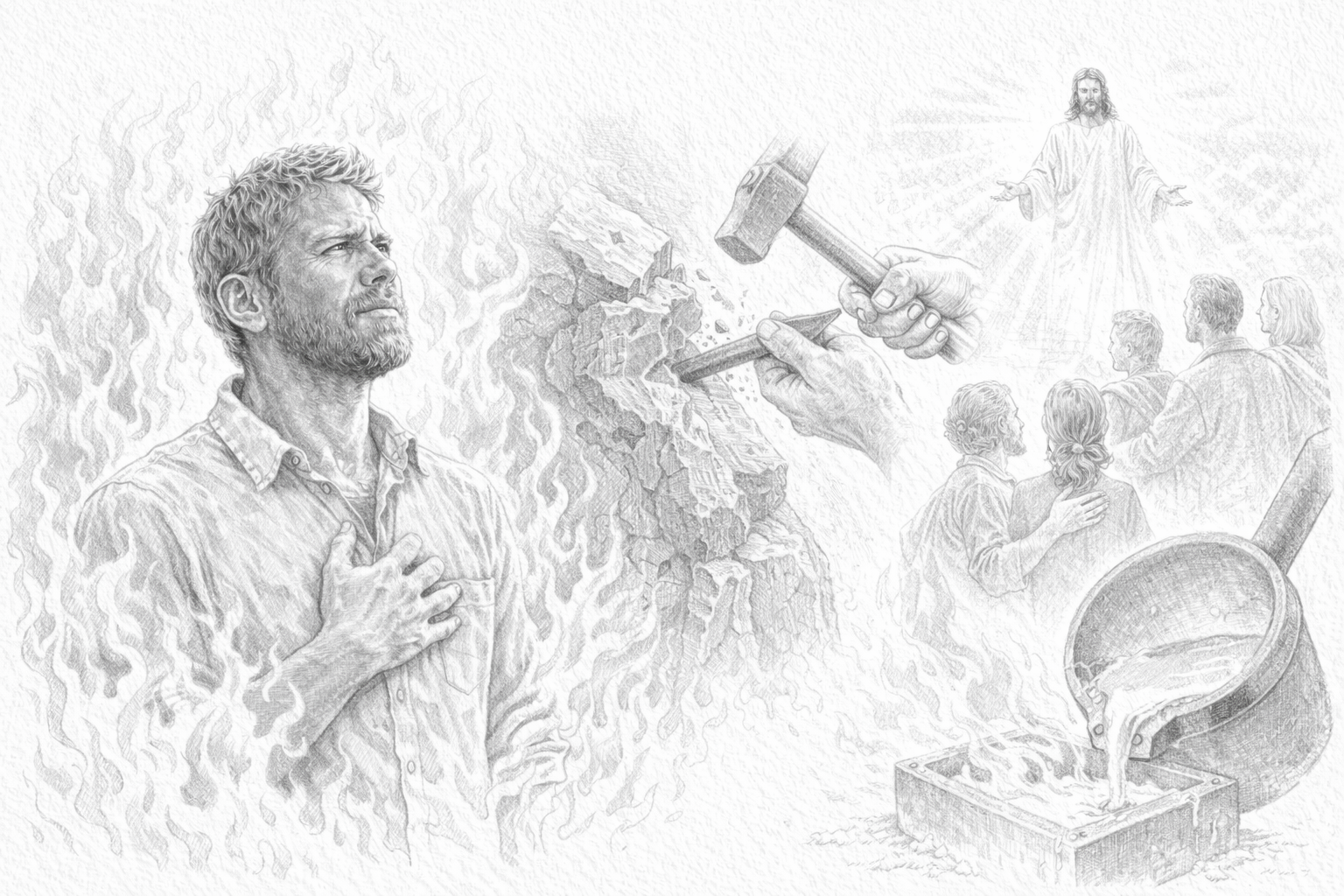
Peter says, do not think it strange when fiery trials come. Do not act as though something bizarre has happened, as though suffering is an interruption to the Christian life instead of part of the way God shapes His people.
That cuts across our instincts.
Because when hardship comes, the first cry of the heart is usually, “Why me?” Why this pain? Why this loss? Why this pressure? Why this disappointment? Why now?
But Peter gently turns that question around. In light of everything he has already said, maybe the better question is, “Why not?”
You need to see this: if suffering is one of the tools God uses to deepen us, wake us, cleanse us, steady us, and open us, then trial is not a strange detour. It is often part of the road.
Peter has already shown us what suffering can do. It can loosen sin’s grip. It can change how others see us. It can put us in the company of prophets, martyrs, and the godly. It can keep eternity in view. It can free us for ministry. If all of that is true, then hardship is not meaningless. It is not random fire. It is refining fire.
That is a big difference.
A house fire destroys.
A furnace refines.
From the outside, both are hot.
Both are painful.
Both involve flames.
But one consumes what is precious, while the other burns away what does not belong. Peter is saying that for the believer, fiery trial is not proof that God has lost hold of your life. It may actually be proof that He is doing something precise in it.
That does not mean we enjoy pain for its own sake. Scripture never asks us to pretend the fire does not hurt. Fire hurts. Loss hurts. Waiting hurts. Slander hurts. The breaking of dreams hurts. But Peter says do not treat it as alien, as though God has suddenly started writing in a language His people have never seen before.
This is part of how He works.
Don’t miss this: one of the enemy’s favorite lies in suffering is to make you feel singled out, as though your hardship means something has gone terribly wrong.
Peter says no. This is not strange. You are not forgotten. You are not being treated unusually. You are walking a road well known by the saints of God.
And when that settles in, it changes the spirit of the trial. Instead of only resisting it, we begin asking what it is producing. Instead of only demanding escape, we begin asking what God is burning away. Instead of only saying, “Get me out,” we begin saying, “Lord, do Your work.”
That is a hard prayer.
But it is a holy one.
It is a little like a sculptor striking stone. To the stone, every blow feels harsh. But the sculptor is not attacking the marble. He is revealing what he intends it to become. Trials can feel like that. We feel the blows and think only of the pain. God sees the shape He is forming.
Here’s the thing: growth rarely happens in comfort. Roots drive deeper in drought. Muscles strengthen under resistance. Gold is purified in fire. And souls often become clearer, softer, stronger, and more useful through suffering than they ever would have in ease.
So Peter says, beloved, do not think it strange.
Not because the fire is small.
Not because the tears are fake.
Not because the pain is pleasant.
But because God has long used fiery trials to form holy people.
So when the question rises, “Why me?”
Maybe the answer is, “Why not me, if this is one of the ways God grows His children?”
That does not make the trial easy.
But it does make it meaningful.
And that changes everything.