
2 Peter 3:8
But, beloved, be not ignorant of this one thing, that one day is with the Lord as a thousand years, and a thousand years as one day.
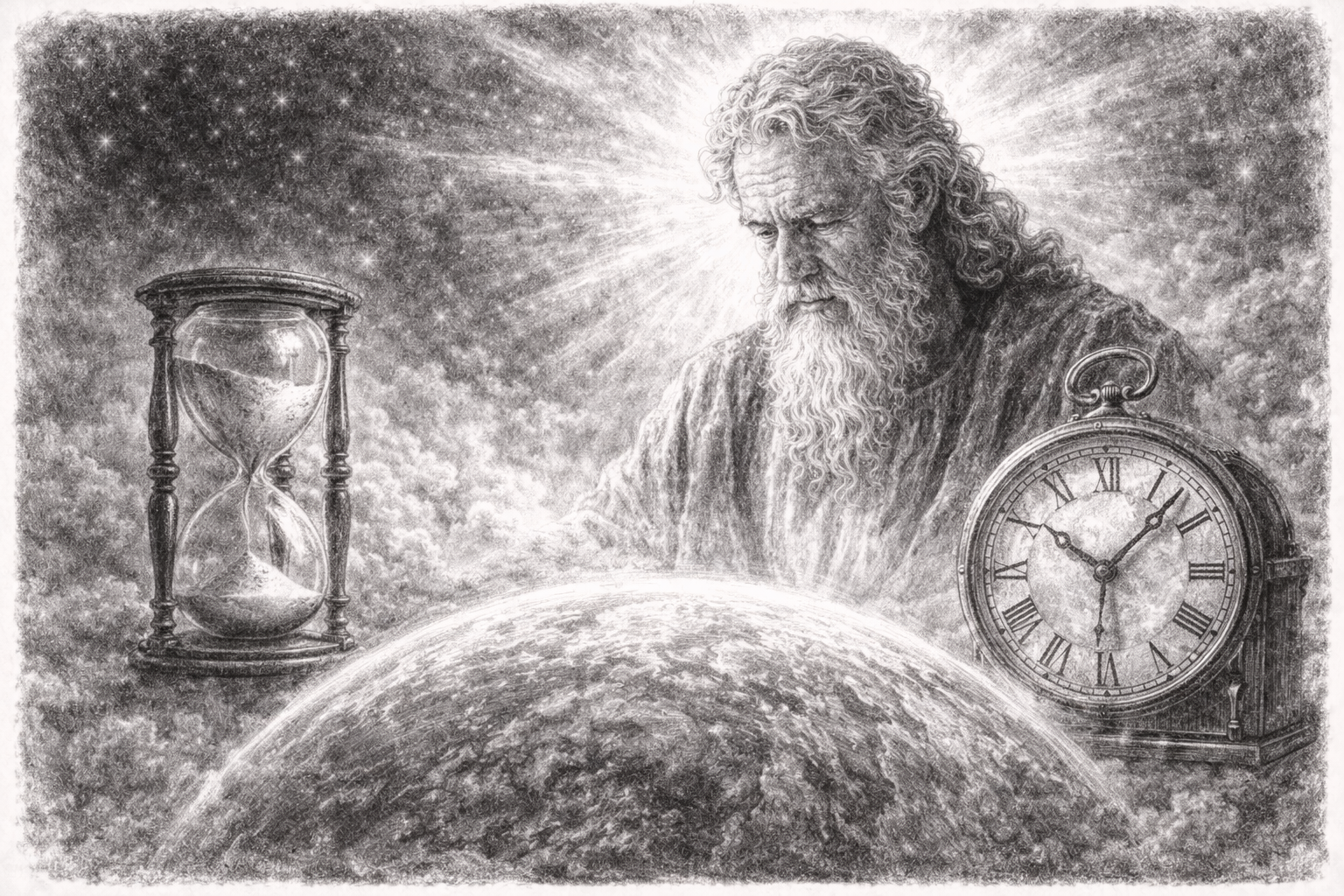
After speaking about the ridicule of scoffers, Peter now turns to the restraint of the Lord. Men say, “Why has He not come yet?” Peter answers by lifting our eyes above the clock entirely. God does not sit inside time the way we do. He is not hemmed in by minutes, anxious over delays, or surprised by the passing of centuries. One day is with the Lord as a thousand years, and a thousand years as one day.
That changes the whole conversation.
We tend to measure everything by our watches, our calendars, our deadlines, our shrinking patience. If something does not happen soon, we begin to assume it may not happen at all. If a prayer lingers unanswered, if a promise seems delayed, if the Lord does not move when we expected Him to, our hearts can grow restless. Peter says do not be ignorant of this one thing. God’s relationship to time is not like ours.
You recall how often that shows up in Scripture. Abraham waited. Joseph waited. Israel waited. David waited. The prophets waited. And in each case, what seemed long to man was not late with God. The Lord was never behind schedule. He was working on a scale larger than the people involved could see at the time.
That is still true.
A week can feel like forever when your heart is hurting. A year can feel endless when you are praying for a prodigal, carrying a burden, or wondering why the Lord has not yet intervened. But Peter reminds us that the seeming delay of God is not evidence of forgetfulness. It is evidence that He is above time, ruling over it rather than being ruled by it.
Consider that. What feels slow to us may be perfect timing to Him.
That applies not only to the return of Christ, but to the whole way we walk with God. We are always tempted to think in terms of now. Now deliver me. Now explain it. Now fix it. Now answer it. But the Lord sees the whole road at once. He sees the beginning and the ending. He sees what this present delay is producing. He sees what would happen if He answered too soon. He sees what mercy, wisdom, and glory are all requiring at once.
Peter is steadying the church here. The scoffers interpret delay as failure. The saints must not make the same mistake. The Lord is not slow the way men are slow. He is not careless the way men are careless. He is not forgetful the way men are forgetful. He transcends time completely.
And that means His delays are not empty.
They are full of purpose.
That is a needed word for us because disappointment has a way of shrinking our view of God. We start with hope, but if enough time passes, our thoughts can become small. Peter will not let that happen. He reminds us that the Lord inhabits eternity. What overwhelms us does not overwhelm Him. What feels stretched out to us is not stretched out to Him.
Beloved, when the promise seems delayed, do not judge the Lord by your watch. Judge Him by His character. He has never once been late. He has never once forgotten. And He has never once been trapped by time. The One who promised to come will come, and until then, every seeming delay is resting inside a wisdom far higher than ours.