
2 Peter 3:10
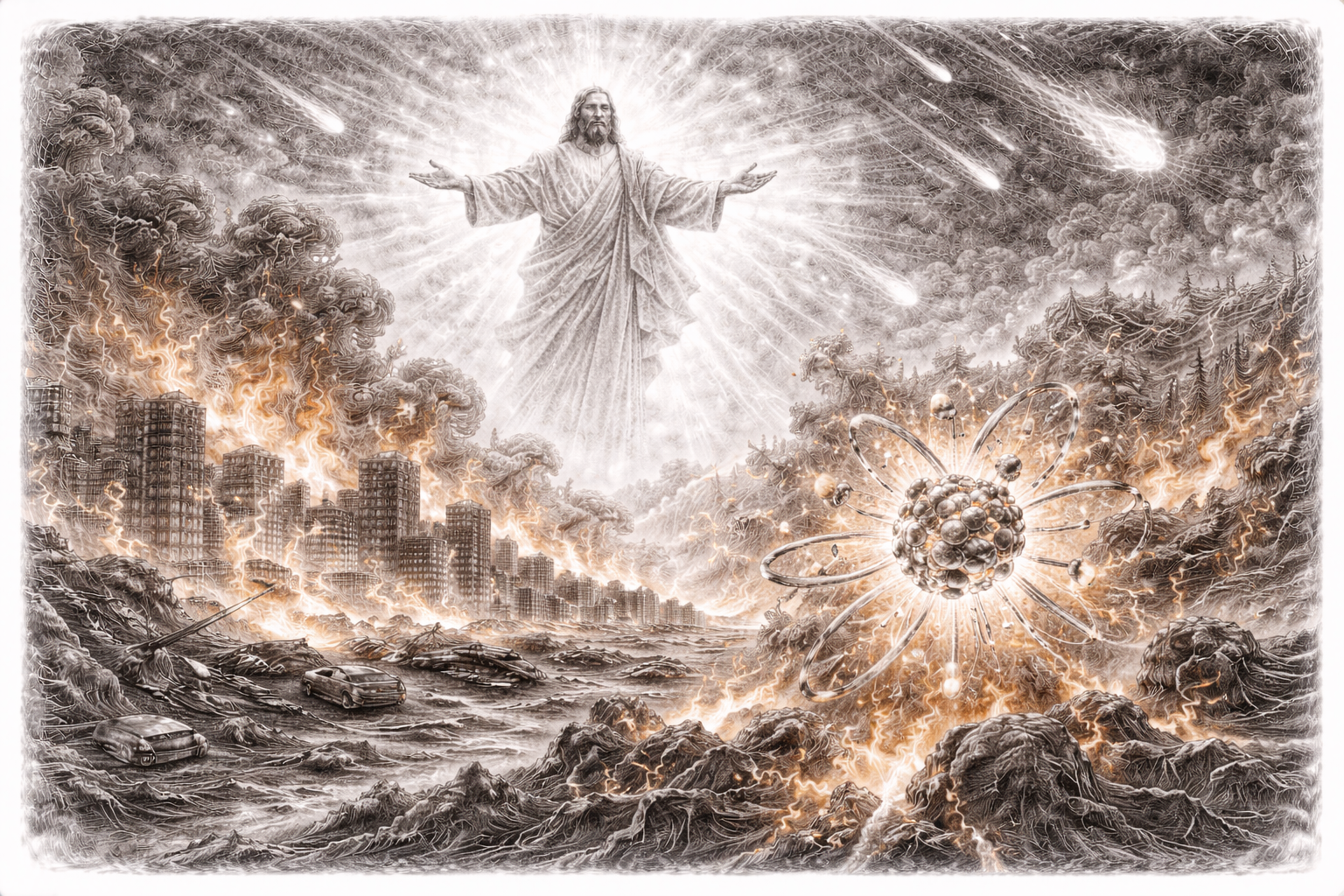
But the day of the Lord will come as a thief in the night; in the which the heavens shall pass away with a great noise, and the elements shall melt with fervent heat, the earth also and the works that are therein shall be burned up.
Peter turns now from the Lord’s delay to the Lord’s Day. He has been explaining why the Lord has not yet returned. Now he tells us what will happen when that day finally arrives.
And it will arrive.
For prophecy to make sense, you have to see the flow of God’s calendar. There is the Day of Man, when man was given stewardship of the earth and turned it into a sorrow soaked wreck. There is the Day of Christ, when Jesus gathers His bride to Himself. There is the Day of the Lord, when God intervenes directly in human history in judgment and rule. And beyond that is the Day of God, when the old polluted order is gone and all things are made new.
Peter says the Day of the Lord will come as a thief in the night. That does not mean the watching believer is meant to live in panic. It means the careless man will be caught off guard. The scoffer. The unbeliever. The one who keeps saying, “Nothing is ever going to change.” He will suddenly discover that everything can change in a moment.
I like the way the Jewish day begins in darkness and then moves toward dawn. The Day of the Lord starts in the darkness of tribulation and judgment, but it does not end there. It moves toward the brightness of Christ’s kingdom. So even in this warning, hope is already hiding in the passage.
Peter then says the heavens shall pass away with a great noise. The word carries the idea of a roar, a rushing, a fierce dissolving sound. Then he says the elements shall melt with fervent heat. For centuries people read that and thought, “Impossible. How could the building blocks of the world melt?”
But then history moved forward.
In the twentieth century, men began to discover the fearful energies hidden inside the created order. What once sounded absurd no longer sounded absurd at all. Suddenly people understood that the world is not nearly as fixed and unbreakable as they had imagined.
And even that is not the deepest point.
Colossians tells us all things were made by Christ and for Christ, and by Him all things consist. Hebrews says He upholds all things by the word of His power. In other words, the universe is not holding together by accident. It is being held together. Right now. This moment. By Jesus Christ Himself.
You need to see this. If all things hold together now, it is because He is holding them together.
That means Peter is pointing to something even greater than human warfare or atomic force. He is saying there will come a day when the Lord no longer sustains this present order as it now stands. The One who spoke it into being and who presently holds it together will one day say the word, and this fallen world system will come apart.
When He lets go, it all goes.
That is a staggering thought. The mountains men trust, the cities men boast in, the systems men build, the things people spend their whole lives chasing, none of them are ultimate. All of them are temporary. All of them are living on borrowed time under the sustaining hand of Christ.
So Peter is not trying to make us fascinated with destruction. He is trying to make us sober. If this world is going to pass away, then do not live as though it were your home. If the works of earth are going to be burned up, then do not pour your heart into things that cannot last. If Christ will one day fold up this present order, then anchor your life in what He calls eternal.
Beloved, the world looks solid until the Lord says otherwise. It looks permanent until the One who holds it together decides its time is done. So live with eternity in view. Hold loosely what men cling to so tightly. And rest in this: the same Christ who will one day bring this order to its end is the Christ who even now is holding all things together by the word of His power.