
1 John 1:8
If we say that we have no sin, we deceive ourselves, and the truth is not in us.
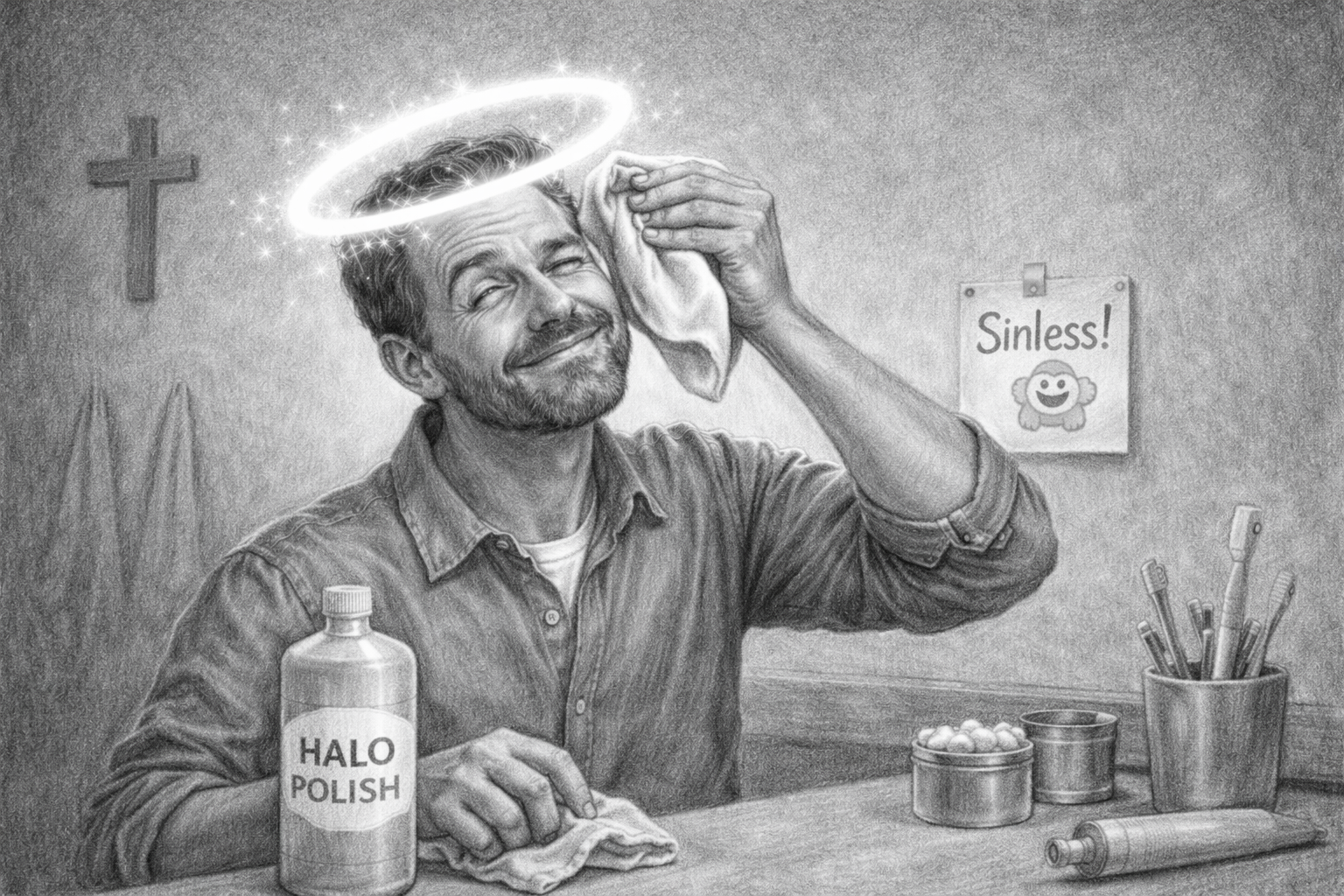
John is fearless here. He does not soften the edge of this verse, because the danger is too great. He says plainly that if we claim to have no sin, we are not merely mistaken. We are deceiving ourselves, and the truth is not in us.
That would have landed hard in his own day. There were those who tried to separate the spiritual life from the life actually being lived in the body. They said, in effect, “What I do outwardly does not touch who I really am inwardly.” John answers that kind of thinking with one stroke. If you say you have no sin, you are self deceived.
And that spirit is still around. It shows up whenever people say there are no absolutes, or whenever they insist that sin is only a social construct, or whenever they say, “I may make mistakes, but I am not a sinner.” John does not leave room for that. Any man, in any culture, at any time, who says he has no sin is not seeing himself clearly.
It is also important to say that this verse speaks to those who claim a kind of full or entire sanctification in which sin has been completely eradicated from the believer so that he no longer sins at all. I understand the desire behind that teaching. It comes from a hunger for holiness, and that hunger is right. We should want to be holy. We should long to be more like Jesus. We should hate sin and desire victory over it.
But when that desire turns into the claim that sin is no longer present in us, John says we have crossed a line into deception.
Do not miss the wisdom of Scripture here. The Bible absolutely teaches growth. It teaches victory. It teaches sanctification. It teaches that the Spirit of God changes us, disciplines us, convicts us, and makes us increasingly like Christ. Thank God for that. A believer should not be content with compromise. A believer should not make peace with carnality.
But the Bible does not teach that, in this present life, a Christian arrives at a place where he can honestly say, “I no longer sin.” In fact, the closer a man gets to the light, the more aware he becomes of how much grace he still needs. Maturity does not make a man boast that he has outgrown sin. Maturity makes him quicker to confess it.
Think about a window on a house. On a cloudy day it may look fairly clean. But let the morning sun hit it straight on, and suddenly every smear and streak shows up. The sunlight did not create the dirt. It revealed it. That is what happens when a man walks with God. The light does not make him sin more. It makes him see more clearly what was there all along.
That is why the holiest saints have usually been the most humble saints. They were not walking around announcing sinless perfection. They were talking about mercy, grace, and the blood of Jesus. The man who truly knows the Lord is not impressed with himself. He is impressed with Christ.
And there is something else here that matters pastorally. When a person claims to be beyond sin, he usually becomes hard on other people. Why? Because if I think I have arrived, I will look at your struggle with impatience instead of compassion. But if I know I still need grace every single day, I will deal more gently with the failures of others. That kind of honesty does not weaken holiness. It deepens it.
Beloved, the danger is not in admitting sin. The danger is in denying it. The danger is not in saying, “Lord, I failed again.” The danger is in saying, “I have reached a place where failure is no longer possible for me.” John says that is self deception. And self deception is especially dangerous because it can wear religious clothes and still be false.
So what do we do with this verse? We let it keep us honest. We let it knock down our spiritual posing. We let it drive us away from proud claims and back to simple truth. Yes, we are being sanctified. Yes, we are being changed. Yes, the Lord does give real victory. But until we see Him face to face, we will still need to confess, still need to repent, still need the cleansing of His blood.
That is not bad news. That is where the comfort lives.
Because the same Bible that says, “If we say that we have no sin, we deceive ourselves,” is about to say, “If we confess our sins, he is faithful and just to forgive us our sins, and to cleanse us from all unrighteousness.” The answer to sin is not denial. The answer is confession, cleansing, and walking in the light.
Saints, do not claim too much for yourself. Claim much for Jesus. Do not boast in your own sanctification as though you have graduated beyond the need for mercy. Boast in the Savior who keeps washing, keeps cleansing, keeps restoring, and keeps telling the truth about us so that He can make us whole.