
Jude 5
I will therefore put you in remembrance, though ye once knew this, how that the Lord, having saved the people out of the land of Egypt, afterward destroyed them that believed not.
Jude is beginning to press a truth he does not want us to miss. He says, in essence, “I know you have heard these things before, but I need to remind you.” And that is often how the Lord works with us. We are not always in need of something new. Many times, we simply need to remember what we already know.
And one of the great themes Jude is moving toward in this epistle is this: keep yourselves in the love of God.
Now that does not mean earning God’s love. It does not mean trying to be good enough so the Father will finally smile on you. God’s love is not a reward for good behavior. Romans 5:8 says that while we were yet sinners, Christ died for us. The Lord loved us when we were rebels, when we were careless, when we were running the other way. So Jude is not talking about getting God to love you more.
He is talking about staying in the place where that love is enjoyed.
That is where so many people get mixed up. They think God works like Santa Claus, making a list, checking it twice, deciding who has been naughty and who has been nice. They imagine that if they have had a good week, blessings flow, but if they have stumbled, heaven shuts down for a while. But that is not the heart of the Father. The handwriting that was against us was nailed to the cross. The blood of Jesus dealt with it fully. God is not turning His love on and off according to your performance.
The spigot is not the problem.
The problem is that sometimes we are not standing under the spout where the blessings come out.
That is what it means to keep yourself in the love of God. It means staying in the place of trust, fellowship, and nearness where His grace is being received, His Word is being believed, and His blessings are being enjoyed. The Lord is faithful. His mercy is new every morning. His love is steady. But we can wander into the dry country of unbelief and wonder why everything feels barren.
That is why Jude brings up Israel.
The Lord saved the people out of Egypt. He heard their cries, sent Moses, humbled Pharaoh, and brought His people through the Red Sea. Their deliverance was real. It was dramatic. It was powerful. God had clearly shown that He intended to do them good.
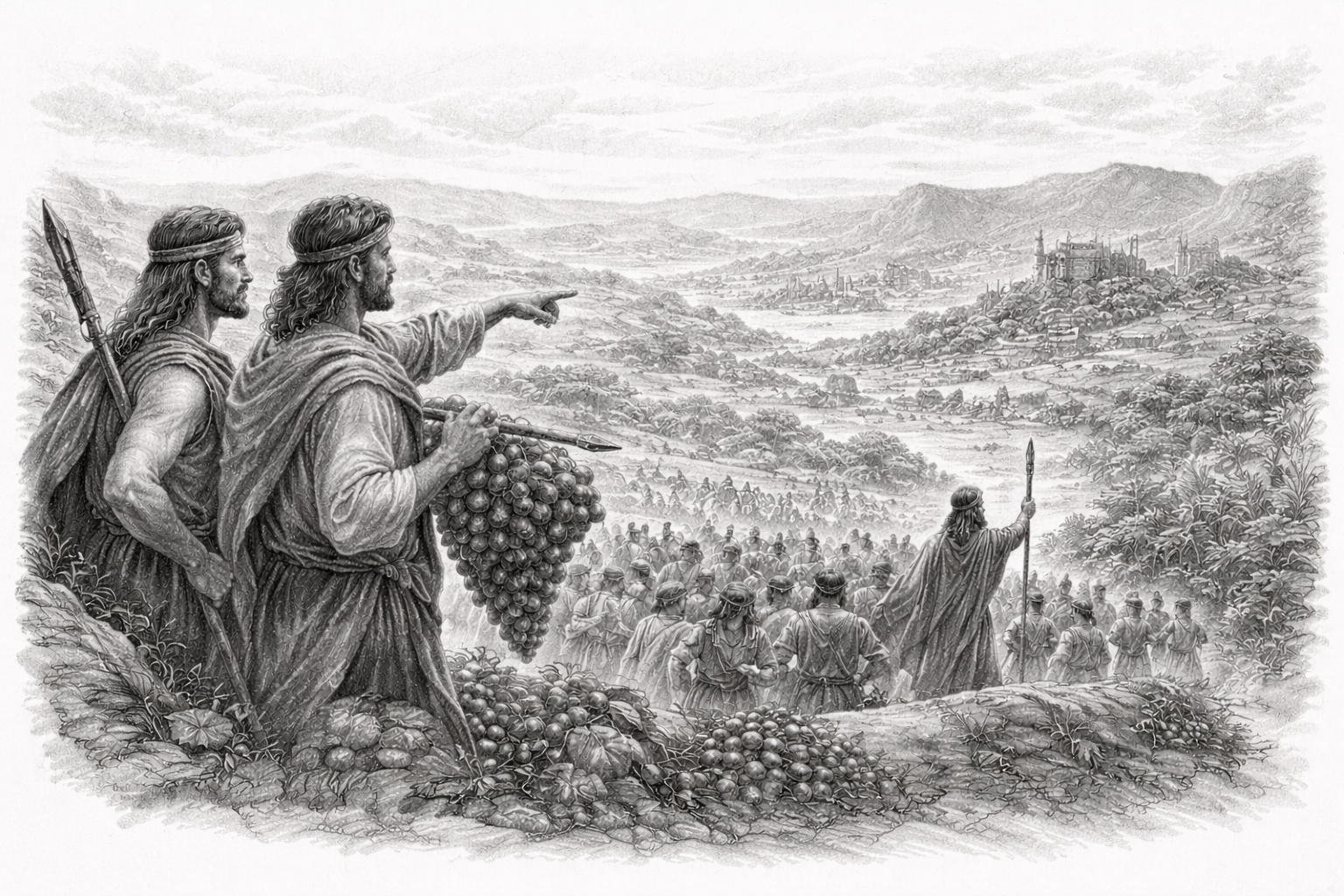
But then they came to Kadesh Barnea.
The spies entered the land and saw that it was everything God had promised. It was fruitful, rich, and beautiful. But ten of them came back talking more about the giants than about the goodness of God. Joshua and Caleb saw the same giants, but they also saw the same God. They understood that if the Lord had promised the land, then the size of the enemy was beside the point.
That is always the battle, is it not?
Unbelief looks at the obstacle until the promise seems small.
Faith looks at God until the obstacle finds its proper size.
The people listened to the fearful report, and because they would not trust the Lord, they wandered in the wilderness until that generation died there. Jude says the Lord afterward destroyed them that believed not. That is a solemn reminder. These were people delivered out of Egypt, yet they failed to enter into what God had for them because unbelief kept them from resting in His promise.
It was not that God stopped loving them.
It was not that His promise failed.
It was not that the spout was turned off.
It was that they moved away from the place where the blessings were meant to be enjoyed. They would not believe Him.
And that still happens. There are believers who truly belong to the Lord, yet they live like spiritual wanderers. They are forgiven, but anxious. Loved, but restless. Delivered, but circling the same dry ground again and again. Not because God has changed, but because unbelief keeps drawing them away from the place of confidence and rest.
Beloved, the call is not to make God love you more. The call is to stay under the spout where the blessings come out.
Stay near Him. Stay in His Word. Stay in the place where His promises are trusted. Keep yourself in the love of God by refusing to drift into unbelief. The Lord’s heart toward you has not cooled. His grace has not dried up. His mercy has not run out. The question is not whether He is willing to bless. The question is whether you will remain in the place where His blessing is received.
Israel is Jude’s first example, and it is a searching one. A delivered people can still die in the desert if they refuse to trust the God who delivered them.