
Revelation 1:4-5
John to the seven churches which are in Asia: Grace be unto you, and peace, from him which is, and which was, and which is to come and from the seven Spirits which are before his throne And from Jesus Christ, who is the faithful witness, and the first begotten of the dead, and the prince of the kings of the earth. Unto him that loved us, and washed us from our sins in his own blood,
John now opens the curtain a little wider, and what we see here is the Trinity.
First, there is Him which is, and which was, and which is to come. That speaks of God the Father. When Moses stood before the burning bush and asked, “What is Your name?” the Lord answered in Exodus 3, I AM THAT I AM. That holy name became so sacred to the Jewish people that they would write only the consonants, YHWH. He is the eternal God. He does not become. He simply is. He was before all things, He stands over all things, and He will be when all earthly thrones have crumbled into dust.
Then John speaks of the seven Spirits which are before his throne. This points to the Holy Spirit, not as seven different spirits, but as the sevenfold ministry of the Holy Spirit seen in Isaiah 11:2. There is fullness there. Completeness there. The Spirit of the Lord in all His rich and perfect ministry.
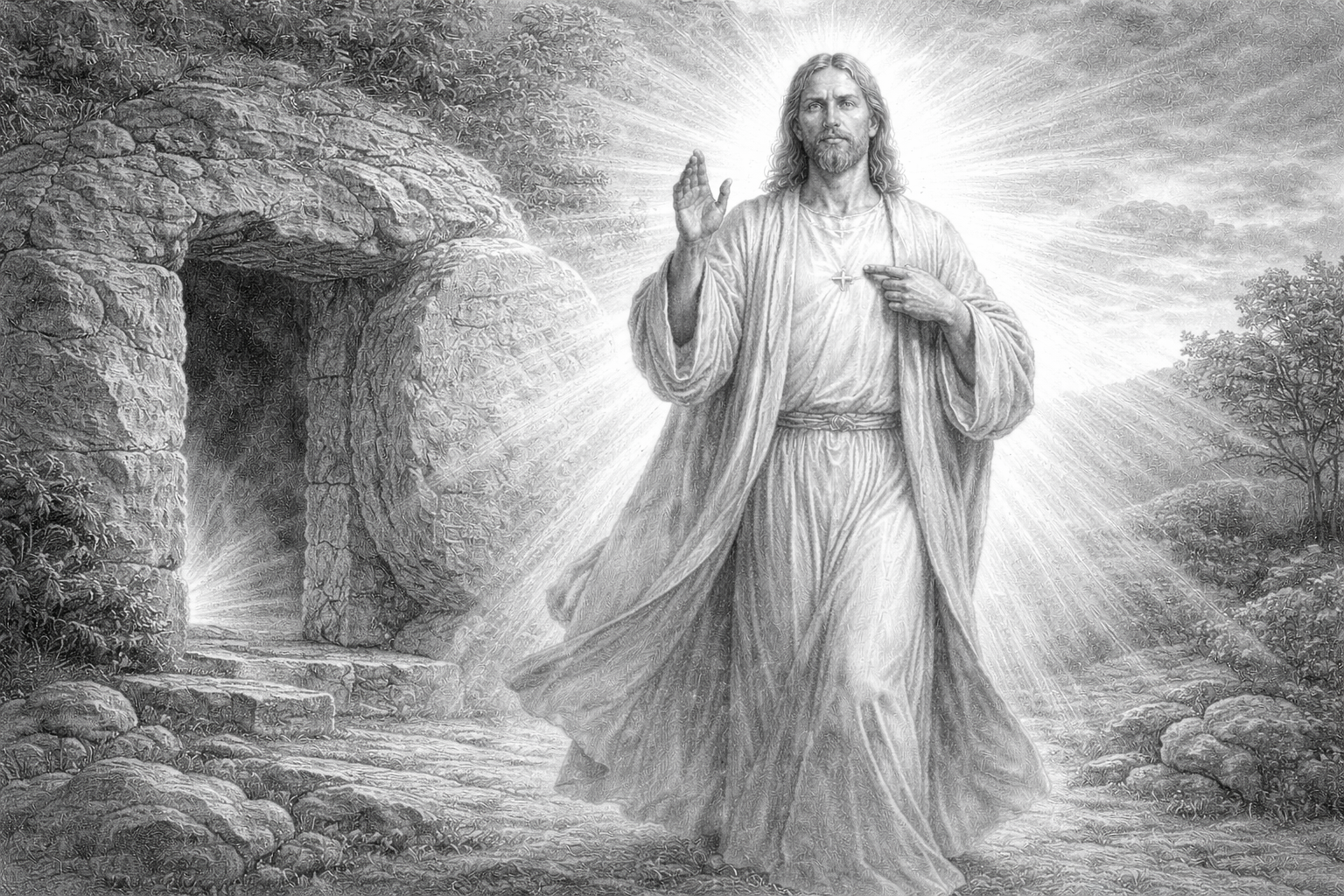
Then John names Jesus Christ, who is the faithful witness. There is the Son. So in these verses we see Father, Spirit, and Son together. The Trinity is not a cold doctrine to be filed away in a theology notebook. It is the living reality of who God is.
And Jesus is called the faithful witness. I like that. He did not come giving guesses about the Father. He did not come offering opinions about heaven. He came as the faithful witness because He knew exactly what He was talking about. When Philip said, “Show us the Father, and it sufficeth us,” Jesus answered in John 14:9, he that hath seen me hath seen the Father. That is a staggering statement. Jesus is the faithful witness because He perfectly reveals the Father. If you want to know what God is like, look at Jesus. Watch Him. Listen to Him. See how He treats people. See how He speaks truth. See how He moves with mercy. The Son faithfully shows us the Father.
Then John calls Him the first begotten of the dead. That phrase has caused confusion for many. The cultist jumps in and says, “Aha, Jesus is begotten, so He must have had a beginning.” But that is not what the phrase means at all.
Think about the expression First Lady. When we speak of a First Lady, we are not saying she was the first woman who ever lived. We are speaking of her place, her rank, her prominence. In the same way, Jeremiah 31:9 calls Ephraim God’s firstborn. Yet Ephraim was not the first son born. He was the younger brother. The point was not birth order, but prominence.
That is the idea here as well. First begotten does not speak of precedence. It speaks of preeminence. Jesus is supreme over death. He is foremost over the grave. He is the One who stands in first place, the One who has conquered what no man could conquer.
And then John says He is the prince of the kings of the earth. Not one king stands above Him. Not one ruler can rival Him. Presidents rise and fall. Kingdoms expand and collapse. Empires boast for a moment and then vanish. But Jesus Christ is the prince of the kings of the earth. He is over all of them. He is not campaigning for authority. He already possesses it.
And then John does something beautiful. He moves from who Jesus is to what Jesus has done.
Unto him that loved us, and washed us from our sins in his own blood.
That lands deep.
John does not say Jesus merely covered our sins with a thin religious paint. He does not say the Lord polished us up a bit, improved our image, or whitewashed our condition. No, He washed us. And He washed us in His own blood.
That means our cleansing is not superficial. It is not cosmetic. It is real. It is costly. It is complete. The blood of Jesus does not paint over guilt. It removes it. The blood of Jesus does not hide stain. It cleanses stain. He washes us white.
Think about that, saints. The faithful witness who shows us the Father is also the risen Lord who stands above death, the ruler above every earthly king, and the Redeemer who loved us enough to shed His own blood for us. John is not merely stacking titles here. He is showing us the glory of Christ from every angle.
He is eternal truth revealed.
He is resurrection with preeminence.
He is authority over every throne.
He is love that bleeds.
And that last phrase makes it personal. Unto him that loved us. Not merely loved the world in some broad abstract sense, though that is true. John says, loved us. This is not distant theology. This is near. This is warm. This is personal. The Lord of glory set His love upon us and washed us from our sins in His own blood.
That means when Revelation opens, it does not begin with beasts and judgments and shaking kingdoms alone. It begins with Jesus. The faithful witness. The preeminent risen One. The ruler over kings. The One who loved us. The One who washed us.
And that changes the way we read the whole book.