
Genesis 4:17
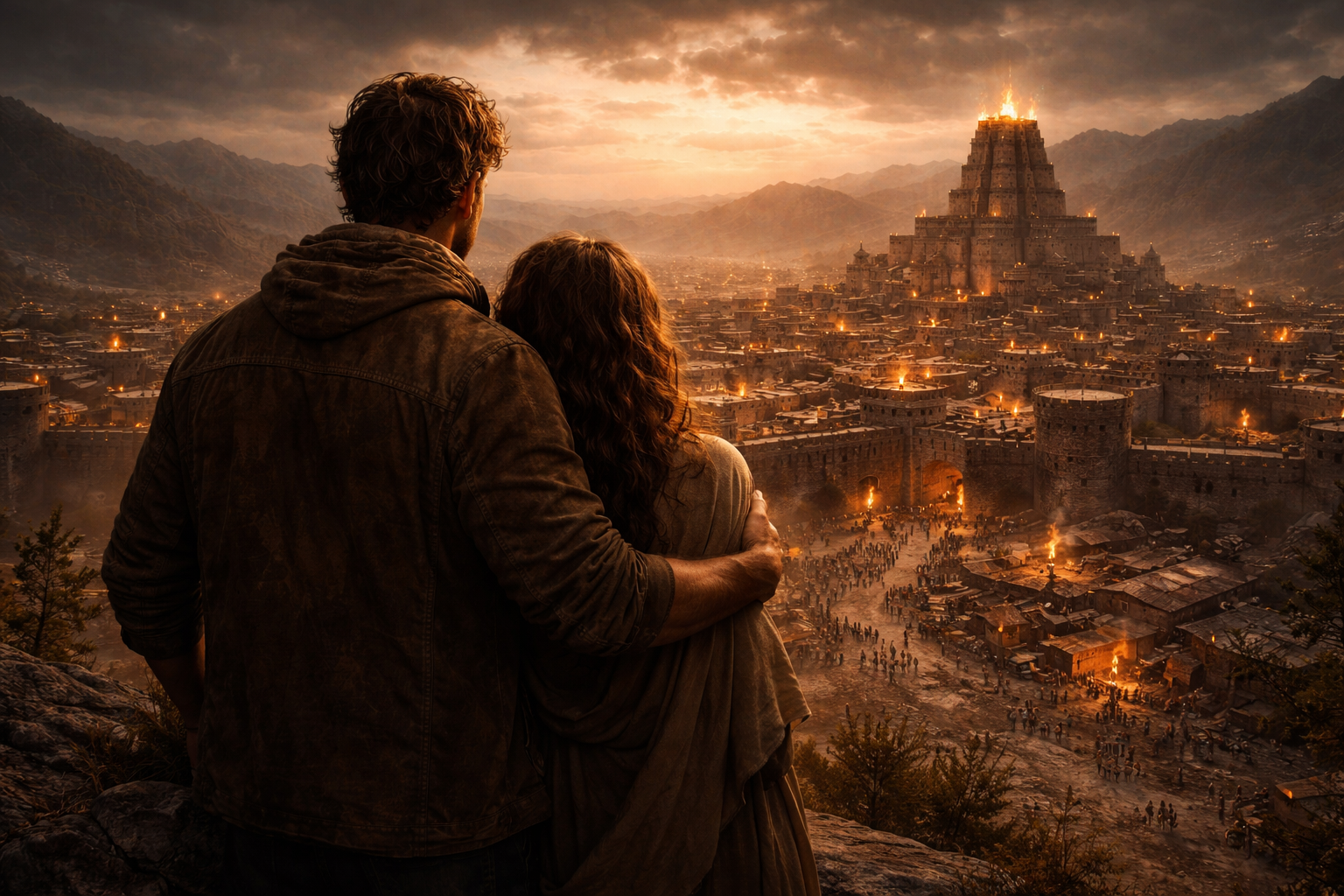
And Cain knew his wife; and she conceived, and bare Enoch: and he builded a city, and called the name of the city, after the name of his son, Enoch.
This is one of the questions people ask again and again. Where did Cain get his wife?
The answer is really not complicated. Adam lived 930 years. Eve was the mother of all living. They had many sons and daughters. So Cain married within the growing human family. At that early point in history, mankind had not yet descended far enough into corruption for the kinds of genetic problems associated with later intermarriage.
But as important as that question seems to people, it is still not the most important question in the chapter.
The greater question is the one the Philippian jailor asked in Acts 16: “What must I do to be saved?” That is always the better question, because a man can solve every curiosity in Genesis and still miss eternal life. He can have answers in his head and still be lost in his heart.
Then the verse turns and shows us something very telling about Cain.
He has gone out from the presence of the Lord. He is wandering east of Eden. Yet instead of returning, he begins building. He builds a city. He names it after his son. And in that, you begin to see what is happening inside of him. If he will not seek the Lord, he will build something else. If he will not find his identity in God, he will try to establish it in his own name through his own line.
That is so human.
When a man wanders from God, he usually does not just sit still. He starts constructing. He builds systems, reputations, careers, legacies, projects, platforms, cities. He pours himself into something he hopes will make his life feel solid. Cain cannot get back to Eden, so he starts building his own version of security east of Eden.
But notice what he dedicates it to.
Not to God.
Not to worship.
Not to gratitude.
He names it after his son.
That says a lot. Cain is trying to establish his own empire, his own line, his own significance. He is reaching for permanence in a world where his soul is still restless. He is trying to anchor himself in something earthly because he has walked away from the only true anchor.
And that is always the danger. A man who will not be ruled by God often tries to rule his own little kingdom instead.
He says, “I will make something. I will name something. I will leave something. I will establish myself.” But all the while, if the Lord is not in it, the city may stand outwardly while the soul remains a fugitive inwardly.
That is where Cain is so instructive. He is wandering, yet building. Restless, yet constructing. Alienated, yet ambitious. And that combination still exists all around us. There are people building impressive lives with deeply unsettled hearts. They have cities, but no peace. They have projects, but no presence. They have legacy, but no rest.
Beloved, there is nothing wrong with building, working, planning, or leaving a godly inheritance. But when those things become substitutes for the presence of God, they turn into monuments to our distance from Him. Cain’s city was not proof that he had found peace. It was proof that he was trying to make peace without God.
And that never works.
The better way is not to build your own empire east of Eden. The better way is to seek the Lord. The better way is not merely to ask, “Where did Cain get his wife?” but, “Am I right with God? Do I know His mercy? Have I come to His Son?”
Because in the end, that question matters more than all the rest.