
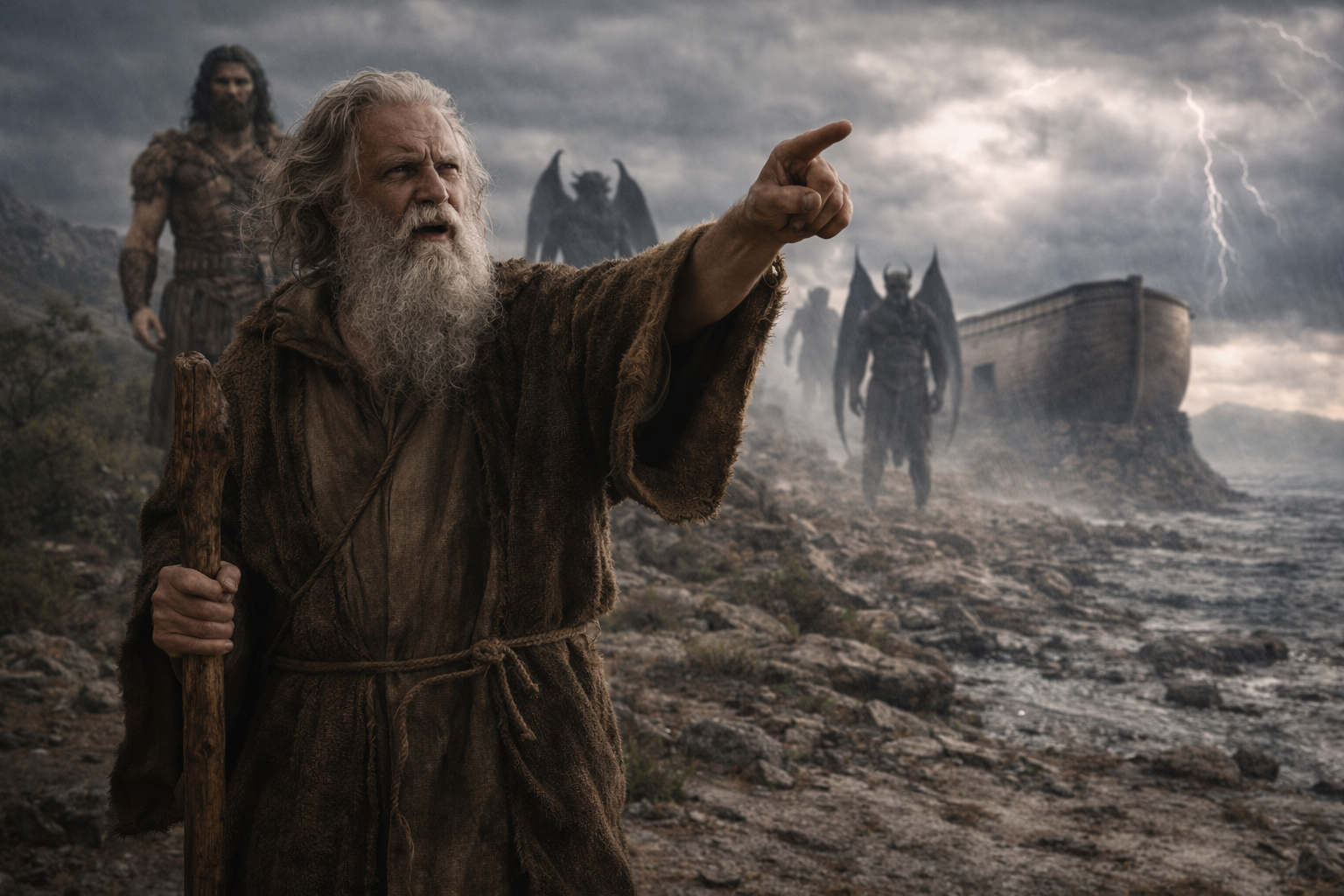
Genesis 6:4
There were giants in the earth in those days; and also after that, when the sons of God came in unto the daughters of men, and they bare children to them, the same became mighty men which were of old, men of renown.
This is one of those verses that makes you stop and read it again.
There were giants in the earth in those days. The Hebrew word is nephalim. Literally, fallen ones. These were not ordinary men. They were mighty men of old, men of renown, figures so unusual that the memory of them seems to have echoed through many cultures in the form of legends and stories about giants.
So the question has to be asked: where did they come from?
There are two main ways this verse is understood. Some say the daughters of men were the daughters of Cain, and the sons of God were the godly line of Seth. But that explanation has never seemed strong enough to me, because a union between the ungodly line of Cain and the godly line of Seth would explain compromise, but it would not naturally explain giants.
That is why I believe the better explanation is found in the phrase itself. Sons of God is benai elohim. Every time that phrase appears in the Old Testament, it refers to angels. And Scripture shows us there are holy angels who do the work of God around His throne, and there are fallen angels, demons, who followed Lucifer in his rebellion against the Lord.
When Satan fell, Revelation says one third of the angelic host followed him.
So when I come to Genesis 6:4, I believe this is speaking of demons, fallen angels, who somehow entered into a forbidden union with human women, producing these nephalim, these fallen ones, these giants, these legendary men of renown. That is why so many cultures contain stories of giant figures. But the best explanation is not mythology. The best explanation is the Word itself.
We know certain demons are held in prison, according to 1 Peter 3:19, because what they did was especially dark. Jude 6 speaks of those who left their own habitation. I believe that is what is in view here. Satan was making a desperate attempt to corrupt the seed of the woman so deeply that the promise of Genesis 3:15 would somehow be thwarted.
But he failed.
He always fails.
He may corrupt. He may pervert. He may rage against the purposes of God. But he cannot stop what God has spoken. The promised Seed was still coming. The Redeemer would still be born. Hell could not shut down the plan of God.
That said, the verse is still deeply sobering because it shows how rotten a culture can become beneath the surface while everything outwardly keeps moving along.
And I think that speaks to our own day in a very real way.
We can say everything is fine. We can point to prosperity. We can point to comfort. We can point to the machinery of society still working. But underneath the surface there is a current of perversion that is hard to overstate. We have become so used to things that once would have shocked and scandalized people that we hardly even blink anymore.
That is the danger.
Not simply that sin exists.
But that sin becomes normal.
Not simply that darkness is present.
But that darkness is packaged, sold, consumed, and defended as though it were harmless.
That is very much the spirit of Noah’s day. Society keeps saying all is well, while under the surface corruption is spreading fast. That is the way judgment days often are. On the outside, life goes on. Underneath, the foundations are rotting.
So Genesis 6:4 is not there merely to stir curiosity. It is there to warn us. It reminds us that the conflict between the seed of the woman and the kingdom of darkness is real. It reminds us that Satan’s hatred for God’s redemptive plan is ancient. And it reminds us that a culture can look strong and successful while spiritually it is falling apart.
Beloved, we should not be naïve about the hour we are living in. We should not call clean what God calls corrupt. We should not grow casual about what grieves His heart. And we should not imagine that a society can celebrate perversion endlessly without consequence.
But do not miss the hope even here.
Genesis 6 proves the enemy could not stop the promise.
Genesis 6 proves God still saw.
Genesis 6 proves the Redeemer was still coming.
And that means no matter how dark the culture becomes, the Word of God still stands.