
Genesis 17:2-6
And I will make my covenant between me and thee, and will multiply thee exceedingly.
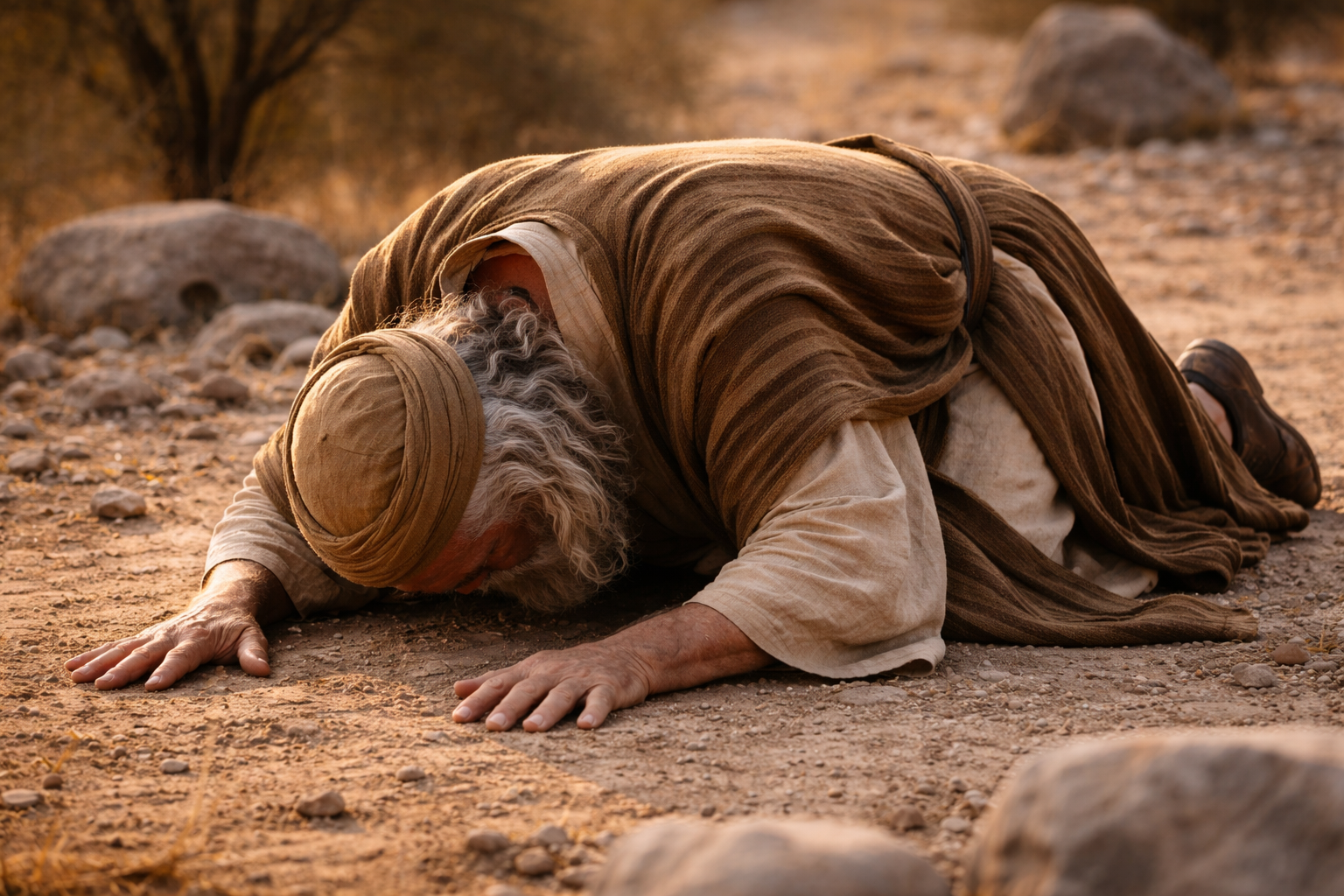
And Abram fell on his face: and God talked with him, saying, As for me, behold, my covenant is with thee, and thou shalt be a father of many nations. Neither shall thy name any more be called Abram, but thy name shall be Abraham; for a father of many nations have I made thee. And I will make thee exceeding fruitful, and I will make nations of thee, and kings shall come out of thee.
What stands out here is how completely this covenant rests on God.
The Lord does not say, “Abram, here is what I need you to do for Me.” He says, I will. Over and over again, that is the heartbeat of the Abrahamic covenant. I will make my covenant. I will multiply thee. I will make thee fruitful. I will make nations of thee. The whole thing rests on the grace of God.
That is the principle of the covenant.
Grace.
Not earned favor.
Not deserved blessing.
Not Abram finally getting his act together and proving himself worthy. The covenant is built on what God says He will do. That is why this chapter is so strong. The foundation is not the faithfulness of man, but the determination of God.
And Abram’s response is exactly right.
He falls on his face.
That is what a man does when he realizes he is standing before a God who is speaking promises too big for him to produce, too deep for him to deserve, and too certain for him to undo. Abram is no longer standing there trying to help God out. He is on his face while God talks with him. That is a much better posture.
Then the Lord changes his name.
No longer Abram, but Abraham.
The fifth letter is added, and that is beautiful because in Scripture five is associated with grace. So even in Abraham’s very name, there is a reminder that what God is doing is by grace. Unmerited. Undeserved. Unearned. The new name itself becomes a testimony that God is the One doing this.
And what a name it is.
Father of many nations.
At the moment, Abraham does not even have Isaac yet. The promise has not fully unfolded. The evidence is not all there. But God speaks of the future as though it were already settled. That is how He speaks. He calls things by what they shall be because His word is that certain.
I love that.
Because God does not wait for the visible proof before He speaks with certainty. He does not say, “Abram, once everything starts coming together, then I will rename you.” No, He gives the name ahead of time. He puts grace into Abraham’s identity before the promise is seen in fullness.
That is often the way the Lord works with us.
He speaks over us according to His purpose, not according to our present appearance. He deals with us in grace. He declares what He is going to do, and then teaches us to walk in the light of it before we can fully see it.
And notice again how active God is in every line.
I will make. I will make. I will make.
That is where peace is found.
Because if this depended on Abraham, there would be reason to panic. If it depended on his strength, his consistency, or his ability to hold things together, the whole covenant would wobble. But when God says, I will, that settles it. Grace means the burden of fulfillment is on the One making the promise.
That does not lead to laziness.
It leads to worship.
It leads a man to fall on his face and listen.
So this is not just a name change. It is a declaration that grace is going to write the story. Abraham will become what God says he will become, not because Abraham is impressive, but because God is faithful.
And that is still the hope of every believer today.
What God begins by grace, He carries by grace, and He completes by grace. The covenant starts with I will, and it stays there all the way through.