
Genesis 18:23-25
And Abraham drew near, and said, Wilt thou also destroy the righteous with the wicked?
Peradventure there be fifty righteous within the city: wilt thou also destroy and not spare the place for the fifty righteous that are therein? That be far from thee to do after this manner, to slay the righteous with the wicked: and that the righteous should be as the wicked, that be far from thee: Shall not the Judge of all the earth do right?
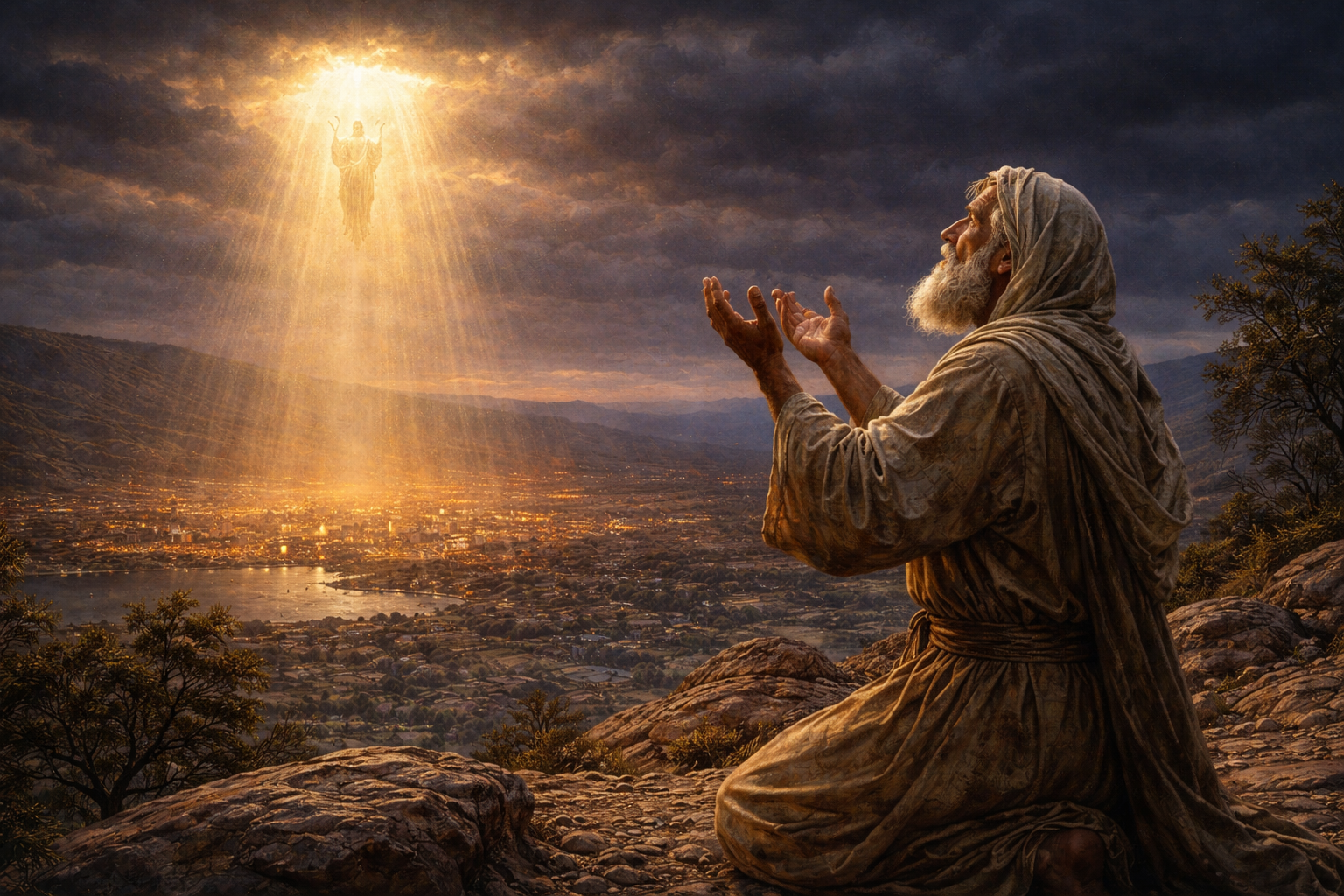
Abraham knows Lot is in Sodom, and that is what moves him to draw near. I love that phrase. He drew near. Before he ever says a word, he gets close to the Lord. That is where real intercession starts. Not with polished language. Not with some religious tone. It starts when a man carries somebody on his heart and brings that burden near to God.
Then Abraham asks a question that still settles the soul today: “Shall not the Judge of all the earth do right?”
He will. Always.
That matters because people still wrestle with questions like this. If Jesus is the only way to the Father, what about the person in some remote place who never had a Bible, never heard a preacher, never had the chance others had? How does God judge that person rightly?
The answer is not that there are many roads to heaven. Jesus said plainly in John 14:6, “No man cometh unto the Father, but by me.” Peter said just as plainly in Acts 4:12, “Neither is there salvation in any other.” Salvation is through Jesus Christ alone. Scripture does not leave room to soften that.
But Scripture also tells us God has not left Himself without witness. Romans 1 and 2 make that clear. Creation round about and conscience deep within testify that there is a Creator, that man is accountable, that truth is real. People are judged according to the light they had. And because God sees perfectly, His judgments will be perfectly right.
That is where peace comes in.
I do not know enough to judge every case. You do not either. We see fragments. God sees the whole thing. He sees what a man knew, what he rejected, what he responded to, what light he was given, what mercy he resisted. Nothing is hidden from Him. So when all is said and done, heaven will not accuse Him of being unfair. Revelation 19:2 says, “True and righteous are his judgments.”
That means nobody will stand before God and say, “You got this wrong.”
And that brings us right to the cross.
God does not wink at sin. He cannot. He is too holy for that. The Judge of all the earth does right, and because He does right, sin must be judged. But here is the wonder of the gospel. The very Judge before whom we are guilty is the One who came down from heaven to pay the price Himself. He did not lower the standard. He fulfilled it. He did not ignore justice. He satisfied it at Calvary.
That is why the cross is so glorious.
It tells me God is righteous beyond question, and loving beyond measure. He is so righteous that sin must be answered for. He is so loving that He answered for it Himself for all who will receive His Son. So when Abraham says, “Shall not the Judge of all the earth do right?” the fullest answer is found in Jesus.
Yes, He will do right.
He will do right in judgment.
He will do right in mercy.
He will do right in every life, every nation, every hidden case, every final sentence.
And if there is something in your heart that still struggles with the justice of God, start at the cross. That is where His justice and His mercy meet without one compromising the other. That is where you see that the Judge of all the earth does right, not only in punishing sin, but in making a way for sinners to be saved.
Beloved, the Judge of all the earth always does right, and Calvary is the clearest proof of it.