
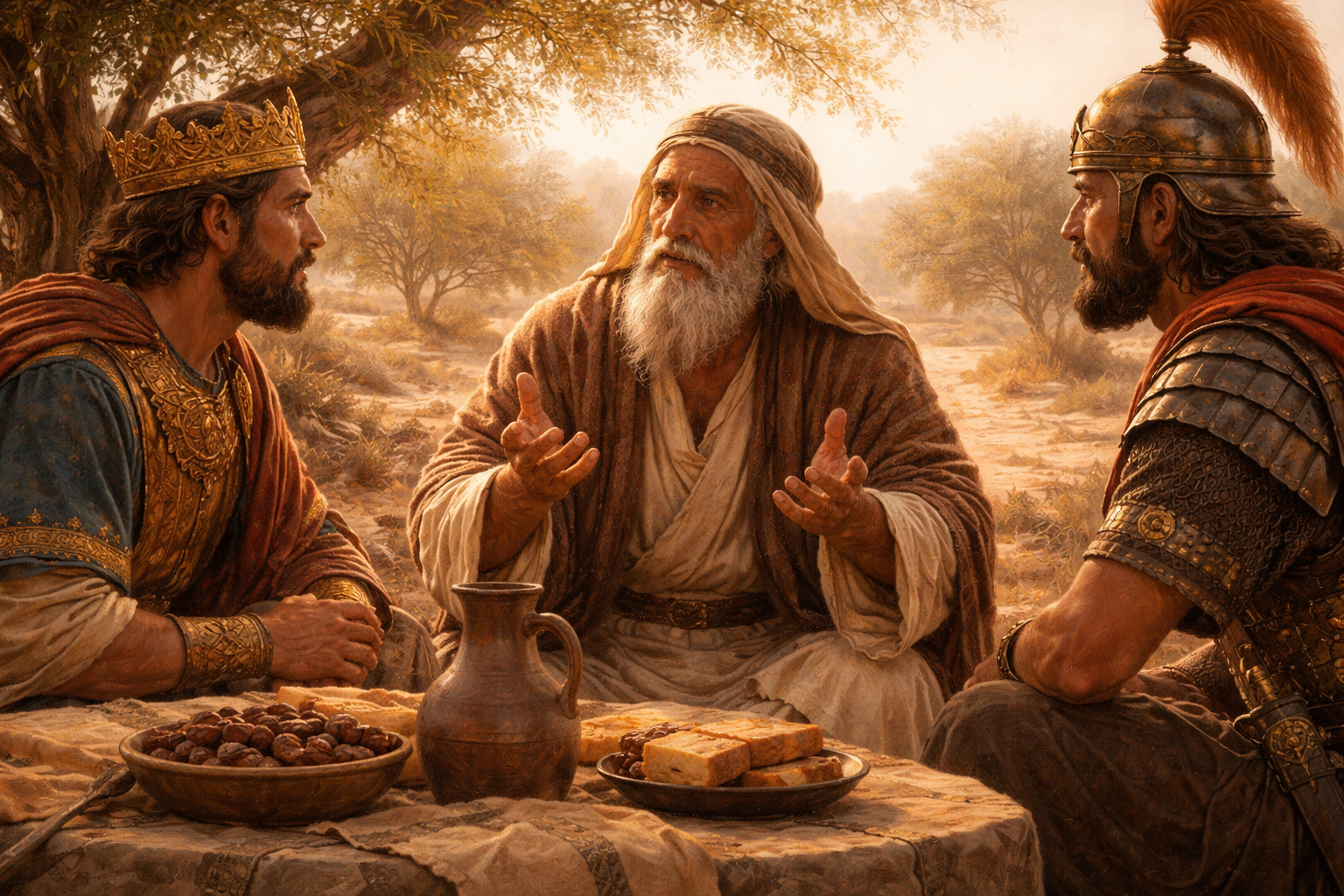
Genesis 21:22, 23
And it came to pass at that time, that Abimelech and Phichol the chief captain of his host spake unto Abraham, saying, God is with thee in all that thou doest: Now therefore swear unto me here by God that thou wilt not deal falsely with me, nor with my son, nor with my son’s son: but according to the kindness that I have done unto thee, thou shalt do unto me, and to the land wherein thou hast sojourned.
I like this because it is so ordinary.
This is not Abraham standing on a mountain receiving some dramatic revelation. This is not a miracle scene. This is not one of those moments we would usually point to as especially spiritual. It is just everyday life. A conversation. An agreement. A man asking another man to deal honestly with him.
And yet right in the middle of that ordinary setting, Abimelech says something striking: “God is with thee in all that thou doest.”
That is a great testimony.
Especially when you remember who is saying it.
This is the same Abimelech who had already been burned by Abraham’s lack of honesty over Sarah. So when he says, “Swear unto me that thou wilt not deal falsely with me,” you can understand why. He remembers. He has not forgotten the half truth, the confusion, the mess Abraham caused years earlier. So there is a little edge to his words. He is basically saying, “Let us be clear this time. Do not lie to me again.”
And honestly, that is humbling.
Here is Abraham, this giant of faith, and yet he is still living with the memory of past failure in the minds of other people. That encourages me in a strange way, because sometimes we think if we are really walking by faith, all of that kind of stuff just disappears. It does not. There are times when even a man of faith has to keep living faithfully while people still remember when he did not.
But even with that history, Abimelech can still say, “God is with thee.”
That is the part that stands out to me.
He does not say, “You are flawless.”
He does not say, “You have never stumbled.”
He says, “God is with you.”
That is a very different thing. Abraham had failed, but the hand of God on his life was still obvious. Over time, even this pagan king could see that there was something real about Abraham’s walk. God was with him in all that he did.
That is what I want.
Not a reputation for being impressive.
Not the appearance of always getting everything right.
But a life that says, even in ordinary matters, God is with this man.
Because that is where faith really gets tested, is it not? Not only in the dramatic moments, but in contracts, conversations, disputes, promises, and plain day to day dealings. In the stuff that feels small. In the stuff nobody writes books about. In the practical side of life where honesty, kindness, and integrity matter.
That is where Abraham is here.
And that is where we live most of the time.
So this becomes very practical. Can people trust my word? Can they see the Lord’s hand on my life not only when I talk about spiritual things, but in the way I handle everyday business? Do I deal truthfully? Do I keep my word? Do I make things right when trust has been strained?
That is real spirituality.
Abimelech wanted peace with Abraham because he recognized that God was with him. But he also wanted honesty from Abraham because he remembered what had happened before. And both of those things matter. The Lord wants His people to have a testimony that is not only spiritual in language, but dependable in conduct.
That is what makes this such a helpful passage to me. It reminds me that God’s presence is not only for the dramatic moments. His presence is meant to show up in the ordinary parts of life too. In the agreements. In the conversations. In the promises we make. In the way we treat people over time.
And what a beautiful thing it is when even those outside the family of faith have to say, “God is with thee in all that thou doest.”