
Genesis 34:24–29
And unto Hamor and unto Shechem his son hearkened all that went out of the gate of his city; and every male was circumcised, all that went out of the gate of his city.
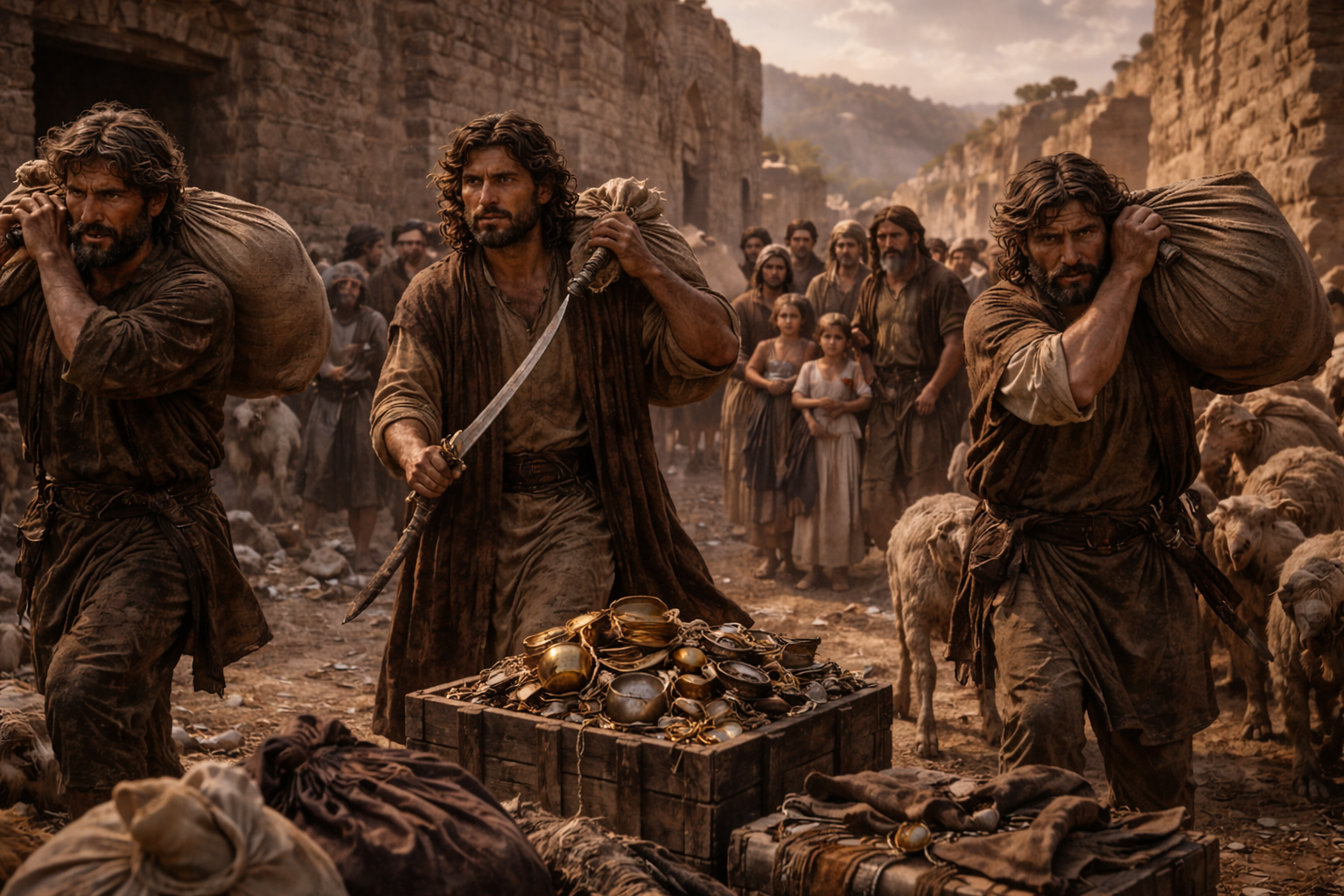
And it came to pass on the third day, when they were sore, that two of the sons of Jacob, Simeon and Levi, Dinah’s brethren, took each man his sword, and came upon the city boldly, and slew all the males. And they slew Hamor and Shechem his son with the edge of the sword, and took Dinah out of Shechem’s house, and went out. The sons of Jacob came upon the slain, and spoiled the city, because they had defiled their sister. They took their sheep, and their oxen, and their asses, and that which was in the city, and that which was in the field, And all their wealth, and all their little ones, and their wives took they captive, and spoiled even all that was in the house.
The men of Shechem bought into Hamor’s and Shechem’s plan. They listened at the gate, accepted the terms, and every male in the city submitted to circumcision. Then on the third day, when they were sore and helpless, Simeon and Levi came in with swords and turned the whole city into a slaughter.
You read this and you understand the outrage behind it. Dinah had been defiled. Her brothers were angry from the start, and not without reason. But now the thing has gone somewhere terrible. What began as grief has turned into treachery, and what began as righteous anger has turned into butchery.
That is the warning in the passage.
Pain does not sanctify revenge.
Simeon and Levi may have felt justified. They may have told themselves they were defending their sister’s honor. But they were not acting in the fear of God. They were acting in fury. And fury, once it gets the sword in its hand, rarely stops where it should.
Notice how quickly it spreads. First Hamor and Shechem are killed. Then all the males. Then the city is spoiled. Then the animals are taken. Then the wealth is taken. Then the women and little ones are carried away. This is what vengeance does. It never stays narrow. It widens. It consumes. It turns wounded men into cruel men.
And that is what makes this chapter so heavy. Nobody comes out clean. Shechem sinned grievously. Hamor trafficked in compromise. The men of the city were moved by greed. Simeon and Levi answered with deceit and then with bloodshed. By the time you get here, the whole scene is stained.
That is what sin does. It never stays in one lane. It spreads from lust to manipulation, from manipulation to deceit, from deceit to violence, from violence to plunder. The flesh never cleans up a mess. It only deepens it.
There is also something especially sobering here. Simeon and Levi used a covenant sign to weaken these men, then struck them when they were most vulnerable. That was not courage. That was cruelty wearing the mask of justice.
And I think that is a needed word. There is a kind of revenge that calls itself righteousness, but heaven does not confuse the two. The fact that a person has been wronged does not give him permission to become wrong in return.
That hits close to home, because when people we love are hurt, something rises in us fast. We want to answer hard. We want to settle the matter ourselves. We want to make sure the pain is paid back. But if I take matters into my own hands in the energy of the flesh, I do not restore what was broken. I only add another layer of evil to the story.
Beloved, grief is real. Anger can be real too. But neither grief nor anger can be trusted to lead the way unless they are brought under the Lordship of God.
Simeon and Levi were angry for their sister. But they did not wait on the Lord. They did not seek righteousness. They took up the sword, and once they did, the whole thing spiraled.
That is why this passage does not read like a triumph. It reads like a tragedy.