
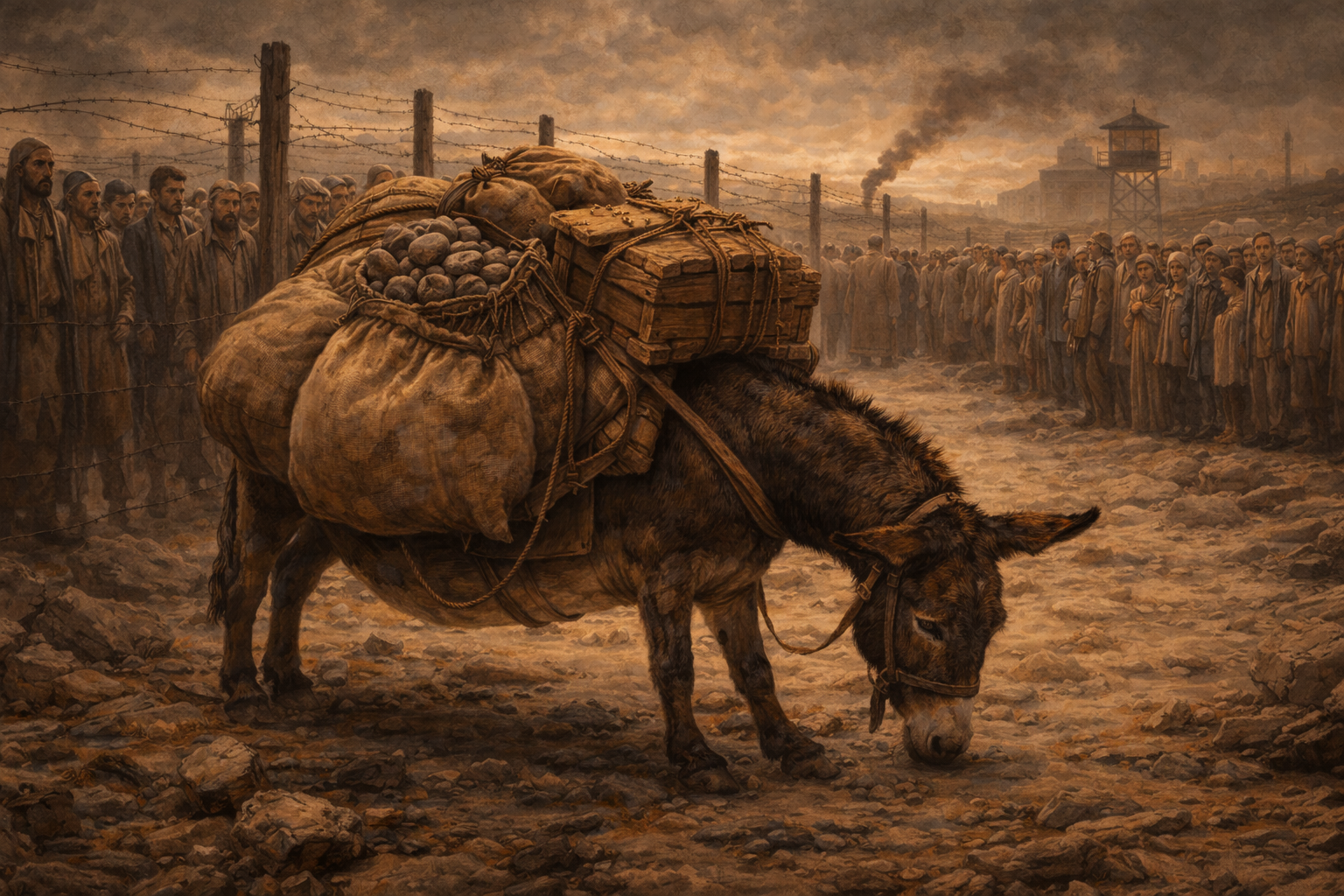
Genesis 49:14-15
“Issachar is a strong ass couching down between two burdens: And he saw that rest was good, and the land that it was pleasant; and bowed his shoulder to bear, and became a servant unto tribute.”
In Issachar, we see an exploited people. Jacob describes him as strong, like a donkey able to carry weight, able to endure pressure, able to keep going under heavy loads. That is the picture before us. Strength is present, but so is burden. Endurance is present, but so is oppression.
And that fits the history being pictured.
Although the Jews were exiled and scattered into virtually every corner of the world, they did not disappear. They remained strong. They remained resilient. They remained able to endure. Like Issachar, they carried heavy burdens and kept going. But that very strength, that very prosperity, and that very persistence often became the occasion for exploitation.
That is one of the tragedies of history.
Though scattered among the nations, the Jewish people often prospered. They labored, built, endured, and survived. Yet instead of that producing gratitude from the peoples around them, it so often produced resentment, suspicion, persecution, and blame. They were exploited. They were targeted. They were made to bear burdens laid upon them by others.
You can see that in the pogroms of Russia. You can see it in the concentration camps of Nazi Germany. Again and again, the Jewish people were made to feel the weight of a world that wanted what they carried, but did not want them. They were strong enough to survive, yet often forced to live under tribute, under oppression, under the crushing weight of hatred.
That is Issachar.
A strong beast bowed low.
A people with endurance, yet made to carry what should never have been laid upon them.
There is something deeply sorrowful in that picture. Strength does not always spare a man from suffering. Sometimes strength is the very reason more is piled onto his back. The one who can bear much is often asked to bear more. The one who survives becomes the one exploited. The one who endures becomes the one burdened.
But even here, the story is not merely one of pain. It is also one of preservation.
Issachar does not collapse. Issachar bends, but he remains. And that too has marked the history of the Jewish people. Empires rose against them. Nations blamed them. Tyrants tried to erase them. Yet they remained. Pressed down, but not gone. Hated, but not destroyed. Exploited, but not erased.
That is a remarkable testimony in itself.
And on a wider level, this verse reminds us that there are seasons when God’s people may carry burdens they did not choose. There are times when strength is tested under weight. There are times when life feels less like ruling and more like bearing. But the Lord sees the burden. He knows the tribute. He knows what has been laid upon the shoulders of His people.
And He does not forget.
So in Issachar we see more than stubborn strength. We see the long history of a people who were made to carry sorrow, injustice, and exploitation, and yet were still preserved through it all.
Bent low.
But not broken.