
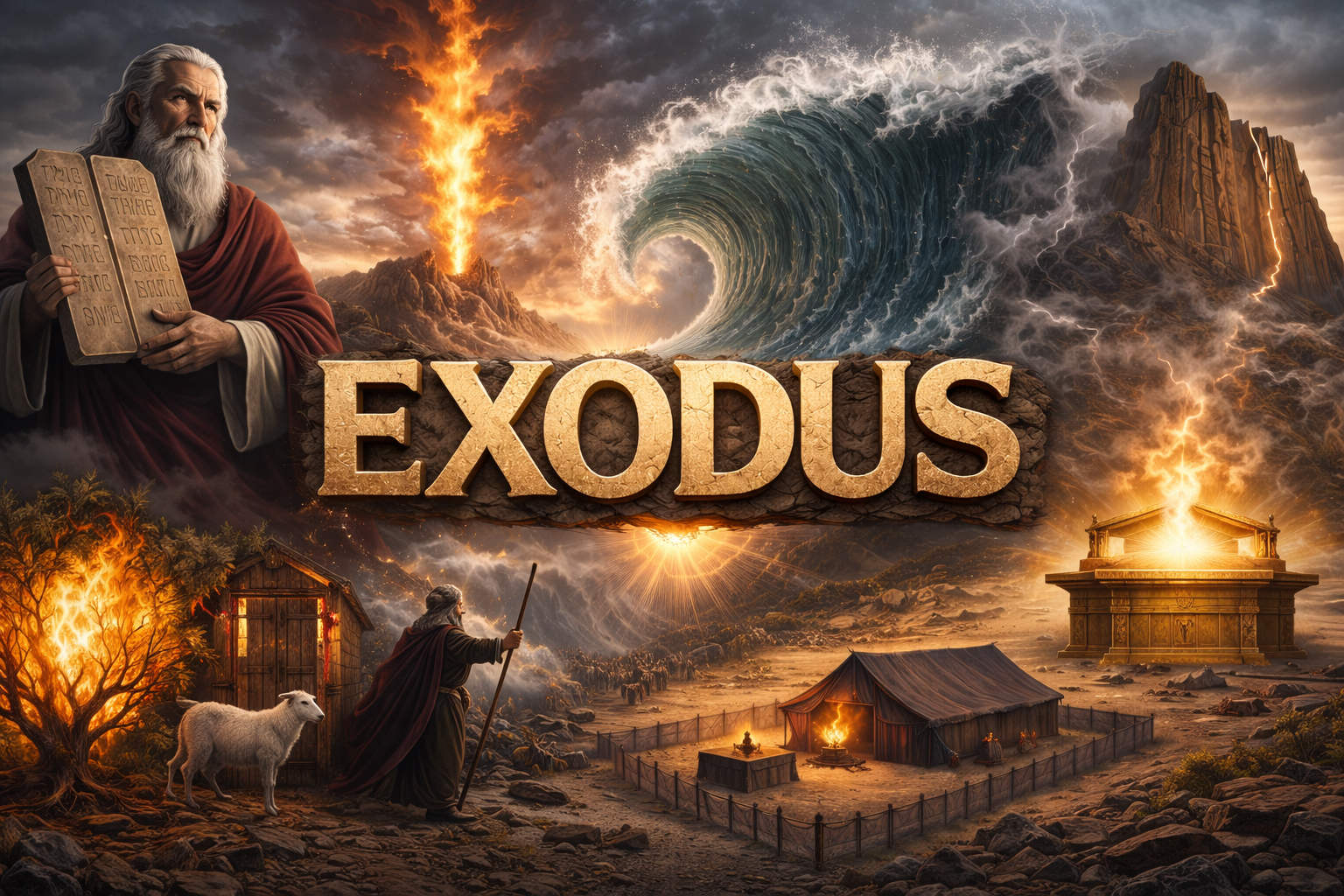
Exodus 3:5-6
And he said, Draw not nigh hither: put off thy shoes from off thy feet, for the place whereon thou standest is holy ground. Moreover he said, I am the God of thy father, the God of Abraham, the God of Isaac, and the God of Jacob. And Moses hid his face; for he was afraid to look upon God.
The first thing Moses learns at the bush is that this is not an ordinary moment. The Lord tells him not to come any closer, but to take his shoes from off his feet, for the place where he is standing is holy ground. What made it holy was not the dirt, the desert, or the bush itself. It was the presence of God. That is what changed everything. Moses was standing in a special spot because God had made Himself known there.
That is always what holiness does. It brings a man to attention. It strips away casualness. It reminds him that he is not dealing with something common, manageable, or ordinary. He is in the presence of the living God. Moses had known the palace of Pharaoh. He had known the wisdom of Egypt. He had known the routines of the wilderness. But this was different. This was not merely an interesting sight. This was a holy encounter. The Lord was saying, in effect, Moses, you are standing before Me.
Then God identifies Himself as the God of his father, the God of Abraham, the God of Isaac, and the God of Jacob. In that introduction there is both continuity and covenant. The God speaking from the bush is not a new god, not a tribal deity, not some local desert power. He is the same God who had spoken to the patriarchs, the same God who had made promises, the same God who had watched over His people through every generation. Some have even seen a whisper of triune fullness in that threefold naming, though the clearest point in the passage is that the covenant God of Abraham, Isaac, and Jacob is now drawing near again to act for His people.
And what is Moses’ response? He hid his face, for he was afraid to look upon God.
That is the right response when a man truly comes into the presence of the Lord. The nearness of God does not make a man feel large. It makes him feel small. It does not leave him impressed with himself. It leaves him aware of how much flesh is still in him, how much weakness marks him, how unworthy he really is. In the light of God’s holiness, all of our imagined strength begins to wither. Moses had lived long enough to know his failures already, but in this moment they became even more real to him. He hides his face because he knows he is before One infinitely pure, infinitely holy, and infinitely above him.
And he was not the last to feel that way. Isaiah would later cry, “Woe is me” when he saw the Lord high and lifted up. Peter would fall before Jesus and say, “Depart from me; for I am a sinful man, O Lord.” That is what happens when heaven opens and a man is brought face to face with the holiness of God. He becomes deeply aware of who God is, and at the same time deeply aware of who he is not.
That is not a bad place to be.
In fact, it is a necessary place.
The man who has never trembled before the holiness of God has not yet really seen Him. But the man who has come low before the Lord, who has felt the weight of divine holiness and the poverty of his own flesh, is finally in the place where God can speak to him rightly. Moses hides his face, but he is not being pushed away in wrath. He is being brought into a holy conversation. The God who makes him aware of his unworthiness is the same God who is about to call him, use him, and go with him.
So this is not merely a moment of fear. It is a moment of revelation. Moses is learning that the God who calls him is holy, covenant keeping, and utterly unlike the gods of Egypt. And the closer a man comes to that God, the more clearly he sees both the greatness of the Lord and the inadequacy of himself. That is where real service begins, not with self confidence, but with the fear of God.