
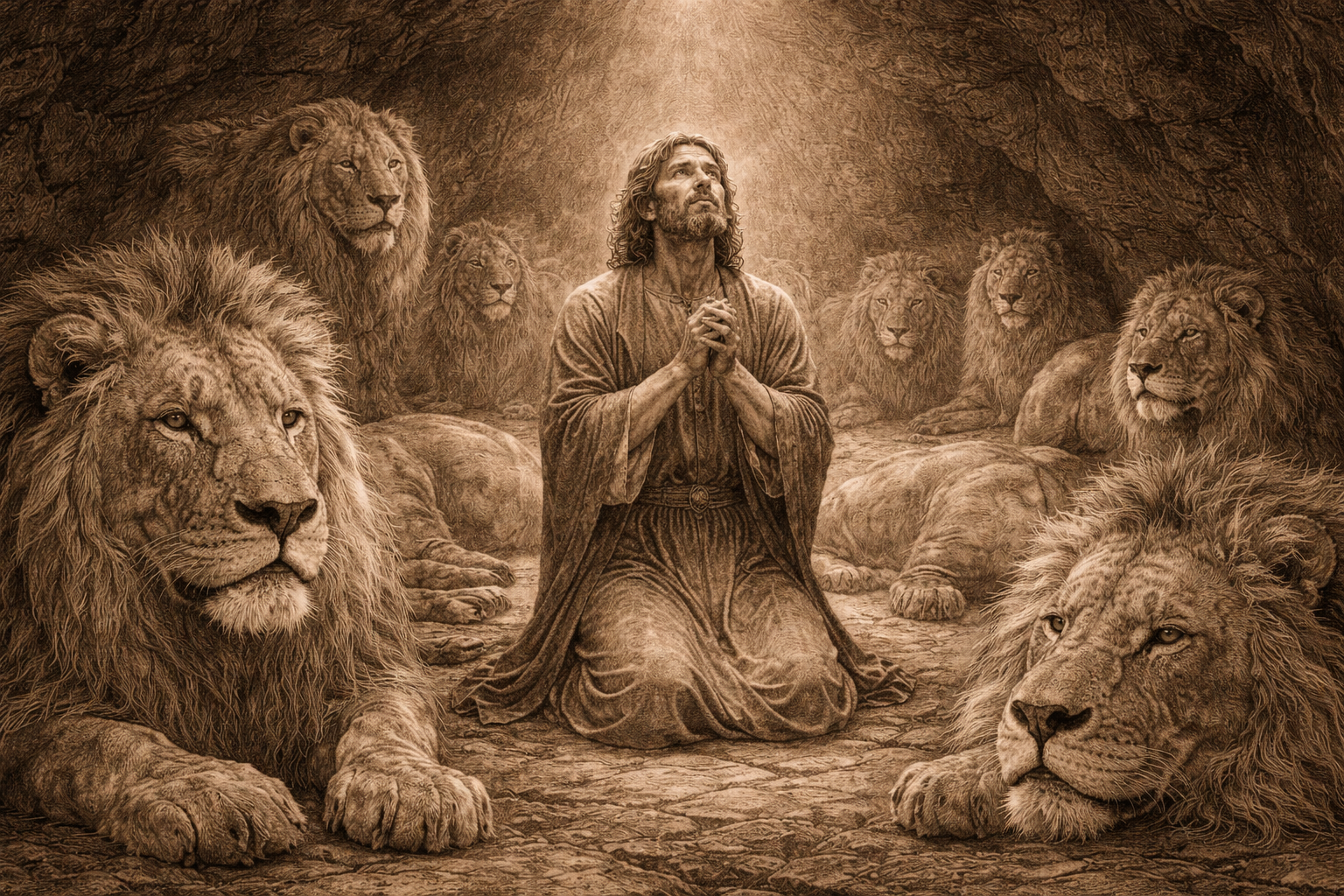
Hebrews 11:32–35
And what shall I more say? for the time would fail me to tell of Gedeon, and of Barak, and of Samson, and of Jephthae; of David also, and Samuel, and of the prophets: Who through faith subdued kingdoms, wrought righteousness, obtained promises, stopped the mouths of lions, quenched the violence of fire, escaped the edge of the sword, out of weakness were made strong, waxed valiant in fight, turned to flight the armies of the aliens. Women received their dead raised to life again…
This part of Hebrews sounds like a victory parade.
Kingdoms subdued. Lions silenced. Fire quenched. Swords escaped. Weak people made strong. Armies turned back. Dead children given back to their mothers. It is a breathtaking stretch of Scripture, and it reminds us that faith really does move into impossible places and see God do astonishing things.
And that is all true.
Faith does see deliverance.
Faith does see strength come into weakness.
Faith does see God intervene in ways no human plan could have arranged.
But here is where people get careless. They read these verses and start treating faith like a lever. Pull it hard enough and out comes your miracle. Say the right words, hold the right posture, generate enough certainty, and God will have to produce healing, wealth, protection, promotion, and visible victory.
That is not faith.
That is superstition wearing a church suit.
You need to see this. Hebrews is not teaching that faith is a machine you feed with confidence so that blessings drop out the bottom. Faith is not confidence in confidence. Faith is trust in God. And trusting God means He remains Lord of the outcome.
Think about that. A child holding his father’s hand is not using his father as a tool. He is trusting his father as a person. That is what biblical faith is like. It is not manipulating God into doing what I want. It is clinging to Him whether He shuts lions’ mouths or lets me hear them roar for a while.
This part of the passage is wonderful because it shows that the Lord can do all kinds of mighty things. He can stop what should have devoured you. He can cool what should have consumed you. He can strengthen what should have collapsed. He can turn the tide when every visible sign says you are finished. Faith celebrates that gladly.
I like that. Because sometimes believers overcorrect so much that they stop expecting anything at all. But Scripture does not apologize for the miraculous. God really does intervene. He really does rescue. He really does heal, provide, strengthen, and deliver. He is not weak. He is not distant. He is not short on power.
But the warning is just as important. Do not stop reading too soon.
Because the same chapter that tells of lions’ mouths being stopped is about to tell of others who were not delivered the same way. The same chapter that tells of victory is about to tell of suffering. The same faith that saw public miracles also endured dark losses. And that means faith cannot be reduced to visible success.
Here’s the thing. If you define faith only by outcomes you like, then the minute the outcome changes, your whole theology falls apart. But if faith is trust in God Himself, then whether He gives triumph in the arena or endurance in the prison, faith still stands.
So these verses are precious, but they are not permission to turn God into a vending machine. They are an invitation to trust the God who is able to do anything, while remembering that He is still God and not our servant.
Faith can stop lions’ mouths.
Faith can quench fire.
Faith can see the dead raised.
But faith is not the force.
God is.