
1 Peter 2:13-20
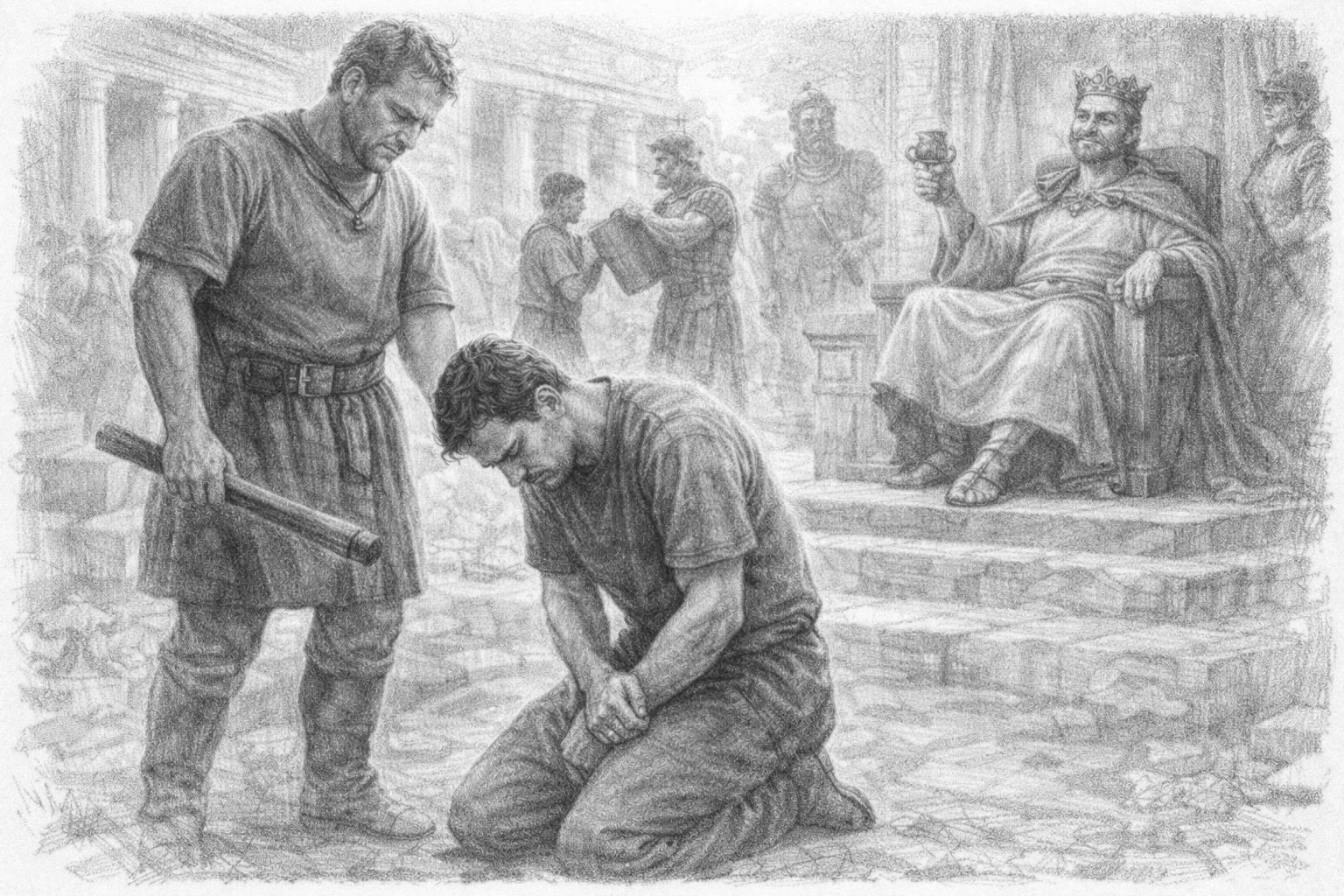
Submit yourselves to every ordinance of man for the Lord’s sake: whether it be to the king, as supreme; or unto governors, as unto them that are sent by him for the punishment of evildoers, and for the praise of them that do well. For so is the will of God, that with well doing ye may put to silence the ignorance of foolish men: As free, and not using your liberty for a cloke of maliciousness, but as the servants of God. Honour all men. Love the brotherhood. Fear God. Honour the king. Servants, be subject to your masters with all fear; not only to the good and gentle, but also to the froward. For this is thankworthy, if a man for conscience toward God endure grief, suffering wrongfully. For what glory is it, if, when ye be buffeted for your faults, ye shall take it patiently? but if, when ye do well, and suffer for it, ye take it patiently, this is acceptable with God.
Peter now brings the Christian life down into the rough places of daily living. He has spoken about purity. He has spoken about identity. Now he speaks about humility, submission, and conduct under pressure. And he does it in a world far harsher than the one most of us know.
That matters.
Because these words were not written to comfortable people living under ideal conditions. They were written to believers living under an empire that was increasingly hostile, and to servants who often had no power at all. Yet Peter tells them to submit, to honor, to endure, and to do good even when they are treated unjustly.
That cuts across the grain of our flesh.
We live in a time when everybody wants to vent, everybody wants to rage, and everybody wants to justify a bitter spirit. But Peter says freedom in Christ is not a license for malice. Liberty is not permission to become sharp, loud, disrespectful, and self-ruled. We are free, yes—but free as the servants of God.
That changes the whole tone of a believer’s life.
We do not submit because earthly authority is always noble.
We do not endure because mistreatment is somehow good.
We do it for the Lord’s sake.
That phrase holds the whole passage together.
Peter is teaching us that there is a way to live so uprightly, so steadily, so honorably, that foolish accusations begin to lose their force. Not because we defended ourselves so brilliantly, but because our lives answered the charge. There is a quiet strength in well doing.
Think about that.
The Lord may be more glorified by the way you carry yourself under provocation than by the sharpness of your argument.
Peter then says, “Honour all men. Love the brotherhood. Fear God. Honour the king.” That is a remarkable string of commands. Honor all men. Not just the ones you agree with. Not just the ones who treat you well. Love the brotherhood. Fear God. And honor the king—even in Peter’s day, when the ruler was no model of sanity or righteousness.
So the question becomes painfully simple.
How can we, who have been shown such mercy, justify a constant spirit of complaint, contempt, and disrespect?
Peter goes even farther and speaks to servants under harsh masters. He says that if a man suffers for doing wrong, there is no glory in patiently taking what he deserved. But if he suffers for doing right, and bears it with conscience toward God, that is acceptable with God.
That is a high word.
It means there is something precious in heaven’s sight about a believer who suffers wrongfully without throwing away character. A man or woman who keeps doing right, keeps honoring God, keeps their spirit clean, even when treated unfairly, is displaying something deeply beautiful.
Here’s the thing.
Anybody can behave well when the boss is fair.
Anybody can sound spiritual when the ruler is decent.
Anybody can submit when the treatment is easy.
But when authority is flawed, when leadership is difficult, when the situation feels unjust, then what is in us starts to show. And Peter says that is exactly where Christian humility shines. Not in weakness. Not in cowardice. But in strong souls that refuse to let hardship turn them ugly.
This does not mean evil is good.
It does not mean injustice is excused.
It means the believer belongs to Christ before he belongs anywhere else.
And because of that, even suffering can become a place of witness.
So Peter leaves us with a searching word. Walk in purity, yes—but also walk in humility. Do not use your freedom as a cover for the flesh. Do not let frustration turn into malice. Do not let hardship become an excuse for dishonor.
Honor people.
Love the brethren.
Fear God.
And let your life speak with a steadiness this world does not understand.