
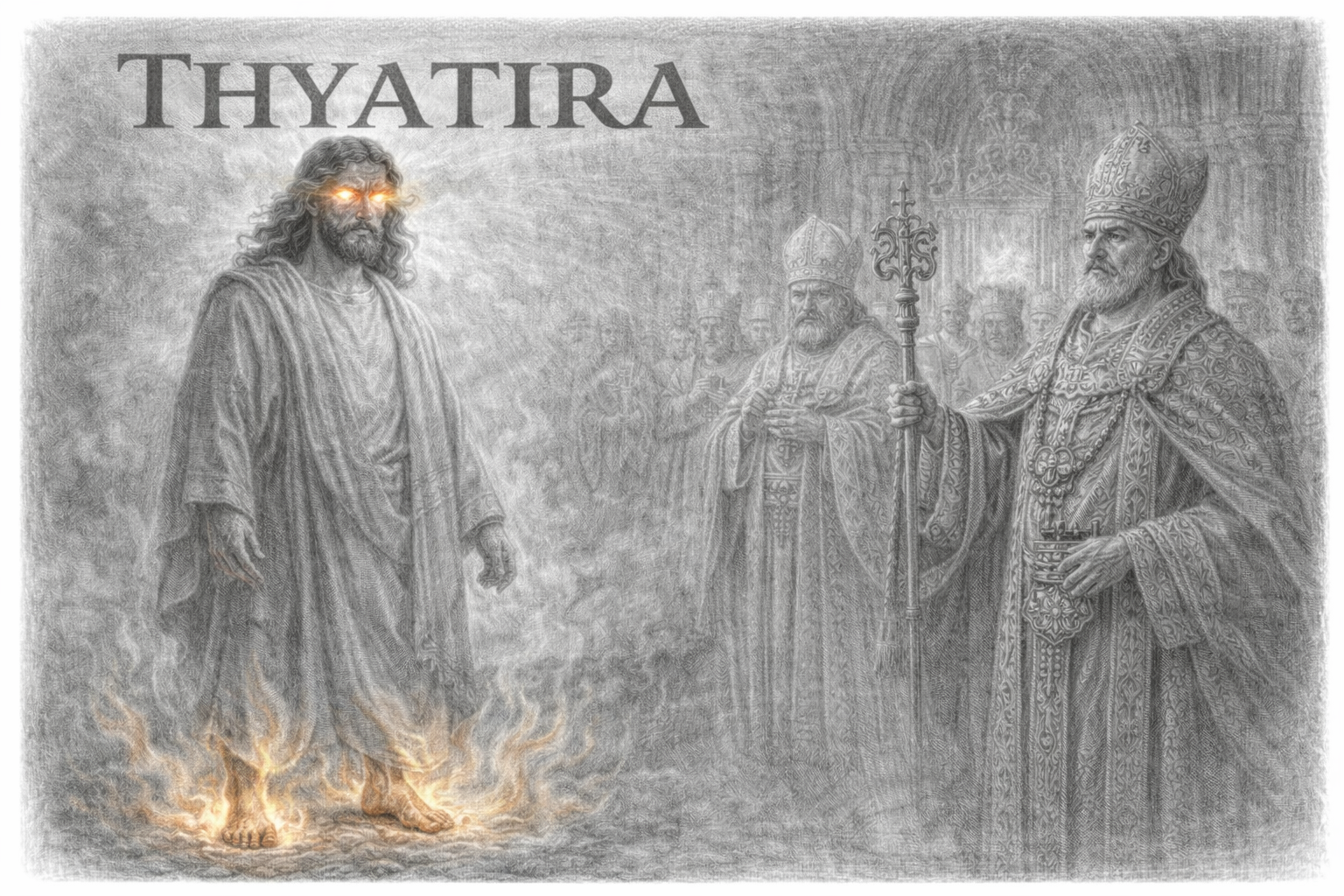
Revelation 2:20
Notwithstanding I have a few things against thee, because thou sufferest that woman Jezebel, which calleth herself a prophetess, to teach and to seduce my servants to commit fornication, and to eat things sacrificed unto idols.
After commending Thyatira, Jesus now speaks with piercing clarity. He says, “Notwithstanding I have a few things against thee.” In other words, all the works, charity, service, faith, patience, and increase could not cancel out what He was about to address.
That is sobering.
Because it means a church can be active and still be in danger.
And the danger here centered around a woman He identifies as Jezebel.
Based on the account in Acts 16, where Paul encountered a group of women worshiping by a riverside, it is very possible that the church at Thyatira was founded by a woman. However, in addition to being founded by a woman, the church at Thyatira was floundering because of a woman. A woman calling herself a prophetess had gained influence and was persuading people to eat food sacrificed to idols and to move into moral compromise.
Jesus uses the name Jezebel because her influence reminded Him of one of the most ungodly women in the history of Israel.
You remember her story.
Jezebel was the daughter of Ethbaal, king of the Zidonians. She was given in marriage to Ahab, king of Israel. And because Ethbaal was the high priest of Ashtaroth, the goddess of sensuality and fertility, Jezebel brought with her a corrupting spiritual influence that worked its way right into the people of God.
That is how corruption often enters.
Not always with a battering ram.
Sometimes through influence.
Sometimes through seduction.
Sometimes through religion wrapped around sensuality, power, and control.
One day Jezebel found Ahab weeping. Why? Because Naboth would not sell him his property. Ahab was king, his power was growing, his influence was increasing, and yet there was still one piece of land he could not get.
Jezebel’s answer was chilling.
“If you’re the king, you should have it. Leave it to me.”
And she did.
She arranged for false accusations to be made against Naboth. She engineered an inquisition and a mock trial. Naboth was condemned and put to death. And then Ahab and Jezebel simply took the land.
That is Jezebel.
Manipulation in the name of power.
False accusation dressed up as righteousness.
Religion used to seize what God had not given.
An inquisition employed to strengthen control.
And Jesus says that same spirit was at work in Thyatira.
That is why the name matters so much. He is not merely pointing to immorality. He is exposing a whole system of corruption. Seduction. Spiritual manipulation. False authority. Power plays. Religious pressure. The use of sacred language to justify unsacred agendas.
What happened with Naboth on a small scale becomes a kind of preview of what would unfold later on a much larger scale in church history.
That is the warning here.
The church at Thyatira was not merely tolerating a bad idea.
She was suffering a corrupting influence.
She was allowing a false prophetess to shape people, seduce servants, and pull hearts toward idolatry and impurity. And Jesus says plainly, I have this against thee.
Beloved, the Lord does not look lightly on what seduces His servants. He does not shrug at spiritual manipulation. He does not excuse systems that use religion to gain power, seize ground, and pressure consciences.
His eyes are still like fire.
And He still sees Jezebel for what she is.