
Love Them and Let God Judge – Genesis 50:18-19
Genesis 50:18-19
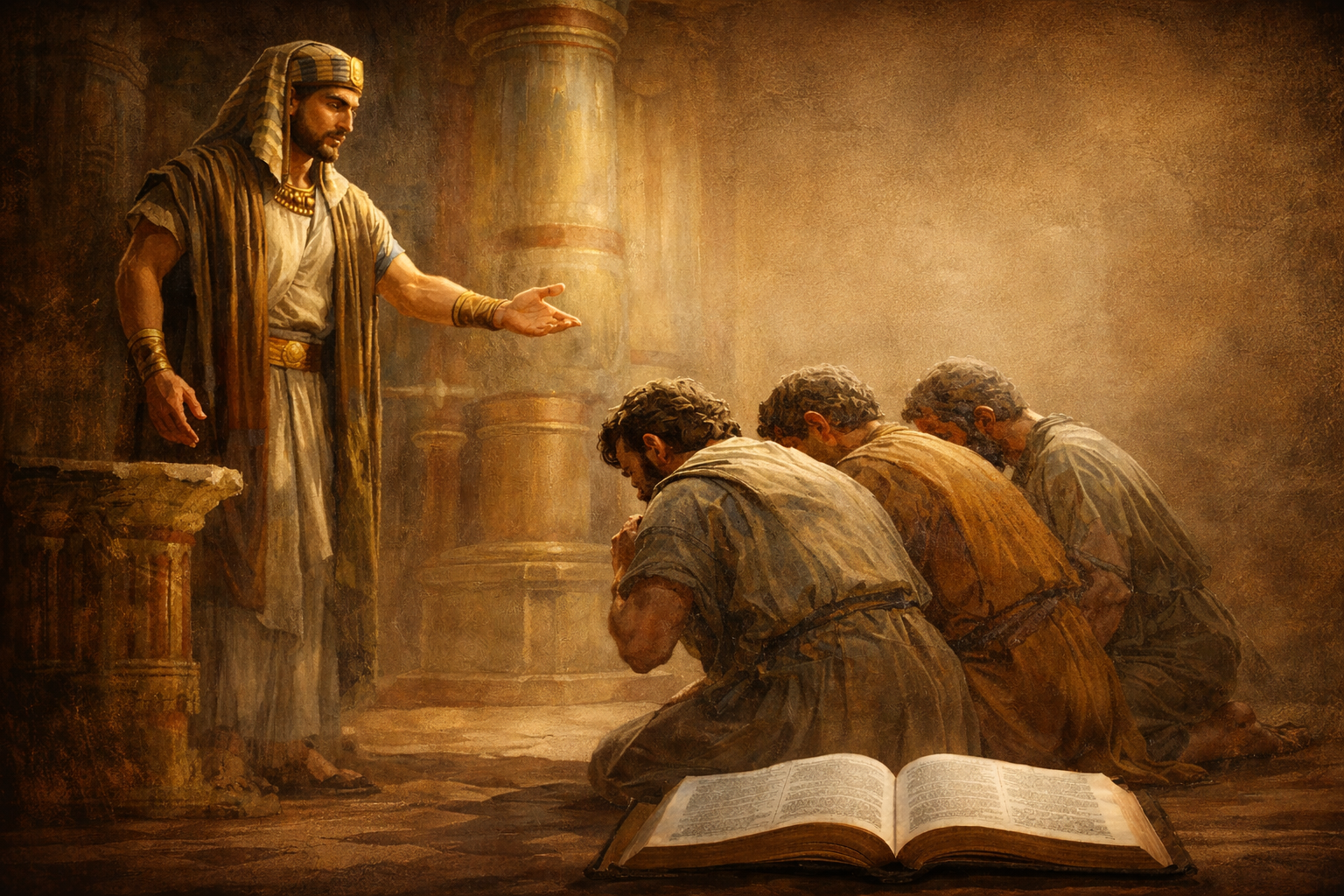
And his brethren also went and fell down before his face; and they said, Behold, we be thy servants. And Joseph said unto them, Fear not: for am I in the place of God?
Now the brothers come themselves. They fall down before Joseph’s face and say, “Behold, we be thy servants.” The very thing Joseph had seen in his dreams years earlier is now taking place. But Joseph does not seize the moment to crush them. He does not use their fear to control them. He does not take the place of accuser, judge, and executioner.
Instead he says, “Fear not: for am I in the place of God?”
That is such a beautiful word.
Joseph understood something that frees a man’s heart. He knew he was not God. Therefore, he did not have to carry himself as though he were. He did not have to settle every score. He did not have to make every wrong right with his own hand. He did not have to sit in the high seat of final judgment over the men who had wounded him.
That belongs to God.
What a great day it is when a man finally learns that.
What a wonderful day it is when the Lord teaches you, “You love them, and let Me judge them.”
Because until that lesson is learned, we usually have it turned around. We try to judge them ourselves, and love them only if they measure up. But the Lord says, “No, you love them. You leave the judging to Me.”
That is where Joseph was living.
And that is wisdom, because at best, we only see through a glass darkly. We do not know the whole story. We do not know all that God is doing in a man’s heart. We do not know what is happening beneath the surface. We look at a moment and think we understand the whole picture, but we do not.
That is why our judgments are so often wrong.
Take David, for example. There he is in 1 Samuel 21:13 with spit running down his beard, clawing at the gate of a Philistine city, acting like a madman. If I had only seen that scene, I would have written him off in a heartbeat. “David, what are you doing? You killed Goliath, and now you are hiding in Goliath’s town acting insane? What happened to you?”
That is what I would have said.
But if you keep reading, you realize that during that season, while outwardly everything looked confused and humiliating, David was also writing some of the richest psalms that have ever been given to the people of God. What looked on the outside like collapse was not the whole story. God was doing something deeper.
That is the point.
Man looks on the outward appearance. Only God sees the heart.
Joseph knew that.
So Joseph refuses to take God’s place. He does not say, “I know exactly what you deserve, and I will make sure you get it.” He says, in essence, “That is not my chair. That is not my place. I am not God.”
That will save a lot of heartache if we ever learn it.
Because there is a strange burden that comes when a man thinks he must evaluate everybody, sort everybody out, settle every account, and pronounce every verdict. That is too heavy a load to carry, and it is not ours to carry anyway. The Lord never asked us to be Him.
He asked us to love.
He asked us to forgive.
He asked us to leave room for Him to do what only He can do.
And when you see Joseph saying, “Am I in the place of God?” you are seeing the beauty of humility. He is powerful enough to act harshly, but humble enough not to. He has authority, but he will not use it to play God.
That is a needed word.
Because some of us have spent too much time trying to do the Lord’s job. We have tried to judge motives we could not possibly know. We have tried to read hearts we cannot see into. We have tried to write people off based on one chapter when God is still writing the story.
Joseph would say, “Fear not.”
And then he would remind us why.
Because he is not God.
And neither are we.