
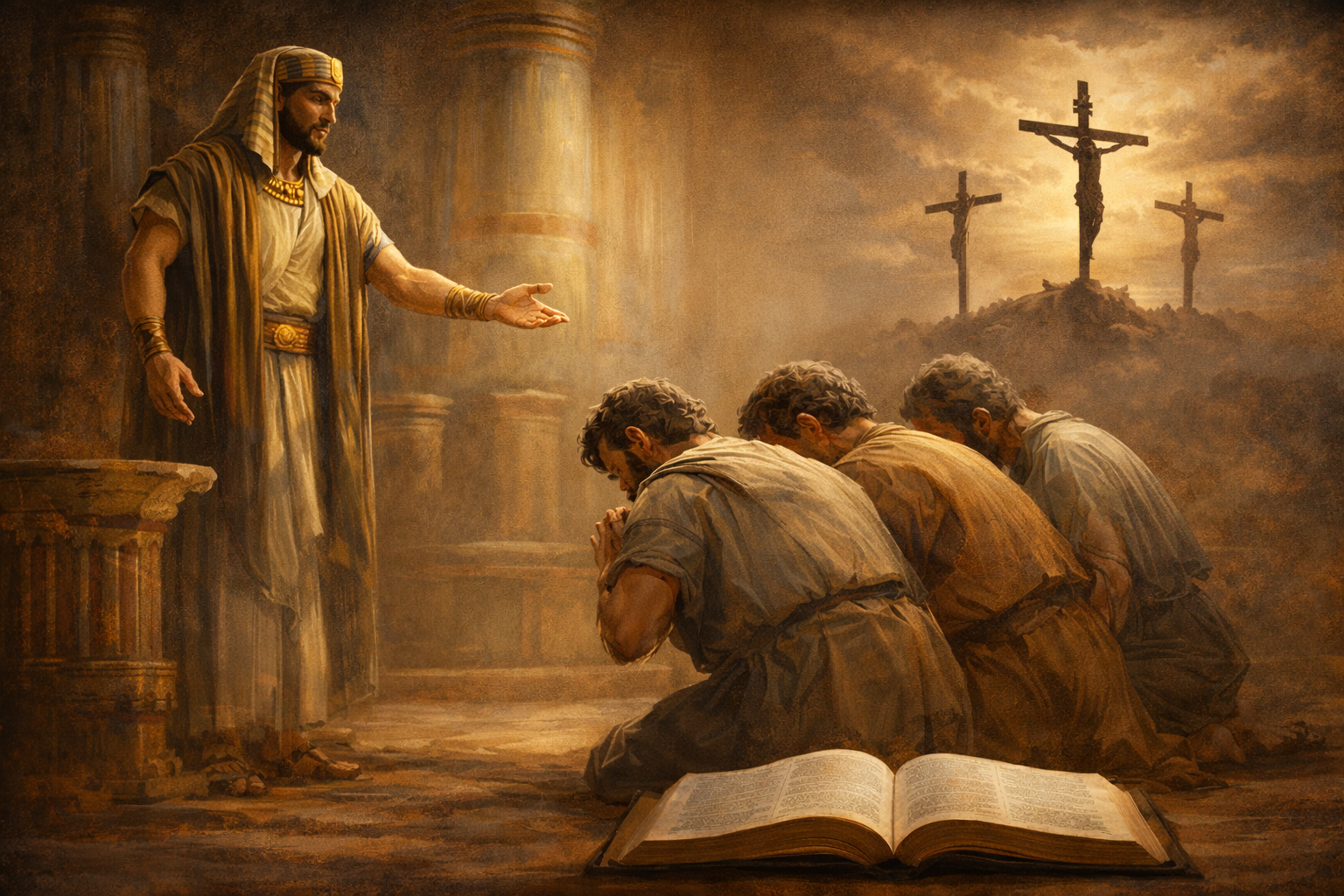
Genesis 50:20
But as for you, ye thought evil against me; but God meant it unto good, to bring to pass, as it is this day, to save much people alive.
This is one of the richest verses in Joseph’s story.
Joseph does not deny what his brothers did. He does not paint it over with some soft religious language. He does not act as though it was no big deal. He tells the truth plainly. “Ye thought evil against me.” They meant to hurt him. They meant to be rid of him. They meant to push him out of their lives. The pit was evil. The slavery was evil. The betrayal was evil.
But Joseph had lived long enough with God to see something else at work above it all.
“But God meant it unto good.”
That is a man who has learned to read life on two levels.
On one level, men were acting wickedly.
On another level, God was still acting sovereignly.
Joseph is not saying their evil was good. He is saying God was so far above their evil that He bent the whole thing toward His own purpose. What they meant to use to destroy him, God used to position him. What they meant to turn into ruin, God turned into rescue. What they meant to end his story, God used to save much people alive.
I love that.
Because that is the kind of heart I want. A heart that can say, “I do not understand everything that is happening today, but I know God is at work.” Not just when the day is easy. Not just when the answer comes quickly. But in the pit. In the prison. In the delay. In the place where nothing makes sense yet.
Joseph had that kind of heart.
And our Greater than Joseph had it perfectly.
When wicked men laid hold on Jesus, mocked Him, beat Him, nailed Him to a Cross, that was evil. Real evil. Hellish evil. And yet even there, heaven had not lost the thread. Men meant evil. God meant redemption. Men meant shame. God meant salvation. Men meant death. God meant life for the world.
That is why Joseph shines so brightly here. He sounds so much like Jesus. Joseph says, in essence, “You meant it for evil, but God had another story in mind.” And Jesus, from the Cross, says, “Father, forgive them; for they know not what they do” Luke 23:34.
That is the heart of heaven.
And that is what makes this verse so precious, because every one of us has places in our story where someone meant evil. A betrayal. A wound. A rejection. A pit we did not choose. A chapter we would never have written for ourselves. If all you can see is what men meant, bitterness will start to grow. But if the Lord gives you grace to see that above the evil of man there is still the providence of God, hope starts to breathe again.
That does not make pain imaginary.
It does not make betrayal painless.
It does not make the pit pleasant.
But it does mean the pit is not in charge.
God is.
Joseph does not stand here talking like a victim who is still trapped in yesterday. He stands here like a man who has watched the hand of God long enough to know that the Lord wastes nothing. Not one tear. Not one prison night. Not one betrayal. Not one delay. God was working all the while.
And notice where it all landed. “To save much people alive.” God did not merely bring Joseph through his suffering. He brought Joseph through it with purpose. There were lives on the other side of it. There was preservation on the other side of it. There was bread on the other side of it.
That is just like the Lord. He does not merely bring His people out. He brings them through in such a way that others are helped because of it. The wound becomes a testimony. The sorrow becomes a channel. The suffering becomes the very place where His grace is seen most clearly.
So Joseph looks at the brothers who wronged him and says the thing only grace can teach a man to say. “You meant evil. God meant good.”
That is not denial.
That is victory.
That is not pretending.
That is perspective given by the Spirit of God.
And maybe that is why this verse has helped so many people over the years. It reminds us that evil does not get the final word. The pit does not get the final word. The betrayal does not get the final word. The sorrow does not get the final word.
God does.
And when He is finished writing the story, it will be plain that even in the darkest chapters, He was still working toward good.