
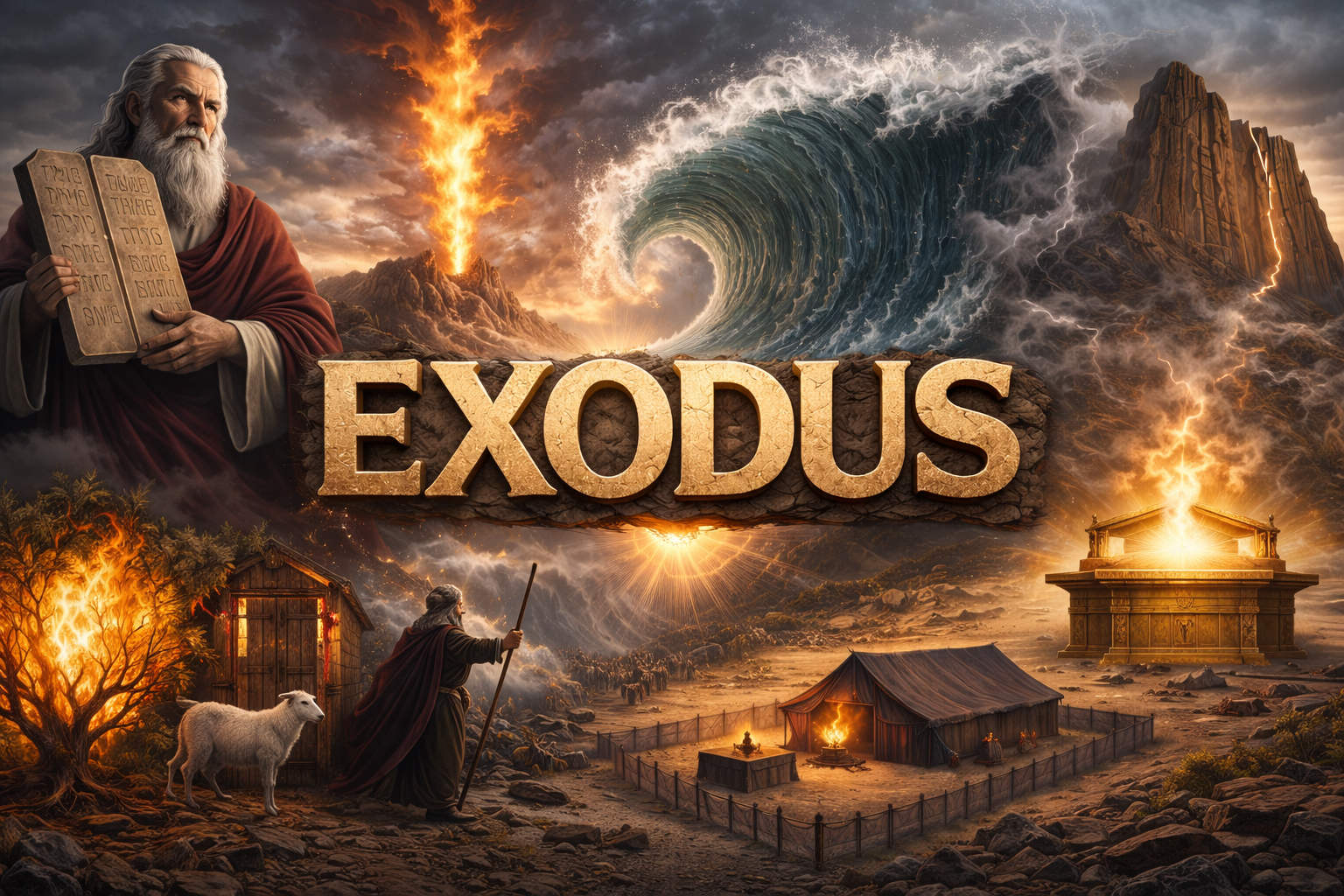
Exodus 3:13-14
And Moses said unto God, Behold, when I come unto the children of Israel, and shall say unto them, The God of your fathers hath sent me unto you; and they shall say to me, What is his name? what shall I say unto them? And God said unto Moses, I AM THAT I AM: and he said, Thus shalt thou say unto the children of Israel, I AM hath sent me unto you.
Moses is not merely asking for a label here. He is asking for something much deeper. “God” is a title, but Moses wants to know the Name, the nature, the character of the One who is sending him. He wants more than a message to deliver. He wants to know the One behind the message. That is what makes this moment so precious. Moses is not just concerned with what he is supposed to say. He wants to know God more personally, more deeply, more truly.
And the Lord answers him in a way that is both simple and unfathomable. “I AM THAT I AM.” In other words, I simply am. I am the self existent One. I am the One who depends on no one, who is explained by no one, who is upheld by no one. Everyone else derives life. God is life. Everyone else is contingent. God simply is. He was not created. He did not begin. He does not borrow strength. He does not develop, improve, or diminish. He is the eternal present tense God.
That is a staggering answer.
It means God is never becoming what He was not before. He is never growing into wisdom. He is never gaining power. He is never trying to hold Himself together. He is fullness in Himself. Perfection in Himself. Eternal being in Himself. That is why this Name carries such majesty. It speaks of absolute sufficiency. God is not like the gods of the nations, dependent on men, limited by time, shaped by place, or subject to change. He is I AM.
And that is not merely theology to admire. It is truth to rest in. Moses is being sent into an impossible situation. He is going to stand before Pharaoh, confront the might of Egypt, and lead a nation out of bondage. So what kind of God must send him? Not a tribal deity. Not a local helper. Not a distant force. He needs the God who simply is. The God who is always present, always sufficient, always enough for every moment and every need. “I AM” means Moses will never arrive at a moment where God is not already there in fullness.
That is why this Name is so rich for the believer too. Whatever the need, God remains I AM. When strength is needed, He is. When wisdom is needed, He is. When guidance is needed, He is. When comfort is needed, He is. When the future is uncertain, He is still the unchanged and unchanging One. Moses did not need a God who had merely helped Abraham, Isaac, and Jacob in the past. He needed the God who is present tense reality. The God who is right now what His people need Him to be.
There is also something tender here. The children of Israel, as the story unfolds, do not actually stop Moses to ask this question. But the Lord answers it anyway. Why? Because He is honoring the desire in Moses’ heart to know Him more intimately. Moses wants to know who is sending him, and God does not brush that aside. He reveals Himself. He gives Moses more than a task. He gives Moses truth about His own nature.
That is always the deeper gift.
The Lord does not merely hand us assignments. He reveals Himself in the process. He lets us know Him. He draws us beyond titles and into truth, beyond vague language and into living reality. Moses asked, in effect, Who are You really? And God answered with one of the most holy revelations in all of Scripture.
I AM THAT I AM.
That is the Name of the One who sends, sustains, and stands with His people. And if Moses could go to Egypt resting in that, then we too can face whatever is before us knowing that the God of the burning bush is still the great I AM.